South Korea fuel price cap: 96% of gas stations freeze prices amid Middle East crisis
Synopsis
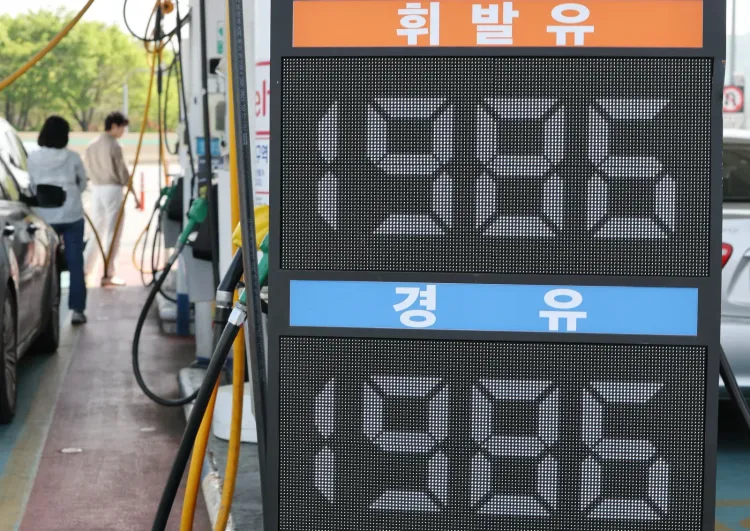
While the US saw fuel prices jump 44 per cent since the US-Israeli war against Iran began, South Korea's government-mandated price cap has held gasoline rises to just 19 per cent — with 96 per cent of gas stations complying. The ceiling stays until Brent crude drops below $100 a barrel; at $105.63, that moment has not arrived.
Key Takeaways
96.1 per cent of South Korea's 10,646 gas stations kept gasoline prices frozen as of 14 May .
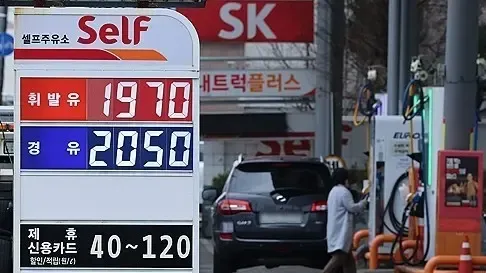
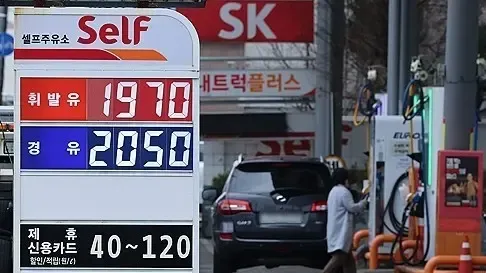
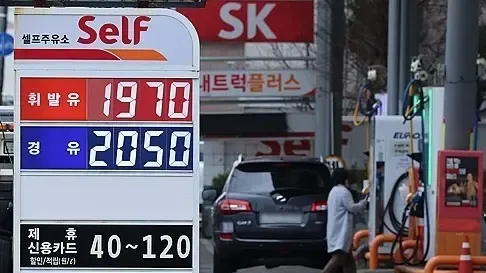
The government froze fuel price caps for the third consecutive time : gasoline at 1,934 won/litre , diesel at 1,923 won/litre , kerosene at 1,530 won/litre .
Since the US-Israeli war against Iran began in late February, South Korean gasoline rose 19 per cent vs 44 per cent in the US.
Fuel consumption has fallen — gasoline down 3 per cent , diesel down 8 per cent — since the cap was introduced on 13 March .
The price cap will be reviewed for removal once crude falls below $100/barrel ; Brent stood at $105.63 and WTI at $101.04 as of Wednesday.
More than 96 per cent of South Korea's gas stations had kept gasoline prices unchanged as of Wednesday, 14 May, according to the Ministry of Trade, Industry and Energy, which credited the country's fuel price cap system for stabilising domestic energy costs amid the ongoing Middle East crisis. The ministry made the disclosure during a regular briefing on energy supply conditions.
Key Developments
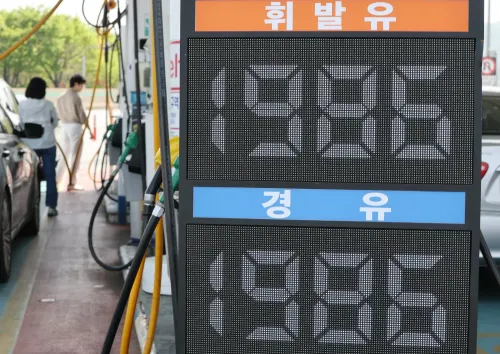
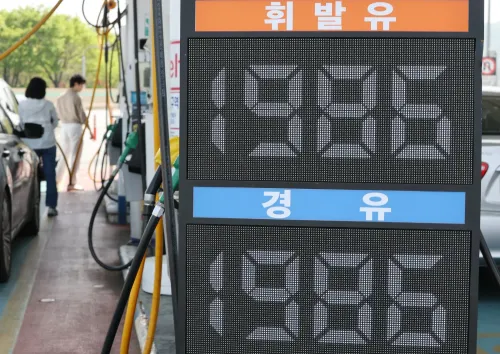
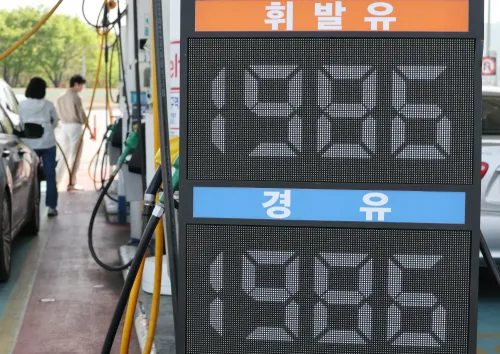
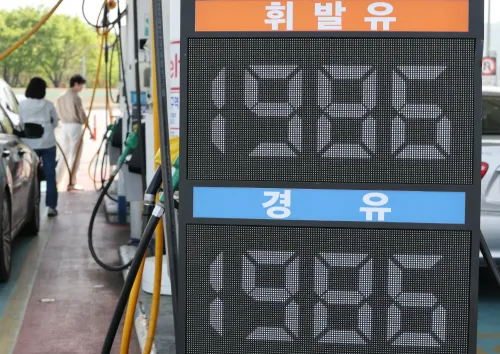
Specifically, 96.1 per cent of the country's 10,646 gas stations maintained gasoline prices at the previous day's level, according to ministry data. Last week, the government froze fuel price caps for the third consecutive time, holding maximum prices of regular gasoline at 1,934 won (US$1.30) per litre, diesel at 1,923 won per litre, and kerosene at 1,530 won per litre — prices charged to gas stations by local oil refiners.
South Korea vs Global Fuel Price Rises
The ministry noted that since the outbreak of the US-Israeli war against Iran in late February, South Korea's gasoline prices have risen only 19 per cent and diesel prices 26 per cent — a markedly smaller increase than in several other major economies. By comparison, both gasoline and diesel prices surged 44 per cent over the same period in the United States. In Britain, Germany, and France, gasoline prices rose between 19 per cent and 22 per cent, while diesel climbed between 28 per cent and 37 per cent, according to the ministry.
Japan recorded relatively smaller increases — 7 per cent for gasoline and 9 per cent for diesel — aided by its own subsidy system.
Impact on Fuel Consumption
Since the price cap system was introduced on 13 March, consumption of gasoline and diesel has declined by 3 per cent and 8 per cent, respectively. Yang Ghi-wuk, Deputy Minister for Trade, Industry and Resources Security, acknowledged the demand squeeze. 'Overall, consumers appear to be feeling pressure (over fuel consumption) due to higher prices,' he said.
Yang also noted a nuanced policy trade-off: 'Some may argue that fuel consumption would have contracted further if international oil prices had been fully reflected in domestic fuel prices. But we also need to consider the negative impact of weakened consumption, so there can be differing views on what constitutes an appropriate price level.'
When Will the Price Cap Be Lifted?
Yang indicated that the government would consider lifting the ceiling once international crude prices fall below $100 per barrel, contingent on stabilisation in the Strait of Hormuz. As of Wednesday, Brent crude stood at $105.63 per barrel and West Texas Intermediate (WTI) was at $101.04 per barrel — both still above the threshold. With crude benchmarks remaining elevated, an early exit from the price cap regime appears unlikely in the near term.
Point of View
Which mainstream coverage tends to gloss over. The harder question is whether holding prices artificially below market levels is storing up a sharper correction once the cap lifts — and whether the threshold of $100 Brent is a policy anchor or a political one, given that it has no stated economic rationale.
NationPress
26 Sept 2026
Frequently Asked Questions
What is South Korea's fuel price cap system?
South Korea's fuel price cap system sets maximum prices that local oil refiners can charge gas stations for gasoline, diesel, and kerosene. Introduced on 13 March, it is aimed at shielding consumers from the full impact of rising global crude prices during the Middle East crisis.
How much have fuel prices risen in South Korea compared to other countries?
Since the US-Israeli war against Iran began in late February, South Korean gasoline prices rose 19 per cent and diesel 26 per cent — compared with 44 per cent for both in the United States and 28–37 per cent for diesel in Britain, Germany, and France.
When will South Korea lift the fuel price cap?
Deputy Minister Yang Ghi-wuk said the ceiling would be reviewed for removal once international crude prices fall below $100 per barrel and the Strait of Hormuz situation stabilises. As of 14 May, Brent crude was at $105.63 and WTI at $101.04 — both above that threshold.
Has the price cap affected fuel consumption in South Korea?
Yes. Since the cap was introduced on 13 March, gasoline consumption has declined 3 per cent and diesel consumption 8 per cent, indicating that consumers are cutting back despite the price ceiling.
How does Japan's fuel pricing compare to South Korea's?
Japan recorded smaller price increases — 7 per cent for gasoline and 9 per cent for diesel — over the same period, attributed to its own government subsidy system rather than a price cap mechanism.