South Korea stocks: 7 in 10 shares fell in July, worst drop since 2008
Synopsis
South Korea's stock markets just posted their worst monthly performance since the 2008 financial crisis, with the KOSPI down 22.2% and the KOSDAQ off 21.4% in July. Seven in 10 listed stocks fell, Kolon TissueGene collapsed 86%, and regulators are now moving to ban 'split listings' — a long-criticised practice blamed for chronically low Korean equity valuations.
Key Takeaways
1,859 stocks — about 70 percent of all listed companies — fell in July across South Korea's KOSPI and KOSDAQ .
The KOSPI tumbled 22.2 percent and the KOSDAQ dropped 21.4 percent — both the steepest monthly falls since October 2008 .
Kolon TissueGene was the biggest loser on the KOSDAQ, plunging 86 percent to 13,000 won from 93,600 won .
Contentree JoongAng fell 67 percent on the KOSPI after parent JoongAng Group faced a liquidity crunch.
The Financial Services Commission (FSC) announced new rules from early August to ban 'split listing' by conglomerates, targeting a key structural drag on Korean equity valuations.
Analyst Han Ji-young of Kiwoom Securities said recovery could hinge on strong earnings from Samsung Electronics and SK hynix .
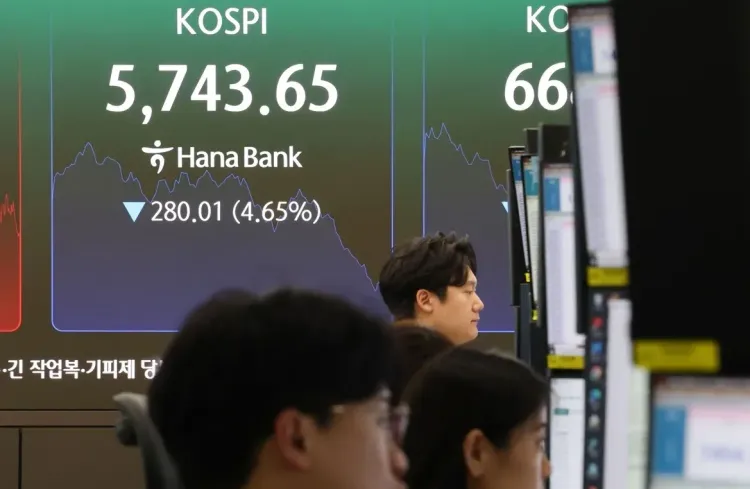
South Korea's stock markets suffered their steepest monthly decline since the 2008 global financial crisis in July, with prices of seven out of 10 listed shares ending the month lower, according to data from the Korea Exchange (KRX). A total of 1,859 stocks — roughly 70 percent of all companies listed across the country's two main bourses — closed below their end-of-June levels as of Friday, 1 August.
Scale of the Decline
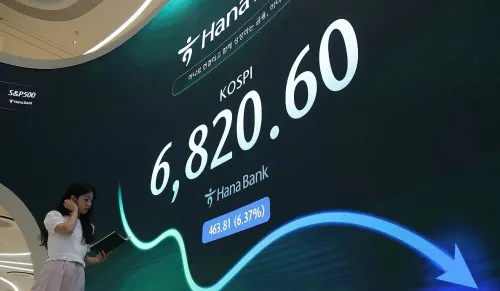
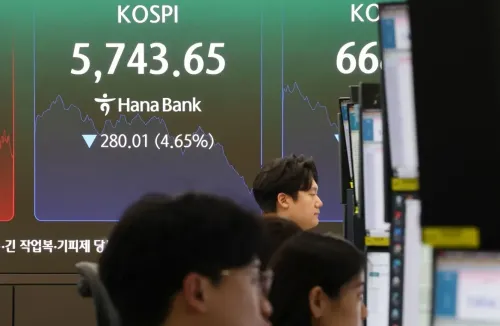
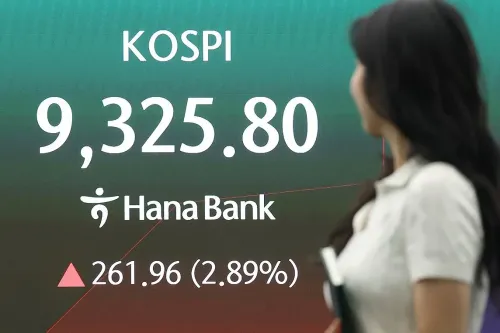
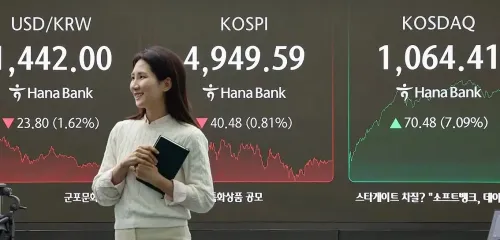
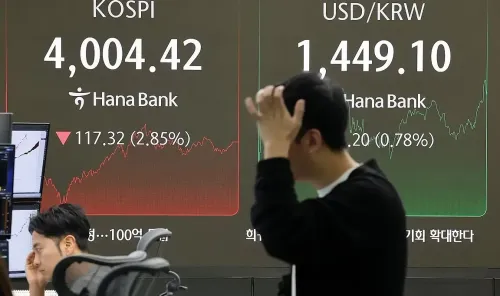
The benchmark Korea Composite Stock Price Index (KOSPI) tumbled 22.2 percent in July from the previous month, while the tech-heavy Korea Securities Dealers Automated Quotations (KOSDAQ) dropped 21.4 percent. Both indices recorded their worst monthly performances since October 2008, when global markets were battered by the fallout from the financial crisis.
By market, 566 stocks — or 62 percent of the KOSPI's 917 listed companies — declined during the month. On the KOSDAQ, the damage was wider: 1,293 stocks, representing 75 percent of its 1,728 listings, also fell.
Biggest Losers
Among KOSDAQ-listed firms, biotechnology company Kolon TissueGene was the month's steepest faller, plunging 86 percent to 13,000 won (approximately US$8.99) from 93,600 won. It was followed by The Technology, which shed 76 percent, and Kolon Life Science, which slid 67 percent.
On the KOSPI, Contentree JoongAng was among the hardest hit, plunging 67 percent after its parent, JoongAng Group, came under pressure from a liquidity crunch.
What Analysts Are Saying
'The KOSPI has remained in an oversold state amid heavy selling pressure,' said Han Ji-young, an analyst at Kiwoom Securities. 'Going forward, investor sentiment is likely to recover on the back of strong earnings from Samsung Electronics and SK hynix,' she added. The remarks point to a cautious but not entirely pessimistic near-term outlook, with blue-chip tech earnings seen as a potential stabiliser.
Regulatory Response: Crackdown on Split Listings
Amid the market turmoil, the Financial Services Commission (FSC) announced that strict new regulations targeting 'split listing' — also referred to as duplicate listing — will come into effect in early August. The practice, which involves spinning off a core business division and listing it separately, has long been cited as a structural factor depressing valuations of South Korean stocks. The new rules aim to strengthen the fiduciary duty of listed companies and better protect the interests of ordinary shareholders.
What to Watch Next
Market participants will closely track earnings from Samsung Electronics and SK hynix in the coming weeks, which analysts believe could serve as sentiment anchors. The FSC's implementation of split-listing curbs will also be scrutinised for its effectiveness in addressing one of the persistent structural weaknesses of South Korean equities. Whether July's historic sell-off marks a floor or a prelude to further pressure will depend heavily on both domestic corporate results and global risk appetite.
Point of View
A phenomenon the market calls the 'Korea discount', driven partly by opaque conglomerate structures and the very split-listing practices the FSC is now rushing to ban. The timing of that regulatory move, arriving in the middle of a historic sell-off, raises the question of whether it is a genuine reform impulse or crisis-driven optics. More importantly, pinning the recovery narrative on Samsung and SK hynix earnings — two companies whose fortunes are tied to global semiconductor cycles — means South Korea's market stabilisation is, once again, outsourced to forces beyond Seoul's control.
NationPress
16 Sept 2026
Frequently Asked Questions
Why did South Korean stocks fall so sharply in July?
South Korea's KOSPI and KOSDAQ posted their steepest monthly declines since October 2008, falling 22.2% and 21.4% respectively, amid heavy selling pressure across the market. According to Korea Exchange data, 1,859 stocks — about 70% of all listed companies — ended July lower than they began it.
Which stocks were the biggest losers in July?
On the KOSDAQ, Kolon TissueGene was the worst performer, plunging 86% to 13,000 won from 93,600 won. The Technology fell 76% and Kolon Life Science slid 67%. On the KOSPI, Contentree JoongAng dropped 67% after its parent JoongAng Group faced a liquidity crunch.
What is 'split listing' and why is South Korea banning it?
Split listing — also called duplicate listing — occurs when a conglomerate spins off a core business division and lists it separately on the stock exchange. The Financial Services Commission (FSC) has announced strict new rules against the practice from early August, citing it as a long-standing structural reason for depressed valuations of South Korean stocks and a risk to ordinary shareholders.
When was the last time South Korean markets fell this sharply?
The July 2024 declines were the steepest since October 2008, when global markets were hit by the fallout from the global financial crisis. Both the KOSPI and KOSDAQ have not recorded monthly losses of this magnitude in the roughly 16 years since.
What could help South Korean markets recover?
Analyst Han Ji-young of Kiwoom Securities said investor sentiment could recover on the back of strong earnings from Samsung Electronics and SK hynix, two of South Korea's most influential listed companies. The FSC's new split-listing regulations are also expected to address a structural factor that has historically weighed on Korean equity valuations.