Could South Korea's Potential Growth Rate Dwindle to Near Zero by the 2040s?
Synopsis
The Bank of Korea's chief warns that South Korea's growth potential could stagnate, possibly reaching zero by the 2040s. He highlights the urgent need for efficient financial resource allocation to reverse this trend. This alarming projection underscores the critical importance of adapting to demographic changes and fostering innovation to secure economic stability.
Key Takeaways
Potential growth rate may drop to zero by the 2040s.
Low birth rates and aging population are critical factors.
Resource allocation needs to focus on high-productivity sectors.
Corporate lending is essential for long-term economic growth.
Current growth projection remains below potential.
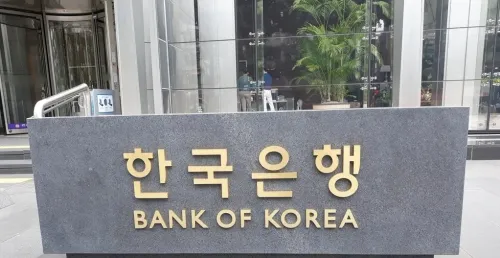
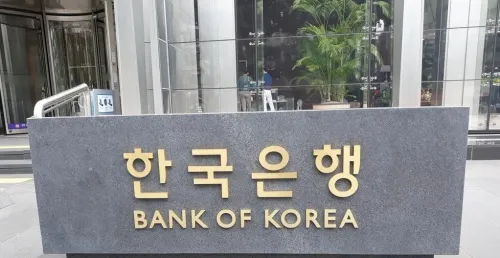
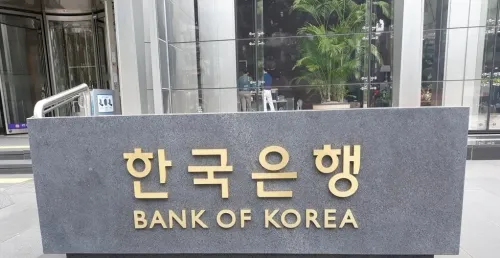
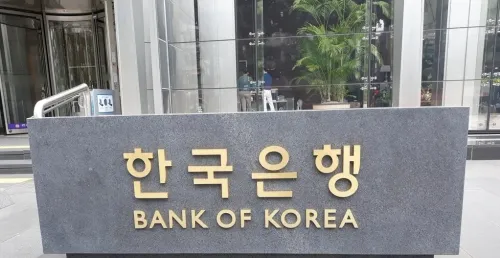
Seoul, Dec 9 (NationPress) The Governor of the Bank of Korea (BOK), Rhee Chang-yong, expressed concerns on Tuesday that South Korea's potential growth rate might drop to a mere zero percent range by the 2040s. He emphasized the necessity for effective allocation of financial resources to enhance growth potential.
Rhee shared these insights during a speech at a BOK symposium co-organized with the Korean Finance Association in Seoul, according to reports from Yonhap news agency.
"In the early 2000s, the nation's potential growth rate was approximately 5 percent, but it has recently decreased to below 2 percent. If this trend continues, it is likely to fall into the zero percent range by the 2040s," Rhee stated.
He noted that this decline has been largely influenced by low birth rates and the swift aging of the population, resulting in a shrinking workforce. Additionally, insufficient corporate investment and innovation to boost productivity have failed to counter these trends.
Moreover, Rhee pointed out the inefficient allocation of resources, which has stymied the flow of capital into high-productivity sectors.
"The significance of finance is greater than ever, as it acts as critical infrastructure that reallocates limited resources to the most efficient sectors, which can foster innovation and productivity growth," he remarked.
As per a BOK analysis, the country could enhance its long-term economic growth by decreasing the proportion of household credit relative to its Gross Domestic Product (GDP) and diverting funds towards more productive sectors, such as corporate lending.
A simulation that reviewed data from 43 countries between 1975 and 2024 indicated that reducing the household credit-to-GDP ratio by 10 percentage points from the current 90.1 percent could elevate South Korea's long-term annual growth rate by 0.2 percentage points.
This effect would be especially significant when credit is directed towards small and medium-sized enterprises (SMEs) and highly productive companies, whereas lending to the real estate sector offers minimal contributions to macroeconomic growth, according to the BOK.
In its recent outlook published late last month, the BOK adjusted its growth forecast for this year upward by 0.1 percentage points to 1 percent. For 2026, it anticipates a 1.8 percent expansion.
Despite this upward adjustment, the growth projection for this year remains significantly below the nation's estimated potential growth rate of approximately 1.8 percent, which represents the maximum pace at which the economy can grow without triggering inflation.
Point of View
It is crucial to recognize the implications of the Bank of Korea's recent warnings. South Korea faces significant demographic challenges that threaten its economic viability. The emphasis on reallocating financial resources is vital for fostering sustainable growth. It is essential for policymakers to act swiftly and strategically to navigate these challenges and secure the nation's economic future.
NationPress
9 Oct 2026
Frequently Asked Questions
What is South Korea's potential growth rate projected to be by the 2040s?
According to Bank of Korea Governor Rhee Chang-yong, South Korea's potential growth rate could fall to the zero percent range by the 2040s.
What factors are contributing to the decline in growth rate?
The decline is largely driven by low birthrates and rapid population aging, which reduce the working-age population, coupled with insufficient corporate investment and innovation.
How can South Korea improve its long-term economic growth rate?
The country could enhance its long-term growth rate by reducing household credit relative to GDP and reallocating funds towards productive sectors, such as corporate lending.
What are the implications of inefficient resource allocation?
Inefficient allocation prevents capital from flowing into high-productivity sectors, hindering economic growth and innovation.
What is the current growth projection for South Korea?
The Bank of Korea has revised its growth projection for this year to 1 percent, which is still below the estimated potential growth rate of around 1.8 percent.