South Korea's $518 billion chip hub plan faces execution and infrastructure doubts

Synopsis
South Korea has pledged $518 billion to build a second chip hub anchored by Samsung and SK Hynix fabs in Gwangju — but the plan has no detailed roadmap for the 6.3 gigawatts of power or 650,000 metric tons of water the complex will need. The gap between the headline number and the infrastructure reality is where this decade-long bet could unravel.
Key Takeaways
South Korea announced an 800 trillion won ($518 billion) corporate investment plan on 29 June to build a semiconductor hub in Gwangju and the Jeolla provinces .
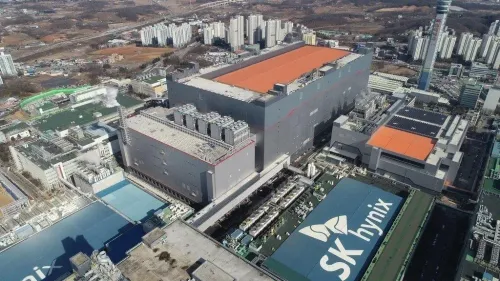
Samsung Electronics will build two memory fabs and SK Hynix will add two more , forming a four-fab complex with a supplier network.
SK Group Chairman Chey Tae-won announced a separate 1,100 trillion won semiconductor investment, including 400 trillion won for the southwestern region.
The four fabs alone will require 6.3 gigawatts of electricity and 650,000 metric tons of water — with no detailed government plan yet for either resource.
Industry observers warned that long-term investment commitments frequently shift, and that execution, not announcement, is the true test.
South Korea on Monday, 29 June unveiled a sweeping plan to build a second semiconductor manufacturing hub in its southwestern region, anchored by a staggering 800 trillion won ($518 billion) in corporate investment commitments. The blueprint, announced by President Lee Jae Myung at a nationally televised briefing at Cheong Wa Dae, is designed to position the country at the forefront of the global artificial intelligence (AI) chip race — though industry observers have raised pointed questions about whether the ambition can survive contact with reality.
The Plan at a Glance
The government aims to transform the southwestern city of Gwangju and the surrounding Jeolla provinces into South Korea's second major chip corridor, complementing the existing cluster centred around the Seoul metropolitan area and the Yongin semiconductor cluster currently under development. At the core of the new complex will be a four-fab memory manufacturing campus: Samsung Electronics plans to build two new memory chip fabrication plants, while rival chipmaker SK Hynix will construct two additional fabs, supported by a network of component and materials suppliers.
Samsung Electronics Chairman Lee Jae-yong confirmed that Gwangju is the leading candidate for the company's new production base, citing expected local government incentives — including support for securing electricity and water supplies and developing a skilled workforce. Separately, Samsung also announced plans to expand robotics investments in Gumi, North Gyeongsang Province, and to build high-bandwidth memory (HBM) production facilities in Chungcheong Province.
SK Group's Larger Commitment
SK Group Chairman Chey Tae-won went further, announcing plans to invest 1,100 trillion won across semiconductor projects — of which 400 trillion won is earmarked for the southwestern region. The remaining outlay will accelerate previously announced projects in Yongin and Cheongju. Together, the Samsung and SK commitments underscore Seoul's determination to maintain its dominance in memory chips as demand from AI data centres continues to surge globally.
Infrastructure Gaps Cast a Shadow
Despite the headline figures, industry observers cautioned that long-term corporate investment pledges frequently shift as market conditions evolve. 'Companies can announce investment plans covering five or even 10 years, but whether those investments are ultimately carried out is something that can only be judged over time,' an industry official said on condition of anonymity. The official added that such announcements 'often present an optimistic scenario, while execution remains the key challenge.'
Critics also pointed to concrete infrastructure gaps. The planned four-fab complex alone is estimated to require 6.3 gigawatts of electricity and approximately 650,000 metric tons of water — figures expected to climb further once supplier facilities and population growth around the industrial zone are factored in. The government has said it plans to draw on alternative water sources, including multipurpose dams and water currently allocated for power generation, but detailed plans for either resource have not yet been presented.
Strategic Context and What's Next
The announcement reflects a dual ambition: keeping South Korea competitive in an AI-driven global chip race while advancing a policy of more balanced regional development beyond the Seoul metropolitan corridor. This is a politically significant dimension — directing industrial investment toward historically less-developed provinces carries weight in domestic politics as much as in economic strategy.
The new cluster is explicitly framed as complementing, not replacing, the Yongin development, suggesting Seoul is betting on a multi-hub model to expand total production capacity. Whether the infrastructure and regulatory frameworks can be assembled fast enough to match the decade-long investment timeline remains the central open question as the blueprint moves from announcement to execution.
Point of View
But the absence of concrete electricity and water procurement plans for a complex demanding 6.3 gigawatts and 650,000 metric tons of water is a structural gap that no announcement can paper over. South Korea's chip dominance was built on decades of sustained capital discipline — not on investment pledges alone. The real risk here is that a politically motivated regional development agenda distorts the site-selection logic that made the Seoul-area clusters globally competitive in the first place. If Gwangju's incentives are the primary draw rather than logistics and talent density, the efficiency calculus for Samsung and SK Hynix could quietly shift as market conditions evolve over the plan's ten-year horizon.
NationPress
29 Jun 2026
Frequently Asked Questions
What is South Korea's new semiconductor hub plan?
South Korea announced on 29 June a plan to build a second semiconductor manufacturing hub in Gwangju and the Jeolla provinces, backed by 800 trillion won ($518 billion) in corporate investment from Samsung Electronics and SK Hynix. The complex will include four memory chip fabrication plants and a network of component suppliers.
Which companies are investing in the Gwangju chip hub?
Samsung Electronics will build two new memory fabs and SK Hynix will construct two additional fabs. SK Group Chairman Chey Tae-won also announced a broader 1,100 trillion won semiconductor investment plan, with 400 trillion won directed at the southwestern region.
Why are experts skeptical about the plan?
Industry observers warn that long-term corporate investment commitments frequently change as market conditions evolve, and that announcements typically reflect optimistic scenarios. Critics also highlight that the government has not yet presented detailed plans for supplying the 6.3 gigawatts of electricity and 650,000 metric tons of water the four-fab complex will require.
How does this plan relate to South Korea's existing chip clusters?
The Gwangju hub is designed to complement, not replace, the Yongin semiconductor cluster currently under development and the established clusters around the Seoul metropolitan area. Seoul is pursuing a multi-hub model to expand total production capacity for AI chips.
What is the strategic motivation behind the southwestern location?
President Lee Jae Myung's government has cited two goals: keeping South Korea competitive in the global AI chip race and advancing more balanced regional development beyond the Seoul corridor. The southwestern provinces have historically received less industrial investment, making this a politically significant choice alongside its economic rationale.