Sarvam AI at G7: India's only AI firm joins global tech talks in France
Synopsis
Sarvam AI became the only Indian company at the G7's high-level AI working lunch in Evian, with co-founder Pratyush Kumar seated alongside OpenAI's Sam Altman, Google DeepMind's Demis Hassabis, and G7 heads of state including Donald Trump and Emmanuel Macron. It is a rare and concrete signal that an Indian AI startup has crossed from domestic ambition to genuine global policy relevance.
Key Takeaways
Sarvam AI co-founder Pratyush Kumar attended a G7 AI working lunch in Evian, France on 17 June .
Sarvam was the only Indian company among the technology executives invited to the session.
Other AI leaders present included Sam Altman (OpenAI), Demis Hassabis (Google DeepMind), Dario Amodei (Anthropic), Alexandr Wang (Meta), Arthur Mensch (Mistral AI), and Aidan Gomez (Cohere).
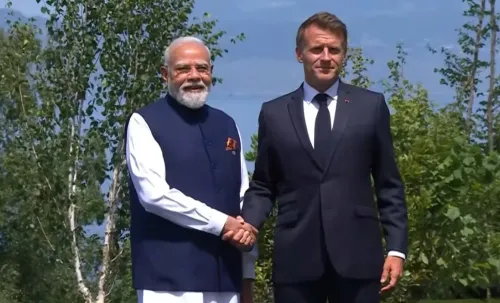
G7 heads of state in attendance included US President Donald Trump , French President Emmanuel Macron , and five other national leaders.
India has been pushing for a larger role in global AI governance, with a focus on multilingual AI and digital public infrastructure.
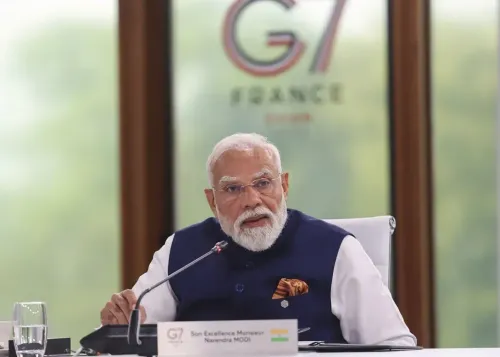
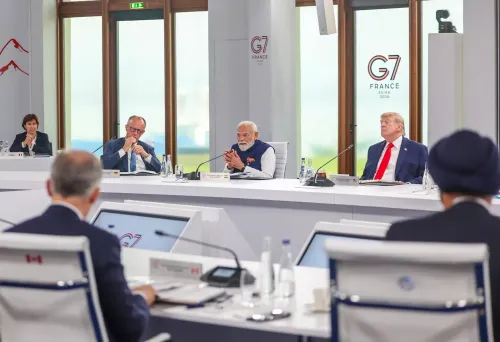
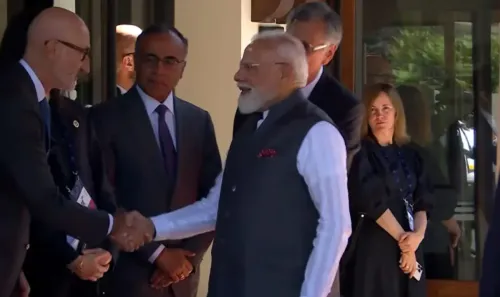
Sarvam AI co-founder Pratyush Kumar joined an elite gathering of global artificial intelligence leaders at the G7 summit in Evian, France on Wednesday, 17 June, making Sarvam the only Indian company represented at a high-level working lunch on the future of AI and the digital economy. The session, held on the sidelines of the G7, brought together heads of state and chief executives of the world's most consequential AI firms.
Who Was at the Table
According to the White House, the technology executives present included OpenAI's Sam Altman, Google DeepMind's Demis Hassabis, Anthropic's Dario Amodei, Meta's Alexandr Wang, Mistral AI's Arthur Mensch, and Cohere's Aidan Gomez — alongside Kumar. On the political side, US President Donald Trump, French President Emmanuel Macron, British Prime Minister Keir Starmer, German Chancellor Friedrich Merz, Italian Prime Minister Giorgia Meloni, Japanese Prime Minister Sanae Takaichi, and Canadian Prime Minister Mark Carney all attended. European Council President Antonio Costa and European Commission President Ursula von der Leyen also participated.
What the Session Signalled
Sarvam AI's inclusion alongside dominant US, European, and Canadian players is widely seen as a marker of India's rising stature in the global AI conversation. The company focuses on multilingual AI systems and digital public infrastructure — areas where India has argued it offers a distinct and scalable model for the developing world. Notably, this is one of the first instances of an Indian AI startup gaining a seat at a G7-level technology policy forum.
Broader G7 Context
The AI working lunch ran parallel to wider G7 deliberations covering economic growth, global security, and developments in the Middle East. The format — pairing elected leaders directly with technology chief executives — underscored how central AI has become to questions of economic competitiveness, national security strategy, and digital governance. Governments across the G7 are grappling with how to regulate AI without stifling innovation, a tension that shaped much of the discussion, according to reports.
India's AI Positioning
New Delhi has been steadily expanding its domestic AI ambitions through both public-sector programmes and private investment. India has also pushed for a greater voice in global AI governance frameworks, particularly around inclusive technology access, multilingual systems, and interoperable digital infrastructure. Kumar's presence at Evian aligns with that diplomatic and strategic push, signalling that Indian AI firms are no longer peripheral observers in these conversations but active participants shaping the agenda.
As AI governance frameworks take shape across major economies, India's ability to place a domestic firm at the G7 table may prove to be an early indicator of the country's longer-term influence in the sector.
Point of View
But the harder question is whether it translates into policy influence. The working lunch format — where AI CEOs sit with heads of state — is increasingly how AI regulation gets pre-shaped before it reaches legislative chambers. India has long argued for a seat in these rooms; having a domestic startup present is a start, but a single invitation is not the same as structural inclusion. New Delhi will need to convert this visibility into durable multilateral engagement — on data governance, compute access, and AI safety standards — if it wants to move from observer to rule-shaper in the global AI order.
NationPress
20 Sept 2026
Frequently Asked Questions
Which Indian company was represented at the G7 AI summit in France?
Sarvam AI was the only Indian company at the G7 AI working lunch in Evian, France on 17 June. Co-founder Pratyush Kumar attended the session alongside chief executives from OpenAI, Google DeepMind, Anthropic, Meta, Mistral AI, and Cohere.
Who attended the G7 AI working lunch in Evian?
The session included G7 leaders — US President Donald Trump, French President Emmanuel Macron, British PM Keir Starmer, German Chancellor Friedrich Merz, Italian PM Giorgia Meloni, Japanese PM Sanae Takaichi, and Canadian PM Mark Carney — as well as European Council and Commission presidents. AI executives from OpenAI, Google DeepMind, Anthropic, Meta, Mistral AI, Cohere, and Sarvam AI also participated, according to the White House.
What is Sarvam AI and why does its G7 inclusion matter?
Sarvam AI is an Indian artificial intelligence company focused on multilingual AI systems and digital public infrastructure. Its inclusion at the G7 is notable because it marks one of the first times an Indian AI startup has participated in a summit-level technology policy forum alongside global industry leaders and heads of state.
What was discussed at the G7 AI session?
The working lunch focused on the future of artificial intelligence and the digital economy. Broader themes included balancing innovation with regulation, economic competitiveness, national security, and digital governance — issues that governments worldwide are actively debating as AI capabilities expand rapidly.
How does this fit into India's broader AI strategy?
India has been scaling domestic AI initiatives across public and private sectors and has sought a larger voice in global AI governance, particularly around inclusive technology, multilingual systems, and digital public infrastructure. Kumar's presence at the G7 is consistent with New Delhi's effort to position India as a key player in the evolving global AI ecosystem.