SCTIMST developing world-class indigenous medical devices, transfers 7 technologies this year
Synopsis
At SCTIMST's Golden Jubilee convocation, Union Minister Dr. Jitendra Singh revealed that the Thiruvananthapuram institute is transferring seven medical technologies to industry this year alone, has treated over 17,000 Ayushman Bharat patients since 2020, and is now collaborating with ISRO on space medicine — signalling India's quiet but ambitious push to build a self-reliant medical innovation ecosystem.
Key Takeaways
SCTIMST is transferring seven medical technologies to industry in the current year as part of its annual innovation pipeline.
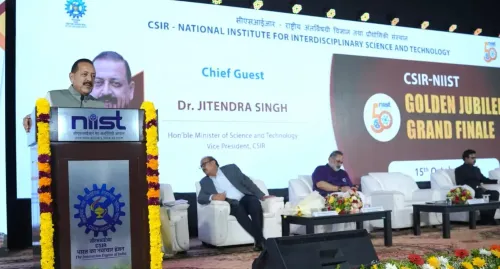
Jitendra Singh addressed the 42nd convocation of SCTIMST on 16 May , coinciding with the institute's Golden Jubilee .
Approval granted for nearly 800 permanent faculty appointments , expected to almost double the institute's working capacity.
SCTIMST doctors have treated over 17,000 patients under the Ayushman Bharat scheme since 2020 .
A new ISRO-SCTIMST collaboration in space medicine is set to open research and clinical opportunities in emerging medical domains.
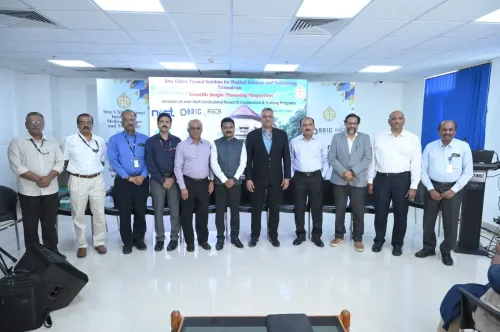
An eight-institution MoU initiative and the upcoming Malini Vasundhara Centre aim to advance precision and non-invasive neurological and oncological care.
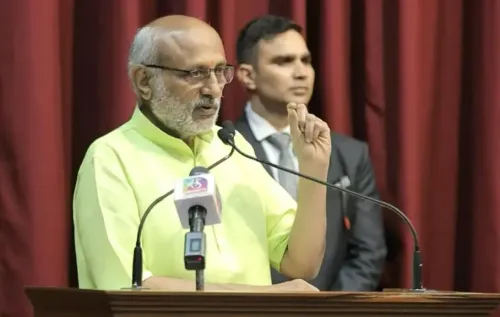
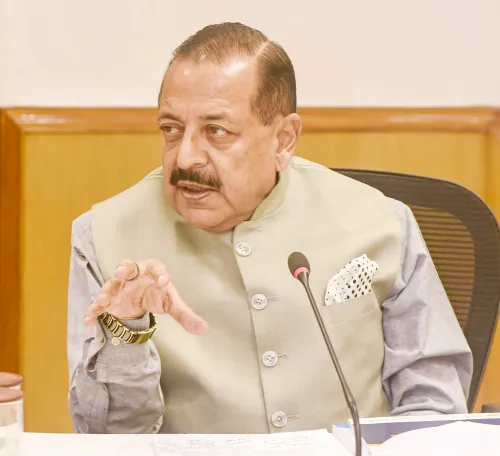
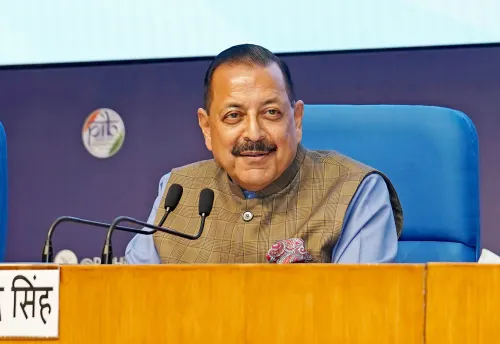
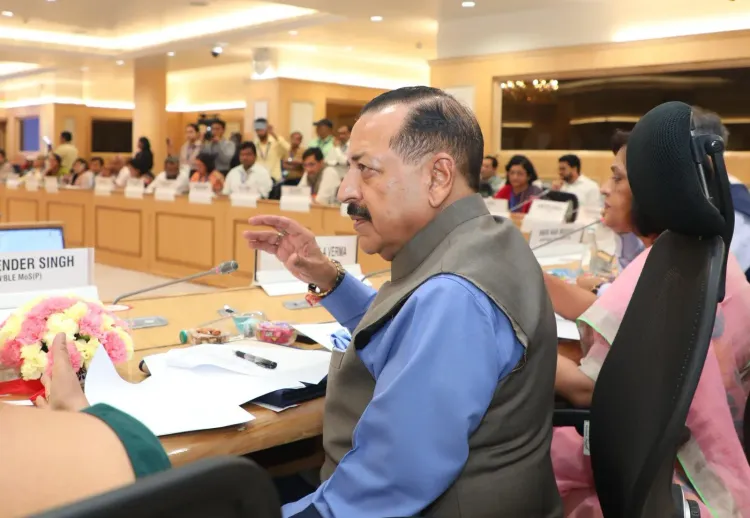
The Sree Chitra Tirunal Institute for Medical Sciences and Technology (SCTIMST), based in Thiruvananthapuram, is emerging as a national leader in indigenous, cost-effective medical device development — transferring multiple cutting-edge technologies to industry every year, including seven technologies slated for transfer in the current year. Union Minister of State (Independent Charge) for Science and Technology and Earth Sciences Dr. Jitendra Singh highlighted this achievement on Saturday, 16 May, while virtually addressing the annual convocation of the institute's 42nd batch.
Key Highlights from the Convocation Address
Speaking on the occasion of SCTIMST's Golden Jubilee celebrations, Dr. Singh lauded the institute's distinctive focus on producing highly effective, affordable, and homegrown medical devices. 'The institute's unique focus on creating highly effective, indigenous and cost-efficient medical devices has made it one of the leading institutions of its kind,' he said. He congratulated graduating students and the institute's leadership on reaching this milestone year.
Expanding Capacity and Infrastructure
Dr. Singh welcomed the approval for the appointment of nearly 800 permanent faculty members, a move he said would almost double the institute's operational capacity. He also acknowledged the Ministry of Health and Family Welfare for establishing the nine-floor Pradhan Mantri Swasthya Suraksha Yojana (PMSSY) block and a four-floor services block at the campus. According to the minister, these additions would position SCTIMST as one of India's largest centres for neurosurgery and cardiac sciences.
Patient Care and Ayushman Bharat
The institute's doctors have treated over 17,000 patients under the Ayushman Bharat scheme since 2020 — a figure Dr. Singh specifically cited as evidence of SCTIMST's commitment to inclusive healthcare delivery. This comes amid a broader national push to expand quality tertiary care access to economically vulnerable populations.
Malini Vasundhara Centre and Research Collaborations
Dr. Singh referred to the foundation stone laid by Prime Minister Narendra Modi for the Malini Vasundhara Centre, describing it as a significant step toward precision-based and non-invasive treatment for neurological and oncological diseases. He also highlighted an eight-institution MoU initiative that brings together leading national institutions to build a synergistic research ecosystem, strengthening interdisciplinary innovation across healthcare and science.
ISRO-SCTIMST Partnership in Space Medicine
Notably, the minister praised a collaboration between the Indian Space Research Organisation (ISRO) and SCTIMST in the domain of space medicine. He stated that this partnership would open new avenues for research, innovation, and clinical practice in emerging medical science fields — a frontier that is gaining strategic importance as India accelerates its human spaceflight programme.
As SCTIMST marks its 50th year, the institute's expanding research portfolio, infrastructure upgrades, and institutional partnerships signal a broader ambition to become a global reference point for affordable medical innovation from India.
Point of View
Where import dependence remains stubbornly high. But transferring technologies to industry is only half the equation — the real measure is whether those devices reach patients at scale and at the promised cost. The ISRO collaboration is intriguing but early; space medicine is a niche that needs a clear patient-benefit pathway to justify the institutional bandwidth. The 800-faculty appointment approval is welcome, yet India's public health institutions have a long history of sanctioned posts that take years to fill. The Golden Jubilee is a moment to celebrate, but also to ask whether SCTIMST's output is being absorbed by the market fast enough to matter for public health outcomes.
NationPress
7 Oct 2026
Frequently Asked Questions
What is SCTIMST and why is it significant?
The Sree Chitra Tirunal Institute for Medical Sciences and Technology (SCTIMST), based in Thiruvananthapuram, is a premier national institute focused on medical sciences, technology development, and advanced clinical care. It is particularly noted for developing cost-effective, indigenous medical devices and transferring them to industry, making it a key institution in India's push for self-reliance in healthcare technology.
How many medical technologies is SCTIMST transferring to industry this year?
SCTIMST is scheduled to transfer seven technologies to industry in the current year, according to Union Minister Dr. Jitendra Singh. The institute transfers multiple technologies annually as part of its ongoing innovation and commercialisation mandate.
What is the Malini Vasundhara Centre at SCTIMST?
The Malini Vasundhara Centre is a new facility whose foundation stone was laid by Prime Minister Narendra Modi. It is designed to advance precision-based and non-invasive treatment for neurological and oncological diseases, further strengthening SCTIMST's specialisation in neurosurgery and cardiac sciences.
How is ISRO involved with SCTIMST?
ISRO and SCTIMST have entered into a collaboration in the field of space medicine. According to Minister Dr. Jitendra Singh, this partnership is expected to create new opportunities for research, innovation, and clinical practice in emerging medical science domains, particularly relevant as India advances its human spaceflight ambitions.
How many patients has SCTIMST treated under Ayushman Bharat?
SCTIMST's doctors have treated over 17,000 patients under the Ayushman Bharat scheme since 2020, reflecting the institute's role in delivering advanced tertiary care to economically vulnerable populations under India's flagship health insurance programme.