SEBI chief warns investors against finfluencers as markets hit ₹472 lakh crore

Synopsis
India's market cap has quadrupled to ₹472 lakh crore in a decade — but SEBI Chairman Tuhin Kanta Pandey says that scale has a shadow side. At the launch of Project Jagruk, he singled out finfluencers pushing anonymous tips and unrealistic returns as a growing threat to retail investors, signalling that financial literacy is now as central to SEBI's agenda as enforcement.
Key Takeaways
SEBI Chairman Tuhin Kanta Pandey warned investors against anonymous finfluencer tips and unrealistic return claims at the Project Jagruk launch on 5 October 2026 .
India's market capitalisation has quadrupled to approximately ₹472 lakh crore over the past decade.
FPI assets grew more than three-fold, from ₹22 lakh crore to ₹78 lakh crore .
India was the first market globally to implement T+1 settlement ; the IPO listing timeline has been cut from T+6 to T+3 working days.
SEBI has broadened market access through SME IPO platforms , REITs , InvITs , online bond platforms, and green and municipal bonds.
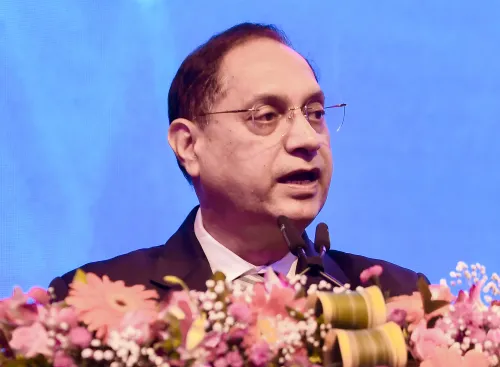
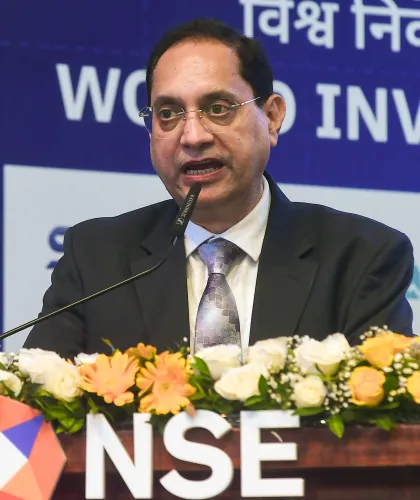
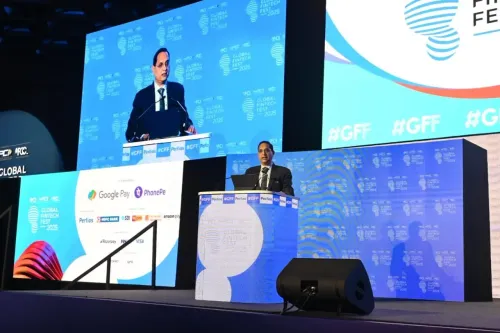
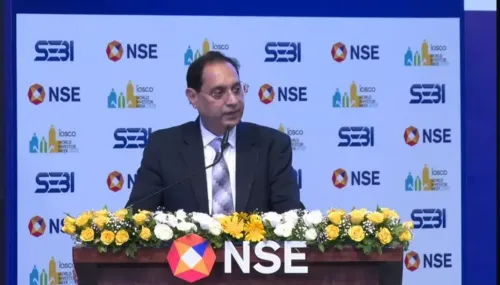
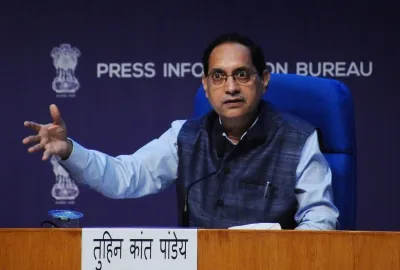
Securities and Exchange Board of India (SEBI) Chairman Tuhin Kanta Pandey on Monday, 5 October 2026, cautioned retail investors and traders to steer clear of anonymous tips peddled by social media financial influencers — commonly called 'finfluencers' — and to be wary of unrealistic return promises, as India's capital markets reach unprecedented scale and depth.
Pandey was addressing the launch of SEBI's Project Jagruk at Panjab University, a financial literacy initiative aimed at broadening investor awareness across the country.
A Decade of Market Deepening
The SEBI chairman highlighted that India's market capitalisation has quadrupled to approximately ₹472 lakh crore over the past decade, reflecting a structural shift in how Indian households engage with financial markets. Foreign portfolio investor (FPI) assets, he noted, have surged from ₹22 lakh crore to ₹78 lakh crore over the same period — a more than three-fold jump.
'Households are also directing larger amounts of savings into securities market instruments,' Pandey said, pointing to systematic investment plans (SIPs) as one of the most accessible entry points for retail investors. The regulator has rationalised mutual fund scheme categories, capped costs, and introduced smaller-ticket SIPs to widen participation, he added.
The Finfluencer Risk
Even as markets grow more inclusive, Pandey flagged a significant hazard accompanying that growth: the proliferation of unverified financial advice online. Anonymous finfluencers — individuals with large social media followings who offer investment tips without regulatory oversight — have become a rising concern for SEBI. The chairman urged investors to avoid acting on such anonymous tips or chasing unrealistic return claims that frequently circulate on digital platforms.
This caution is consistent with SEBI's broader enforcement posture in recent years, which has included show-cause notices to several unregistered investment advisers operating through YouTube channels and Telegram groups. Notably, the regulator has been working on formalising guidelines around finfluencer activity, and Pandey's remarks signal that investor education — not just enforcement — is now central to that strategy.
Structural Reforms Highlighted
Pandey outlined a series of market infrastructure milestones under SEBI's watch. India was the first market globally to test T+1 settlement and among the first to allow interoperability between clearing corporations. The IPO listing timeline has been compressed from T+6 to T+3 working days, improving capital access for issuers and liquidity for investors.
He also cited the introduction of online bond platforms to democratise access to corporate bonds, along with the launch of green, sustainable, and municipal bonds as fresh fundraising channels. Products such as Real Estate Investment Trusts (REITs), Infrastructure Investment Trusts (InvITs), and commodity derivatives have further expanded the toolkit available to investors and businesses.
Broadening Market Access
The regulator has also worked to onboard new categories of participants, including investment advisers, ESG rating providers, and financing channels for startups and infrastructure projects. A simplified FPI framework with streamlined digital onboarding has improved the ease of doing business for overseas investors, Pandey said.
Access has also widened through SME IPO platforms, bringing smaller companies into the public markets ecosystem. On cybersecurity, he noted that SEBI has strengthened reporting requirements in step with rising digitisation and market participation.
'Over the last decade, India's capital markets have become deeper, broader and more accessible,' Pandey said. 'The framework has evolved to make these products accessible to a wider segment of investors.'
With Project Jagruk now formally launched, SEBI's next challenge will be matching the pace of financial innovation with investor literacy — particularly as finfluencer-driven misinformation continues to outrun regulatory guardrails.
Point of View
But it has also created a captive audience for unregistered advisers hiding behind anonymous handles. SEBI's enforcement record on finfluencers has been patchy so far — notices have been issued, but convictions and deterrence remain limited. Project Jagruk is a welcome initiative, but financial literacy campaigns historically lag behind the speed and scale of digital misinformation. The regulator will need hard rules with enforceable penalties — not just awareness drives — to protect the 15 crore-plus investors who have entered markets over the last decade.
NationPress
5 Oct 2026
Frequently Asked Questions
What is SEBI's warning about finfluencers?
SEBI Chairman Tuhin Kanta Pandey cautioned retail investors on 5 October 2026 to avoid acting on anonymous tips from social media financial influencers ('finfluencers') and to disregard unrealistic return promises. The warning came at the launch of Project Jagruk, SEBI's financial literacy initiative, at Panjab University.
What is SEBI's Project Jagruk?
Project Jagruk is a SEBI-led financial literacy initiative aimed at broadening investor awareness across India. It was formally launched by Chairman Tuhin Kanta Pandey at Panjab University on 5 October 2026, with a focus on educating retail investors about market risks, including finfluencer misinformation.
How big are India's capital markets today?
India's market capitalisation has quadrupled to approximately ₹472 lakh crore over the past decade, according to SEBI Chairman Pandey. Foreign portfolio investor assets have also grown from ₹22 lakh crore to ₹78 lakh crore over the same period.
What market reforms did SEBI introduce over the last decade?
SEBI introduced T+1 settlement — a global first — and cut IPO listing timelines from T+6 to T+3 working days. It also launched online bond platforms, REITs, InvITs, SME IPO platforms, and green and municipal bonds, while rationalising mutual fund categories and capping costs to widen retail participation.
Why are finfluencers a concern for retail investors in India?
Finfluencers — social media personalities who dispense investment advice — often operate without SEBI registration or accountability, making their tips unreliable and potentially harmful to retail investors. SEBI has previously issued notices to unregistered advisers operating via YouTube and Telegram, but Pandey's remarks suggest investor education is now equally central to the regulator's response strategy.