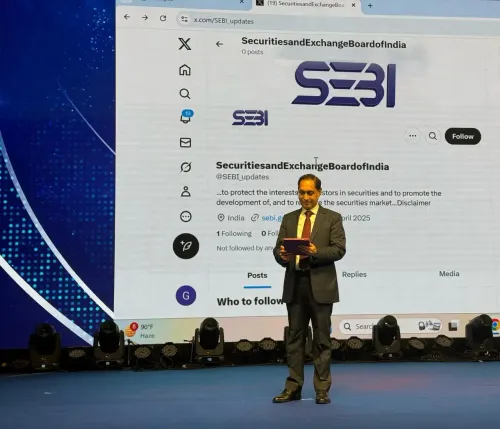
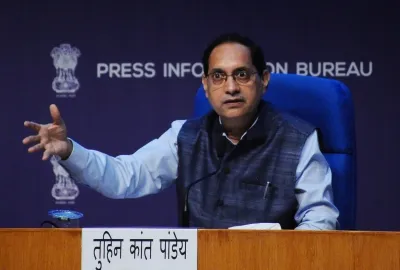
SEBI chief Tuhin Kanta Pandey flags capital formation, investor protection as core priorities
Synopsis
SEBI Chairman Tuhin Kanta Pandey told a Kolkata business forum that India's capital markets must be resilient, not just efficient — and that investor protection is as critical as capital formation. With West Bengal's investor base swelling from 12 lakh to over 90 lakh since FY15, the regulator is backing words with reforms: shorter IPO timelines, lower face-value debt, and relaxed merchant banking rules.
Key Takeaways
SEBI Chairman Tuhin Kanta Pandey spoke at the Bharat Chamber of Commerce Investors Forum in Kolkata on 31 October 2026 .
Indian companies raise on average more than ₹10 lakh crore annually through equity and debt issuances, according to Pandey.
West Bengal's securities market investor base grew from around 12 lakh in FY15 to over 90 lakh , with 36% being investors under age 30 .
Over 40 MSMEs from West Bengal have raised more than ₹1,400 crore via SME IPOs.
SEBI reforms include streamlined IPO processes, shorter rights issue timelines, lower face-value debt securities, and relaxed merchant banking norms for private placements.
Pandey stressed that markets must remain resilient during stress periods, not just efficient in normal conditions.
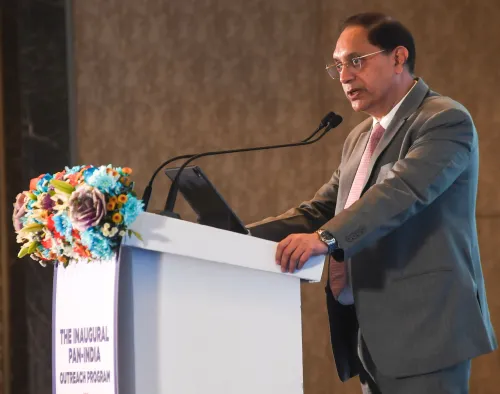
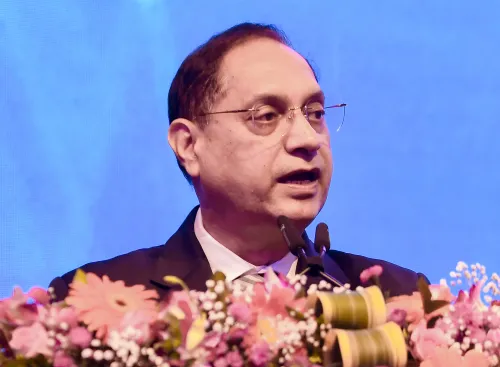
Securities and Exchange Board of India (SEBI) Chairman Tuhin Kanta Pandey on Saturday, 31 October 2026, reaffirmed that the regulator's central focus remains on making India's capital markets more accessible, efficient, and resilient — with facilitating capital formation, easing compliance burdens, and strengthening investor protection at the heart of its agenda.
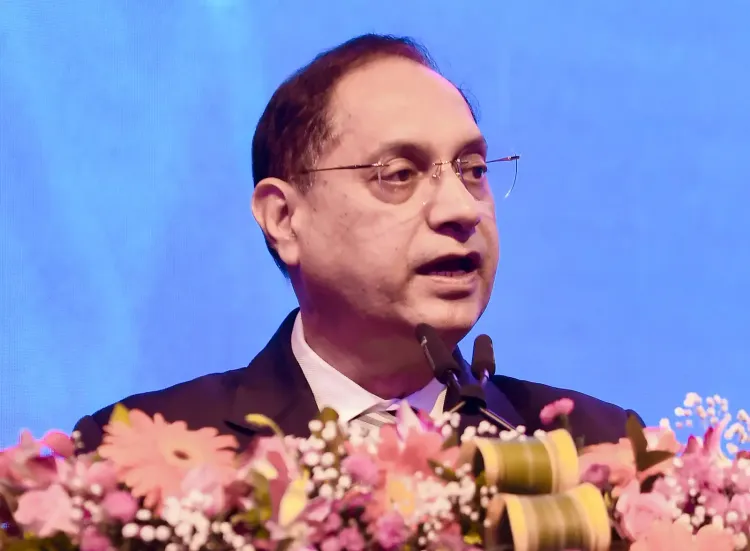
Pandey was speaking at the Bharat Chamber of Commerce Investors Forum in Kolkata, where he outlined SEBI's reform priorities and highlighted the broadening participation of retail investors in Indian securities markets.
Market Growth Over the Past Decade
The SEBI chief pointed to strong market expansion over the last ten years, noting that companies have raised on average more than ₹10 lakh crore annually through equity and debt issuances. Market capitalisation, he said, has grown significantly over this period, reflecting deeper corporate engagement with public markets.
“Building world-class capital markets is not merely about achieving higher market capitalisation, larger trading volumes, or faster transactions. The real measure is how effectively markets connect savings with productive investment, support businesses in raising capital, and create opportunities for investors to participate in economic growth,” Pandey said.
Investor Protection: An Equal Priority
Pandey was emphatic that growth in market depth must be matched by robust investor safeguards. “While we continue to strengthen markets for businesses, an equally important priority is investor protection. World-class markets must be not only efficient during normal times, but also resilient during periods of stress,” he stated.
He underlined that financial education remains a critical pillar, arguing that an informed investor is the first line of defence against market misconduct and mis-selling.
West Bengal's Growing Capital Market Footprint
Addressing the Kolkata audience specifically, Pandey highlighted West Bengal's expanding role in India's securities ecosystem. The number of investors from the state in the securities market rose from around 12 lakh in FY15 to over 90 lakh currently, with approximately 36% of these being young investors under the age of 30.
He added that 379 listed companies have registered offices in West Bengal, and over 40 MSMEs from the state have tapped capital markets, raising more than ₹1,400 crore through SME IPOs. This comes amid a broader national trend of smaller businesses increasingly accessing public markets for growth capital.
Key Regulatory Reforms Underway
Pandey outlined several measures SEBI has introduced to reduce compliance friction and lower the cost of fundraising. These include streamlining IPO processes, shortening timelines for rights issues, rationalising listing requirements for large issuers, and reducing listing timelines for public issues.
Additional steps include permitting certain employee stock options after listing under prescribed conditions, enabling debt securities with lower face values, and relaxing mandatory merchant banking requirements for eligible issuers undertaking private placements. Collectively, these reforms signal a push to make capital-raising more cost-effective without diluting market integrity.
What This Means Going Forward
Pandey's remarks arrive as SEBI navigates a period of heightened scrutiny — both on market surveillance and on its own governance framework. His emphasis on resilience during stress periods is notable given recent volatility in Indian equities. The regulator is expected to issue further operational guidelines on several of the announced reforms in the coming weeks.
Point of View
Part reform agenda. SEBI is under pressure on multiple fronts: criticism over its handling of index derivatives regulation, questions about conflicts of interest at the top, and persistent retail investor complaints about algo trading. The pivot toward 'resilience during stress' language is not accidental; it signals the regulator is aware that market depth without protective architecture creates systemic risk. The West Bengal data — from 12 lakh to 90 lakh investors in a decade — is striking, but it also raises a question mainstream coverage ignores: are these new investors adequately informed, or are they entering a market whose complexity outpaces the financial literacy infrastructure SEBI itself acknowledges is still being built?
NationPress
31 Oct 2026
Frequently Asked Questions
What did SEBI Chairman Tuhin Kanta Pandey say at the Kolkata forum?
Pandey reaffirmed that SEBI's priorities are facilitating capital formation, improving ease of doing business, and strengthening investor protection. He noted that Indian companies raise over ₹10 lakh crore annually and that markets must be resilient, not just efficient during normal times.
How has West Bengal's participation in capital markets grown?
West Bengal's investor base in the securities market grew from around 12 lakh in FY15 to over 90 lakh, with approximately 36% being young investors under the age of 30. Over 40 MSMEs from the state have also raised more than ₹1,400 crore through SME IPOs.
What regulatory reforms has SEBI introduced to ease fundraising?
SEBI has streamlined IPO processes, shortened rights issue timelines, rationalised listing requirements for large issuers, enabled lower face-value debt securities, and relaxed mandatory merchant banking norms for eligible private placement issuers. These steps aim to reduce compliance costs without compromising market integrity.
Why does SEBI emphasise investor protection alongside capital market growth?
Pandey argued that world-class markets must be resilient during periods of stress, not merely efficient in calm conditions. He stressed that financial education and informed investors serve as the first line of defence against market misconduct.
What is the significance of SEBI's SME IPO push for smaller businesses?
More than 40 MSMEs from West Bengal alone have accessed capital markets through SME IPOs, raising over ₹1,400 crore. This reflects a broader national trend of smaller enterprises using public markets for growth funding, supported by SEBI's efforts to lower compliance barriers.