SEBI mulls third-party IPO fund monitoring; shell firms pose market risk, says Tuhin Kanta Pandey

Synopsis
SEBI Chairman Tuhin Kanta Pandey has put shell-like listed companies on notice while unveiling plans to make third-party IPO fund monitoring mandatory for all public issues — not just those above ₹100 crore. With stock exchanges set to fine non-cooperating firms ₹50,000 per instance and an AI-based default-detection tool in the works, India’s capital markets regulator is signalling a significant tightening of its post-listing surveillance architecture.
Key Takeaways
SEBI Chairman Tuhin Kanta Pandey warned that some listed companies with little or no economic activity function like shell companies and “add risk to the market.” SEBI is preparing a framework to make third-party IPO fund monitoring mandatory for all public issues , removing the existing ₹100 crore fresh-issue threshold.
Stock exchanges may fine non-cooperating companies ₹50,000 per instance ; continued default could lead to depositories freezing promoters’ demat accounts .
SEBI is piloting an AI-based surveillance tool to detect early signs of corporate debt defaults across debenture trustees, exchanges, depositories, and credit rating agencies.
The SME IPO framework , Innovators Growth Platform , and main-board IPO listing norms are all under simultaneous review.
All proposals remain in the open consultation phase and have not yet been formalised as rules.
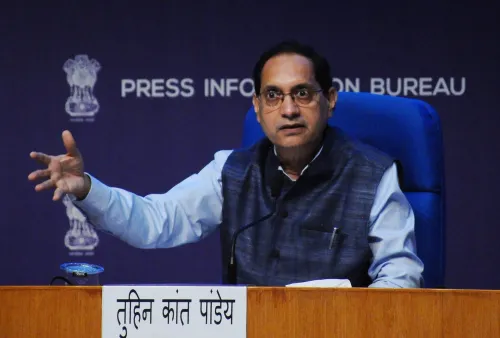
The Securities and Exchange Board of India (SEBI) Chairman Tuhin Kanta Pandey on 29 October 2026 outlined a series of measures to strengthen oversight of listed companies and capital-raising processes, warning that some listed entities with little or no real economic activity function like shell companies and “add risk to the market.”
Third-Party Monitoring of IPO Proceeds
Speaking at a panel discussion in Mumbai, Pandey said SEBI is preparing a framework under which third-party monitoring agencies would independently verify whether funds raised through initial public offerings (IPOs) are deployed for purposes disclosed in offer documents. “Public capital brings public responsibility,” he said, stressing that companies must remain accountable for how investors’ funds are utilised.
The remarks follow a SEBI consultation paper floated earlier this month proposing that monitoring agencies be made mandatory for all public issues, irrespective of issue size, and excluding only the offer-for-sale component. Under the current framework, IPO proceeds must be monitored by a SEBI-registered credit rating agency only when the fresh issue size exceeds ₹100 crore.
Penalties for Non-Compliance
The proposed framework gives stock exchanges the power to levy a fine of ₹50,000 per reported instance of non-cooperation with a monitoring agency. Repeated non-compliance could trigger depositories freezing promoters’ demat accounts. Companies flagged for non-cooperation would also be barred from terminating the monitoring agency’s agreement or appointing a replacement until the default is resolved. The proposals remain in the open consultation phase and have not yet been notified as formal rules.
Debenture Trustees and AI-Based Surveillance
Pandey said SEBI is simultaneously reviewing the governance framework for debenture trustees, with emphasis on tighter oversight. Notably, SEBI is also piloting an AI-based tool designed to monitor disclosures by debenture trustees, stock exchanges, depositories, and credit rating agencies. The tool is intended to flag early warning signs of corporate debt defaults before they escalate into systemic problems.
Broader Reforms Under Review
Beyond IPOs, SEBI is considering a revamp of the framework for main-board IPOs and follow-on public offers, along with a comprehensive review of listing and disclosure obligations. The regulator is also examining the SME IPO framework and the Innovators Growth Platform — which caters to new-age companies — to improve public capital access for high-growth businesses.
Why It Matters
The push for stricter IPO fund-use monitoring comes against a backdrop of heightened retail investor participation in Indian capital markets and several high-profile post-listing controversies over fund deployment. Critics have long argued that weak enforcement of utilisation norms enables promoters to divert proceeds away from stated objectives. SEBI’s move to extend mandatory monitoring to all issue sizes — not just those above ₹100 crore — addresses a structural gap that smaller IPOs have historically exploited. All proposals will be finalised following the conclusion of the consultation process.
Point of View
And the regulator’s track record on post-listing accountability has been patchy. The ₹50,000 fine per non-cooperation instance is a starting point, yet for a promoter running a shell-like entity, it is not obviously punitive. The demat freeze provision is the sharper tool, but its constitutionality and ease of invocation will face legal challenge. SEBI’s simultaneous AI-surveillance pilot signals a welcome shift toward real-time oversight — whether the institution has the bandwidth to act on those flags is the question mainstream coverage is not asking.
NationPress
29 Oct 2026
Frequently Asked Questions
What is SEBI’s proposed third-party IPO fund monitoring framework?
SEBI is proposing to make independent third-party monitoring agencies mandatory for all IPOs, regardless of issue size, to verify that funds raised are used for the purposes stated in offer documents. Currently, such monitoring is required only when a fresh issue exceeds ₹100 crore.
What penalties are proposed for companies that do not cooperate with monitoring agencies?
Stock exchanges would be empowered to fine non-cooperating companies ₹50,000 for each reported instance of non-compliance. If the default continues, depositories could freeze the promoters’ demat accounts, and the company would be barred from replacing the monitoring agency until the default is cleared.
What did SEBI Chairman Tuhin Kanta Pandey say about shell companies?
Pandey said that some listed companies with little or no real economic activity function like shell companies and “add risk to the market.” He stressed that public capital brings public responsibility and that companies must be held accountable for how investors’ money is used.
What is the AI-based tool SEBI is piloting?
SEBI is testing an artificial intelligence tool designed to monitor disclosures by debenture trustees, stock exchanges, depositories, and credit rating agencies. The tool is meant to flag early warning signs of corporate debt defaults before they grow into larger problems.
Are these SEBI proposals already in effect?
No. All proposals, including mandatory third-party monitoring and the revised penalty framework, are currently in the open consultation phase and have not been notified as formal rules. Final norms will be issued after the consultation process concludes.