Sensex, Nifty fall for 3rd straight day as crude oil rebound stokes inflation fears
Synopsis
Indian equities logged a third straight day of losses on 30 September as surging crude oil prices and stalled US-Iran diplomacy rattled investor confidence. With Nifty options data showing heavy Call-side resistance at 23,000 and key support at 22,500 under watch, the next directional move hinges squarely on global oil and geopolitical developments.
Key Takeaways
Sensex fell 48.78 points to close at 72,480.29 on 30 September — its third consecutive losing session.
Nifty50 declined 95.75 points to settle at 22,620.45 ; key support at 22,500 , resistance at 22,800 .
Apollo Hospitals , Max Healthcare , and BSE were among the top Nifty losers; Nifty Pharma and Nifty Metal led sectoral declines.
Broader markets held up: Nifty MidCap 100 edged up 0.02% ; Nifty SmallCap gained 0.27% .
Crude oil rebound and fading US-Iran deal hopes were the primary triggers for the risk-off mood.
Call OI at 17.11 crore versus Put OI at 10.96 crore signals elevated overhead resistance near the 23,000 strike.
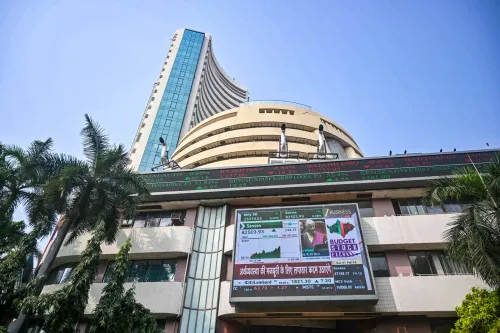
The BSE Sensex and NSE Nifty50 extended their losing streak to a third consecutive session on Wednesday, 30 September, as a sharp rebound in crude oil prices revived inflationary concerns and weighed on investor sentiment, compounded by fading hopes of a diplomatic breakthrough in US-Iran talks. The benchmark indices closed in the red across healthcare, pharma, and metal sectors, though broader markets showed pockets of resilience.
Benchmark Index Performance
The Sensex slipped 48.78 points, or 0.07%, to close at 72,480.29, while the Nifty50 declined a steeper 95.75 points, or 0.42%, to settle at 22,620.45. The divergence between the two indices reflected concentrated selling in Nifty-heavy healthcare and pharmaceutical counters rather than broad-based capitulation.
Key Support and Resistance Levels
Market analysts flagged the 22,600–22,550 band as the immediate support zone for the Nifty. According to technical experts, a sustained break below 22,500 could expose the index to the 22,300 level. On the upside, 22,800 is seen as the nearest resistance.
Options data pointed to a skewed market structure. 'Call OI stands at around 17.11 crore against Put OI of around 10.96 crore, indicating stronger Call-side positioning. Significant Call OI is visible around the 22,700–23,000 strikes, with 23,000 carrying the highest Call OI, keeping overhead resistance elevated,' market watchers noted.
Sectors in Focus: Healthcare Leads Losses
Selling pressure was most acute in healthcare and pharmaceutical stocks. Apollo Hospitals Enterprise, Max Healthcare Institute, and BSE were among the top Nifty losers of the session. Nifty Healthcare, Nifty Pharma, Nifty Consumer Durables, and Nifty Metal were the worst-performing sectoral indices on the day.
In contrast, Nifty Realty, Nifty Private Bank, and Nifty Media ended with gains, supported by stock-specific buying interest that provided some cushion to the broader market.
Mid- and Small-Cap Resilience
The broader market diverged from the headline indices. The Nifty MidCap 100 edged up 0.02%, while the Nifty SmallCap index gained 0.27% — a sign that retail and domestic institutional flows remained relatively steady even as large-cap sentiment soured.
Macro Outlook and What to Watch
Analysts cautioned that elevated crude oil prices risk reigniting inflationary pressures, which could squeeze corporate margins and weigh on economic growth projections. 'Market participants are likely to remain selective, favouring fundamentally strong businesses with resilient earnings profiles until there is greater clarity on the macroeconomic outlook,' analysts said.
With the US-Iran diplomatic track showing little forward movement, crude price volatility is expected to persist in the near term. Investors will closely watch global oil benchmarks, upcoming inflation data, and any fresh geopolitical signals for directional cues.
Point of View
But three consecutive down sessions driven by crude and geopolitics reveal a market that has lost its near-term catalyst. The heavier Nifty drop — nearly double the Sensex in percentage terms — points to concentrated vulnerability in healthcare and pharma, sectors that had been relative safe havens. More telling is the options skew: Call OI nearly 56% heavier than Put OI signals that institutional players are hedging upside rather than betting on a recovery. Until crude stabilises or US-Iran talks produce a concrete outcome, the path of least resistance for Nifty remains toward the 22,300 support, not a breakout above 23,000.
NationPress
30 Sept 2026
Frequently Asked Questions
Why did the Sensex and Nifty fall for a third straight day on 30 September?
The Sensex and Nifty extended their losing streak to three sessions on 30 September primarily because a rebound in crude oil prices stoked inflation concerns and investor sentiment was further dampened by fading prospects of a US-Iran diplomatic breakthrough. Healthcare and pharmaceutical stocks bore the brunt of the selling.
What are the key support and resistance levels for Nifty?
According to market analysts, the immediate support zone for the Nifty is at 22,600–22,550, with a critical level at 22,500 — a sustained break below which could pull the index toward 22,300. On the upside, 22,800 is the nearest resistance, with heavy Call OI keeping the 23,000 zone as a significant overhead barrier.
Which sectors and stocks fell the most?
Nifty Healthcare, Nifty Pharma, Nifty Consumer Durables, and Nifty Metal were the worst-performing sectoral indices. Apollo Hospitals Enterprise, Max Healthcare Institute, and BSE were among the top individual losers in the Nifty index.
Did the broader market also fall?
No — the broader market showed relative resilience. The Nifty MidCap 100 edged up 0.02% and the Nifty SmallCap index gained 0.27%, suggesting domestic flows held steady even as large-cap sentiment weakened.
What should investors watch going forward?
Analysts advise watching global crude oil price movements, any developments in US-Iran diplomatic talks, and upcoming macroeconomic data for directional cues. They recommend staying selective and favouring businesses with strong earnings visibility until the macro outlook becomes clearer.