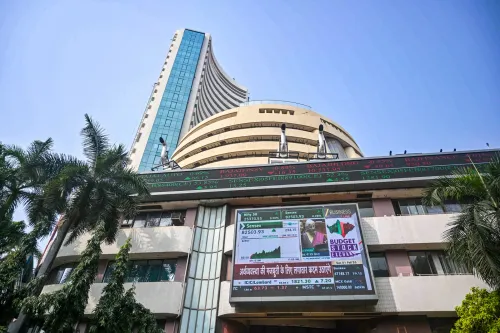
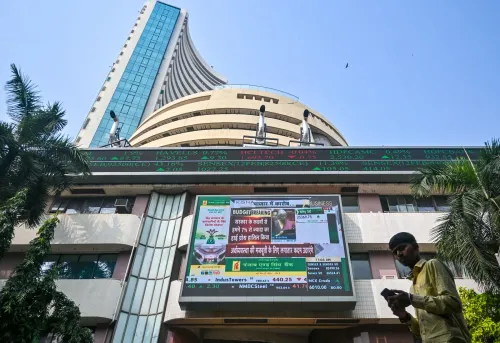
Sensex, Nifty post weekly gains as crude eases and rupee firms up

Synopsis
Indian markets delivered solid weekly gains despite a Friday stumble triggered by US-Iran hostilities. Midcap and smallcap indices stole the show with gains above 3.5–4%, while easing crude and a firmer rupee kept the broader mood constructive — though geopolitical risk in West Asia remains an ever-present wildcard.
Key Takeaways
Sensex advanced 0.54% for the week, closing Friday at 77,328 — down 516 points on the day.
Nifty 50 gained 0.76% for the week, ending at 24,180 after a 0.60% Friday decline.
Nifty Midcap100 surged 3.49% and Nifty Smallcap100 gained 4.05% during the week.
Brent crude fell over 3% to below $95 per barrel ; domestic crude futures slipped below ₹9,000 .
Friday's selloff was triggered by US-Iran military exchange, though both sides signalled a return to normalcy.
Upcoming India and US inflation data will be closely watched for cues on RBI rate trajectory.
Indian equity benchmarks closed the week on a positive note, with Nifty 50 gaining 0.76% and Sensex advancing 0.54% over the five sessions ending 9 May, buoyed by easing crude oil prices, a firmer rupee, and softer 10-year bond yields. Despite lingering geopolitical tensions, the broader macro improvement drove a constructive shift in market sentiment through much of the week.
Weekly Performance at a Glance
Sensex closed Friday at 77,328, down 516 points or 0.66% on the final trading day, while Nifty 50 ended at 24,180, slipping 0.60% in the last session. However, the weekly trajectory remained firmly positive. Notably, midcap and smallcap indices significantly outperformed the benchmarks — Nifty Midcap100 surged 3.49% and Nifty Smallcap100 gained 4.05% during the week, reflecting broad-based risk appetite beyond large-caps.
Sectors including autos, defence, realty, and pharma witnessed strong buying interest, further underlining the breadth of the rally.
What Drove the Gains
According to market analysts, the improvement in macro conditions shifted sentiment from early-week caution to a more constructive stance, allowing markets to absorb profit-booking triggered by fresh geopolitical headlines toward the end of the week. Investor confidence was further supported by favourable state election outcomes and Q4 earnings that came in better than cautious expectations.
Brent crude oil declined over 3% in international markets to trade below the $95-per-barrel mark, while domestic crude futures slipped below the ₹9,000 level, reversing much of the previous session's escalation-driven rebound. This easing in energy costs was a key tailwind for commodity-sensitive sectors and overall corporate margin expectations.
Geopolitical Tensions Weigh on Friday's Session
Markets ended lower on the final trading day after the United States and Iran exchanged fire, prompting investors to reassess expectations of a near-term peace deal and rekindling energy supply chain concerns. Iran claimed the US had violated a ceasefire agreement; however, US President Donald Trump reaffirmed that the ceasefire remained in effect, and Iran subsequently said the situation had returned to normal. The episode underscored how quickly geopolitical flare-ups can translate into market volatility, particularly for energy and commodity-linked stocks.
Key Levels and What to Watch
Market participants noted that Nifty 50 faces an immediate resistance zone at 24,250–24,300, while the 24,100–24,000 band remains a crucial support area. For Bank Nifty, a sustained move above 55,500 could extend the recovery toward 55,800–56,000, strengthening near-term momentum.
Investors are closely watching upcoming India and US inflation data, along with domestic credit growth trends, as these will influence Reserve Bank of India (RBI) rate expectations and corporate margin outlooks. Analysts cautioned that any renewed escalation in West Asia remains a key risk, particularly for commodity-sensitive sectors, even as stable crude prices and rupee recovery offer near-term support.
Point of View
Inflation, and the RBI's rate calculus. With both US and India inflation prints due, the next fortnight could reset rate expectations in either direction — and markets are priced for the optimistic scenario.
NationPress
24 Sept 2026
Frequently Asked Questions
Why did Sensex and Nifty rise this week?
Sensex gained 0.54% and Nifty rose 0.76% for the week ended 9 May, driven by easing crude oil prices, a firmer rupee, softer bond yields, better-than-expected Q4 earnings, and favourable state election outcomes. Improved macro conditions shifted investor sentiment from caution to a more constructive stance.
Why did markets fall on Friday, 9 May?
Markets ended lower on Friday after the United States and Iran exchanged fire, rekindling energy supply chain concerns and prompting investors to reassess prospects of a near-term peace deal. Sensex fell 516 points and Nifty slipped 0.60% on the day, though both sides later signalled a return to normalcy.
Which sectors and indices outperformed this week?
Nifty Midcap100 surged 3.49% and Nifty Smallcap100 gained 4.05%, significantly outpacing the benchmark indices. Sectors such as autos, defence, realty, and pharma saw strong buying interest during the week.
What are the key levels to watch for Nifty next week?
Nifty 50 faces immediate resistance at 24,250–24,300, while the 24,100–24,000 band is seen as a crucial support zone. For Bank Nifty, a sustained move above 55,500 could open the path toward 55,800–56,000.
What macroeconomic data will drive markets in the near term?
Investors are closely tracking India and US inflation data, along with domestic credit growth trends, as these will shape RBI rate expectations and corporate margin outlooks. Any renewed escalation in West Asia remains a key downside risk for commodity-sensitive sectors.