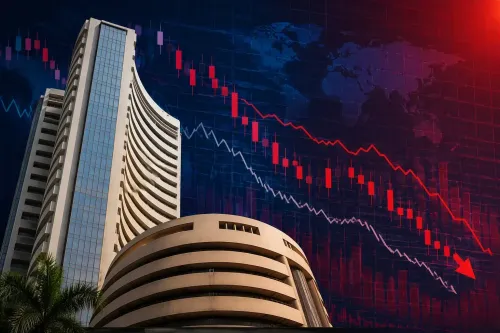
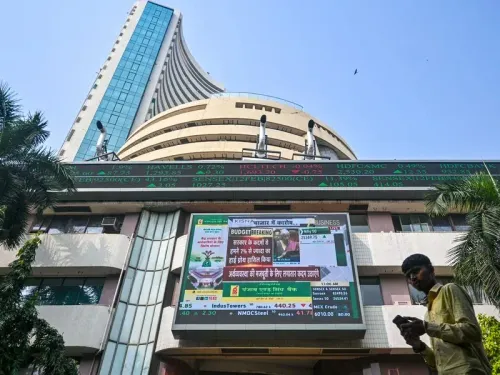
Sensex falls 571 points to 71,909 as energy costs, bond yield fears grip markets

Synopsis
Indian equities extended a losing streak to four straight sessions on 1 October, with the Sensex shedding 571 points and the Nifty slipping below a critical 200-SMA level. Rising energy prices, volatile bond yields, and rate-hike fears triggered broad-based selling — auto, metal, media, and FMCG bore the brunt, while IT alone offered any shelter.
Key Takeaways
Sensex fell 570.59 points ( 0.79% ) to close at 71,909.70 on 1 October 2026 .
Nifty50 dropped 198.50 points ( 0.88% ) to settle at 22,421.95 — a fourth straight session of losses.
Nifty breached its weekly 200-SMA zone of 22,600–22,580 ; next key support is 22,400 , with 22,200–22,000 at risk if that fails.
Bajaj Auto , Maruti Suzuki India , and Shriram Finance were the biggest Nifty losers.
Nifty MidCap 100 fell 1.01% and Nifty Smallcap 100 declined 0.97% , reflecting broad risk aversion.
Nifty IT was the sole sectoral outperformer during the session.
The BSE Sensex tumbled 570.59 points, or 0.79%, to settle at 71,909.70 on Thursday, 1 October, while the Nifty50 shed 198.50 points, or 0.88%, to close at 22,421.95 — marking the fourth consecutive session of losses for domestic equities. Heightened concerns over rising energy prices, volatile global bond yields, and the prospect of further monetary tightening drove broad-based selling across sectors.
Technical Pressure Mounts on Nifty
Market analysts flagged a significant technical breach, noting that the Nifty has broken below its weekly 200-SMA zone of 22,600–22,580 and nearly tested projected support at 22,400. 'A failure to defend 22,400 could extend weakness towards 22,200–22,000, while 22,600–22,800 has now become the immediate resistance band,' market watchers said. The breach of this key moving average level signals that near-term momentum has decisively shifted in favour of sellers.
Biggest Losers and Sectoral Damage
Bajaj Auto, Maruti Suzuki India, and Shriram Finance emerged as the steepest decliners among Nifty constituents, reflecting acute pressure on auto and financial stocks. On the sectoral front, the Nifty Auto, Nifty Media, Nifty Metal, and Nifty FMCG indices recorded the sharpest falls of the session. The sell-off was not confined to large-caps: the Nifty MidCap 100 index ended 1.01% lower, while the Nifty Smallcap 100 declined 0.97%, underscoring widespread risk aversion across market capitalisations.
IT Stocks Buck the Trend
In an otherwise red session, information technology stocks provided a rare pocket of resilience. The Nifty IT index emerged as the top-performing sectoral gauge, bucking the broad selling pressure. This divergence likely reflects expectations that a slowdown in rate hikes globally could ease the valuation discount that has weighed on tech multiples in recent quarters.
What Analysts Are Recommending
Analysts advised a cautious but differentiated approach depending on investment horizon. 'Long-term investors may stay invested and use market weakness to accumulate gradually, while short-term investors could adopt a wait-and-watch approach until stronger measures from international institutions and the government help restore stability in global financial markets,' analysts noted. This is the fourth straight session of declines — a streak not seen in several weeks — and market participants are watching global cues closely for any sign of stabilisation.
Point of View
Bond yields, and rate-hike fears are all moving in the same direction at the same time, leaving fund managers with few defensive rotations available — as the broad mid- and small-cap damage shows. The IT outperformance is a thin silver lining, and whether it holds depends almost entirely on the next US macro print.
NationPress
1 Oct 2026
Frequently Asked Questions
Why did the Sensex fall on 1 October 2026?
The Sensex fell 570.59 points to 71,909.70 on 1 October 2026, driven by rising energy prices, volatile global bond yields, and fears of further monetary tightening. It was the fourth consecutive session of losses for Indian equities.
What is the Nifty support level to watch after this fall?
Analysts say the critical support is at 22,400; a failure to hold that level could push the Nifty towards 22,200–22,000. The index has already broken below its weekly 200-SMA zone of 22,600–22,580, which has now turned into immediate resistance.
Which stocks and sectors fell the most?
Bajaj Auto, Maruti Suzuki India, and Shriram Finance were the biggest Nifty losers. Sectoral indices for auto, media, metal, and FMCG posted the steepest declines, while mid-cap and small-cap indices also fell over 0.97%.
Which sector outperformed during the sell-off?
Information technology was the only bright spot, with the Nifty IT index emerging as the top-performing sector during the session, likely on expectations that a peak in global rate hikes could ease valuation pressure on tech stocks.
What should investors do during this market weakness?
Analysts recommend that long-term investors stay invested and accumulate gradually during dips, while short-term investors should adopt a wait-and-watch approach until global financial markets stabilise with support from central banks and governments.