Is the Stock Market Thriving with the New India-US Trade Agreement?
Synopsis
The Indian stock market is on fire following the announcement of a groundbreaking trade agreement with the United States. With major indices surging over 2,400 points, what does this mean for India's economy and investors? Stay tuned for insights on the immediate effects and future implications of this pivotal deal.
Key Takeaways
Sensex surged over 2,400 points.
India-US trade deal reduces tariffs on Indian goods to 18%.
Immediate tariff relief for India.
Potential growth rate of 7.5% in FY27.
Increased foreign capital inflows expected.
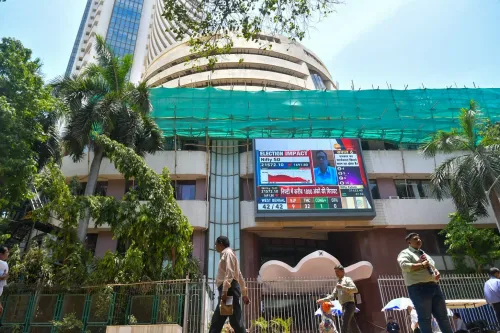
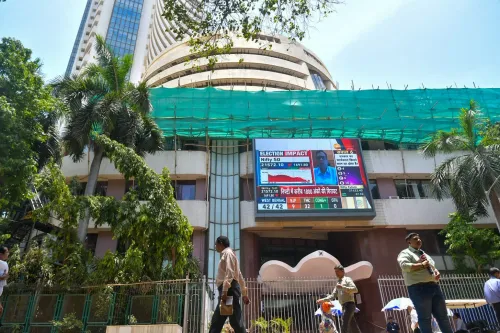
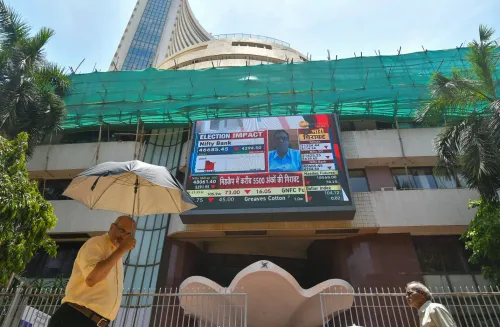
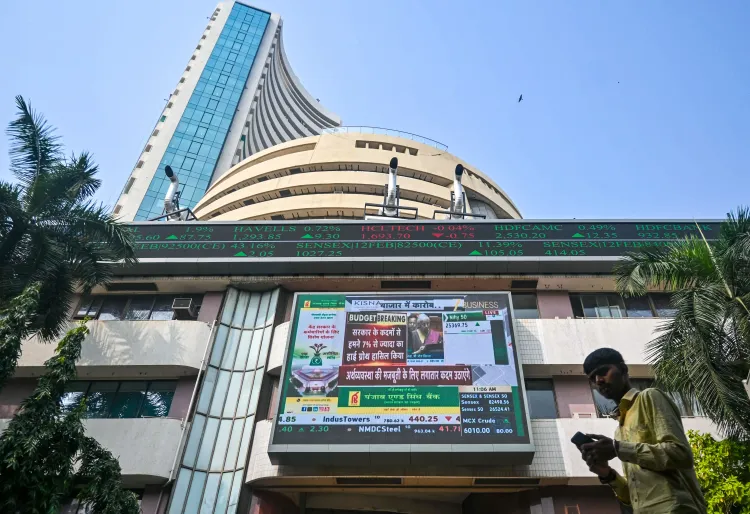
Mumbai, Feb 3 (NationPress) The Indian equity markets experienced a remarkable surge of approximately 3 percent early on Tuesday, driven by widespread purchasing across various sectors, following the announcement of the India-US trade deal.
As of 9:25 am, the Sensex rose by 2,421 points, equivalent to 2.97 percent, reaching 84,088, while the Nifty increased by 741 points, or 2.96 percent, settling at 25,829.
The trade agreement between India and the United States entails a reduction of reciprocal tariffs on Indian goods from 25 percent to 18 percent, along with the elimination of an additional 25 percent duty on imports of Russian crude oil. President Donald Trump announced that the trade deal would be effective immediately following a phone discussion with Prime Minister Narendra Modi late on Monday, granting immediate tariff relief to India.
Major broad-cap indices showcased significant gains, with the Nifty Midcap 100 soaring by 3.10 percent, and the Nifty Smallcap 100 rising by 3.25 percent.
All sectoral indices reported considerable gains, particularly in realty, auto, consumer durables, and IT, which rose by 4.47 percent, 3.78 percent, 3.69 percent, and 3.04 percent, respectively.
At 18 percent, India's tariff rate is now more competitive than that of several key export-oriented Asian countries. Bangladesh, Sri Lanka, Taiwan, and Vietnam are facing tariffs of 20 percent, while Indonesia, Malaysia, Thailand, the Philippines, and Pakistan are subject to tariffs of 19 percent.
Immediate support for the Nifty is predicted to lie within the 25,600-25,800 zone, while resistance is expected between 26,200 and 26,350, according to market analysts.
“The announcement of the long-anticipated US-India trade deal and the US decision to reduce tariffs on India from 50 percent to 18 percent represents a pivotal moment for the Indian economy and stock markets, as the delay had been a significant burden on market performance,” stated an analyst.
Market observers anticipate that India’s growth rate may rise to approximately 7.5 percent in FY27, supported by increased exports to the US resulting from the deal. Additionally, corporate earnings, already on the mend, could accelerate to around 16 percent to 18 percent in FY27.
Analysts also predict a strong rebound for the rupee, adding that the synergy between the US-India trade deal, the EU-India trade agreement, and a growth-focused budget will enhance market sentiment. This positive outlook could prompt immediate foreign capital inflows, potentially transforming India's Balance of Payments (BoP) situation.
Large caps, including leading banks, non-banking financial entities, telecom, capital goods, and IT sectors, which are favored by foreign institutional investors (FIIs), may witness substantial inflows, according to market analysts.
In Asian markets, China's Shanghai Index rose by 0.38 percent, and Shenzhen increased by 0.93 percent. Japan's Nikkei surged by 3.23 percent, while Hong Kong's Hang Seng Index edged up by 0.11 percent. South Korea's Kospi experienced a significant jump of 5.04 percent.
The US markets concluded the previous trading session largely in positive territory, with the Nasdaq gaining 0.56 percent. The S&P 500 rose by 0.54 percent, and the Dow added 1.05 percent.
On February 2, foreign institutional investors (FIIs) net sold equities worth Rs 1,832 crore, while domestic institutional investors (DIIs) were net buyers, acquiring equities worth Rs 2,446 crore.
Point of View
The recent surge in the stock market following the India-US trade agreement signifies a crucial turning point for the Indian economy. It reflects the potential for enhanced trade relationships and economic growth, while also highlighting the importance of timely policy decisions. At NationPress, we remain committed to delivering comprehensive coverage of such pivotal moments.
NationPress
23 Sept 2026
Frequently Asked Questions
What is the significance of the India-US trade deal?
The India-US trade deal reduces tariffs on Indian goods, potentially boosting exports and enhancing economic growth.
How has the stock market reacted to the trade deal?
Following the announcement, the Sensex surged by over 2,400 points, indicating strong investor confidence.
What sectors are likely to benefit from the trade deal?
Sectors such as realty, auto, consumer durables, and IT are expected to see significant gains.
What impact will this have on India's economy?
Analysts predict an increase in India's growth rate and corporate earnings due to higher exports.
Will foreign investment increase in India?
Yes, the positive sentiment from the trade deal could lead to increased foreign capital inflows.