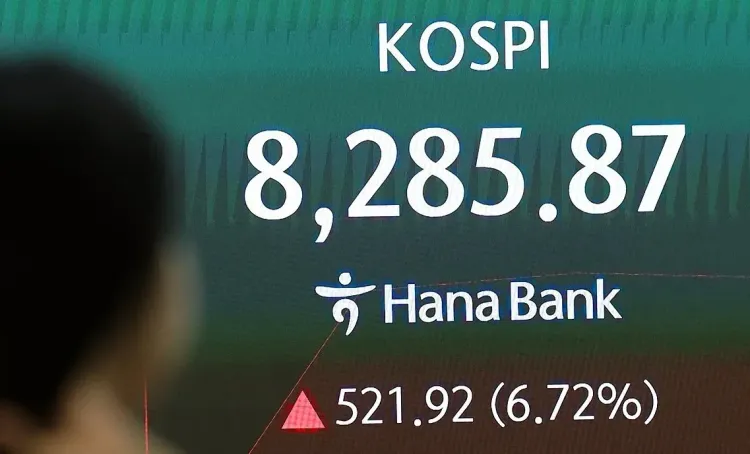
Seoul KOSPI surges 7.81% to 8,370 on Trump Iran war deal hopes
Synopsis
Seoul's KOSPI posted one of its sharpest single-session rallies in recent memory — up nearly 8% — on a single set of remarks from Donald Trump claiming a 'great settlement' with Iran. With the Strait of Hormuz still closed and Tehran yet to confirm any deal, the market is pricing in a peace that has not yet been signed. The gap between Trump's optimism and Iranian silence is the story.
Key Takeaways
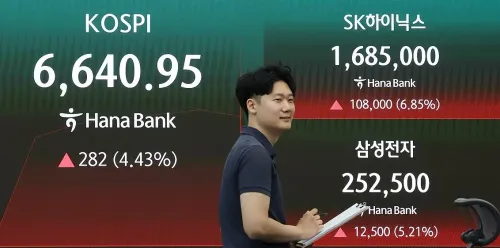
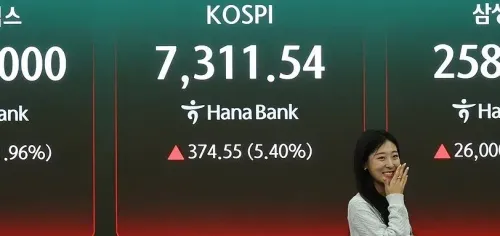
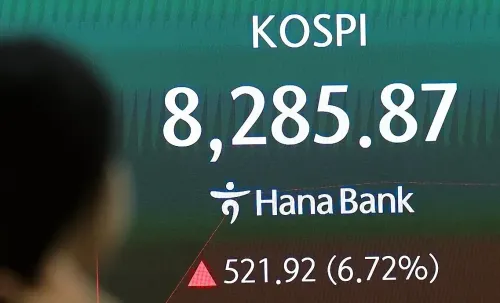
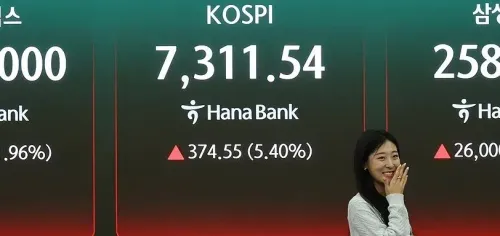
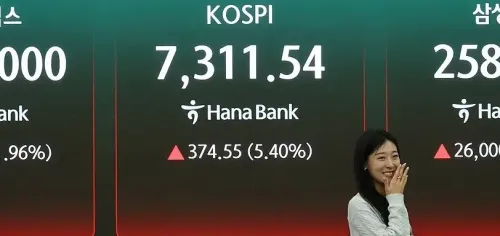
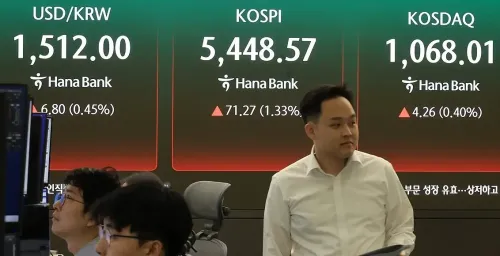
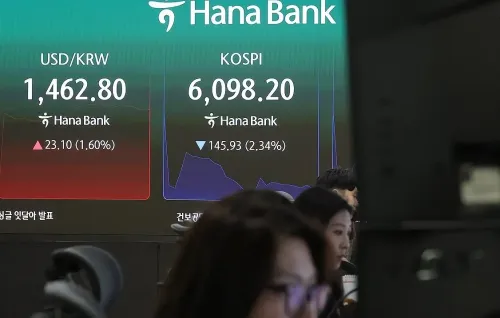
The KOSPI surged 606.46 points (7.81%) to 8,370.41 as of 11:20 am on 12 June .
Samsung Electronics climbed 11.37% ; SK Hynix added 8% ; KB Financial jumped 8.05% .
US President Donald Trump claimed Washington reached a 'great settlement' with Iran; Iran had not confirmed the deal as of the time of reporting.
Trump said the Strait of Hormuz would reopen upon signing, potentially as early as the coming weekend.
The Bank of Korea Governor Shin Hyun-song called for an interest rate hike 'without delay' on the bank's 76th anniversary .
The Korean won strengthened to 1,519.9 per US dollar , up 9 won from the previous session.
South Korea's benchmark Korea Composite Stock Price Index (KOSPI) surged 606.46 points, or 7.81 percent, to 8,370.41 as of 11:20 am local time on Friday, 12 June, as remarks by US President Donald Trump signalling an imminent end to the Iran war ignited a broad-based rally. Institutional and foreign investors piled into blue-chip technology stocks, keeping the index comfortably above the 8,000-point threshold after a sharply higher open.
Trump's Iran Deal Remarks Spark the Rally
On Thursday (US time), President Trump declared that Washington had reached 'a great settlement' on the conflict with Iran, adding that a formal agreement could be signed 'as early as this weekend'. Iran, however, had yet to confirm any such deal as of the time of reporting. Trump elaborated: 'We have a signing soon and the documents are in pretty final shape. So, we'll see. Very good ... should be done pretty quickly.'
The president also said the Strait of Hormuz — virtually shut by the conflict — would 'officially open as soon as we sign, which could be soon, very soon, maybe over the weekend in Europe.' Crucially, Trump identified the 'most important paragraph' of the prospective document as the clause stipulating that 'Iran will, in no way, shape or form, have a nuclear weapon or purchase a nuclear weapon.'
Tech and Auto Giants Lead the Charge
Chip heavyweight Samsung Electronics climbed 11.37 percent, the standout gainer of the session, while memory rival SK Hynix added 8 percent. Automaker Hyundai Motor advanced 5.53 percent, consumer electronics maker LG Electronics rose 6.19 percent, and financial conglomerate KB Financial jumped 8.05 percent. The gains broadly tracked overnight advances on Wall Street, where Trump's comments had already lifted US indices.
Bank of Korea Holds a Hawkish Line
Against the market euphoria, the Bank of Korea signalled a different priority. Governor Shin Hyun-song, in a message marking the central bank's 76th anniversary, said the bank should 'raise interest rates without delay' — reaffirming a hawkish stance even as geopolitical risks appeared to ease. The juxtaposition of a rate-tightening signal alongside a geopolitics-driven equity surge underscores the complex macro backdrop facing South Korean policymakers.
Why the Strait of Hormuz Matters for South Korea
South Korea imports the vast majority of its crude oil through the Strait of Hormuz, making any disruption to the waterway a direct threat to its energy security and export competitiveness. The conflict had all but closed the strait, pushing up global oil prices and disrupting shipments of oil, fertiliser, and other commodities. A verified ceasefire and reopening of the strait would meaningfully reduce input-cost pressures for South Korea's energy-intensive manufacturing sector.
What to Watch Next
Markets will be closely monitoring whether Iran officially confirms the reported settlement and whether a signing ceremony materialises over the coming weekend. Any breakdown in talks — or silence from Tehran — could quickly unwind Friday's gains. Analysts will also watch how the Korean won, quoted at 1,519.9 won per US dollar (up 9 won from the previous session), responds to confirmation or denial of the deal.
Point of View
And the Strait of Hormuz remains closed. South Korean markets, structurally exposed to both energy costs and US tech sentiment, are particularly vulnerable to a reversal if Tehran's silence hardens into denial. The Bank of Korea's simultaneous hawkish signal adds another layer of complexity: a rate hike cycle running alongside geopolitical relief could cap how much of this equity pop is sustainable. The market is, in effect, betting on a weekend signing that has not happened yet.
NationPress
28 Sept 2026
Frequently Asked Questions
Why did Seoul's KOSPI surge nearly 8% on 12 June?
The KOSPI surged 7.81% to 8,370.41 primarily because US President Donald Trump claimed Washington had reached a settlement with Iran, raising hopes that the conflict — and the near-closure of the Strait of Hormuz — could end imminently. Institutional and foreign investors bought heavily into blue-chip tech and financial stocks.
Has Iran confirmed the reported deal with the United States?
As of the time of reporting on 12 June, Iran had not confirmed any settlement. Trump said documents were 'in pretty final shape' and a signing could happen 'over the weekend in Europe,' but an official Iranian response was still awaited.
Which South Korean stocks gained the most on Friday?
Samsung Electronics led with an 11.37% gain, followed by KB Financial at 8.05% and SK Hynix at 8%. Hyundai Motor rose 5.53% and LG Electronics added 6.19%.
Why does the Strait of Hormuz matter so much to South Korea?
South Korea relies heavily on oil imports routed through the Strait of Hormuz. The conflict had effectively closed the waterway, disrupting shipments of oil, fertiliser, and other commodities and pushing up prices. A reopening would directly ease energy and input costs for South Korea's manufacturing sector.
What is the Bank of Korea's current stance on interest rates?
Bank of Korea Governor Shin Hyun-song reaffirmed a hawkish position on 12 June, stating the bank should 'raise interest rates without delay' in a message marking the institution's 76th anniversary — a signal that monetary tightening remains on the table despite the geopolitical optimism driving equity markets.