Vikram-1 launch window: July 12–Aug 4 for India's first private orbital rocket
Synopsis
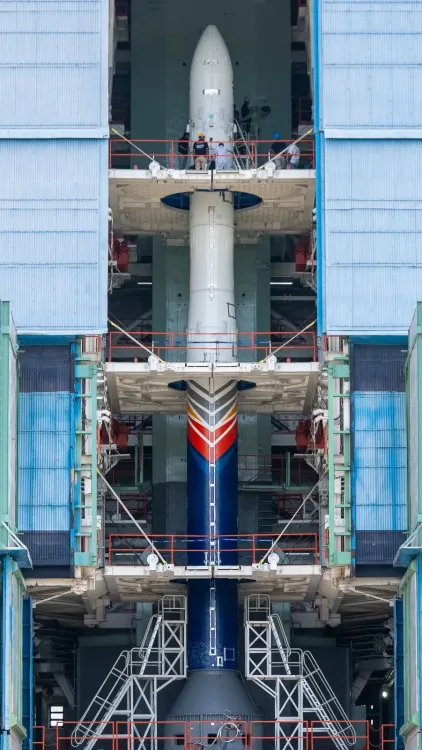
India's first privately developed orbital-class rocket, Vikram-1, is set to lift off between 12 July and 4 August from Sriharikota. Skyroot Aerospace's Mission Aagaman isn't just a test flight — it is the moment India's private space sector attempts to cross from suborbital demonstration to orbital capability, a leap that could reshape the country's commercial launch landscape.
Key Takeaways
Skyroot Aerospace has opened a launch window of 12 July to 4 August for Vikram-1 , India's first private orbital-class rocket.
The mission, named Mission Aagaman , will lift off from Satish Dhawan Space Centre, Sriharikota , subject to weather and range clearance.
Primary objective is in-flight performance data collection across all stages — designed as a technology demonstration, not a purely commercial flight.
The mission carries a mix of domestic and international customer payloads on a partially commercial basis.
Vikram-1 follows Vikram-S , which became India's first privately developed rocket to reach space in November 2022 .
Skyroot employs more than 1,000 people and plans to begin regular commercial launches after one or two successful demonstration missions.
Skyroot Aerospace has confirmed a launch window of 12 July to 4 August for the maiden flight of Vikram-1, India's first privately developed orbital-class rocket, in a mission named Mission Aagaman. The announcement, made on Thursday, 2 July, marks a defining moment for India's commercial space sector as the country prepares to attempt its first privately led orbital launch.
Mission Details and Launch Conditions
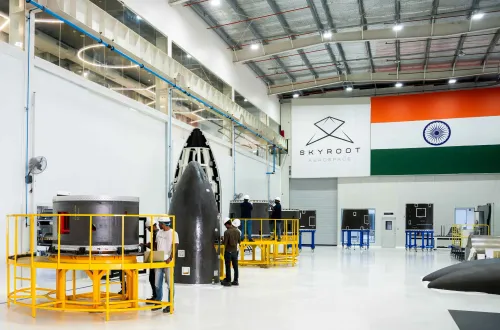
The launch is scheduled no earlier than 12 July, subject to the completion of final assembly and testing at the Satish Dhawan Space Centre (SDSC-SHAR) in Sriharikota. Favourable weather, safety clearances, and range availability will also determine the exact lift-off date. All stages of Vikram-1 have been integrated and stacked at the launch pad, the company confirmed.
The mission will carry a combination of domestic and international customer payloads, making it a partially commercial flight. Engineers will closely monitor propulsion systems, stage separation, guidance, navigation, and control systems throughout the ascent.
Primary Objective: Data, Not Just Orbit
According to Skyroot Aerospace, the primary goal of Mission Aagaman is to collect comprehensive in-flight performance data across every stage of Vikram-1's ascent. The mission has been designed as a technology demonstration and learning exercise rather than a purely commercial one.
Pawan Kumar Chandana, Co-founder and Chief Executive Officer of Skyroot Aerospace, explained the rationale: 'This mission is about understanding how the rocket performs in real flight conditions, something that cannot be fully replicated through ground testing. The moment Vikram-1 lifts off, India's private space industry will cross a threshold it has never crossed before.'
Building on Vikram-S: From Space to Orbit
Mission Aagaman follows the successful launch of Vikram-S in November 2022, which became the first privately developed rocket to reach space from Indian soil. While Vikram-S validated foundational technologies, Vikram-1 is designed to go further — demonstrating the ability to place payloads into orbit, a significantly more complex engineering challenge.
Naga Bharath Daka, Co-founder and Chief Operating Officer of Skyroot Aerospace, described the journey as transformative, acknowledging the support of the Government of India, IN-SPACe, ISRO, investors, customers, and the company's team of more than 1,000 employees. He noted that Vikram-S laid the technological foundation, while Vikram-1 represents the company's biggest leap toward a reliable, high-frequency commercial launch service.
Road to Commercial Operations
Skyroot plans to commence regular commercial launch services after one or two successful demonstration missions. The data gathered from Mission Aagaman is expected to validate vehicle performance and guide future upgrades for its commercial launch programme. Notably, this milestone arrives as India's space sector undergoes rapid liberalisation, with private players increasingly central to the country's launch ambitions.
Point of View
And Mission Aagaman will reveal whether the regulatory and infrastructure scaffolding built over the past three years can support genuine private orbital ambition. What is often missed in the celebration is that reaching orbit is categorically harder than reaching space: stage separation, guidance precision, and sustained propulsion must all work in sequence with no margin for incremental failure. One or two demonstration missions before commercial operations is a conservative but credible roadmap — the real question is whether Skyroot can maintain cadence and cost competitiveness against established global small-sat launchers once it does.
NationPress
2 Jul 2026
Frequently Asked Questions
What is Mission Aagaman and when will Vikram-1 launch?
Mission Aagaman is the maiden orbital test flight of Skyroot Aerospace's Vikram-1 rocket, with a launch window open from 12 July to 4 August. The exact date depends on final assembly completion at Sriharikota and favourable weather and range clearance conditions.
What is the difference between Vikram-S and Vikram-1?
Vikram-S, launched in November 2022, was a suborbital rocket that validated Skyroot's foundational technologies and became the first privately developed Indian rocket to reach space. Vikram-1 is an orbital-class vehicle designed to place payloads into orbit — a significantly more complex engineering achievement.
What is the primary goal of the Vikram-1 test flight?
The primary objective is to collect comprehensive in-flight performance data across every stage of ascent, serving as a technology demonstration and learning exercise. The data will be used to validate vehicle performance and guide upgrades for Skyroot's commercial launch programme.
Will Vikram-1 carry any commercial payloads on its maiden flight?
Yes, the maiden flight will carry a combination of domestic and international customer payloads, making it a partially commercial mission even as its main purpose remains technology demonstration.
When does Skyroot plan to start regular commercial launch services?
Skyroot Aerospace plans to begin regular commercial launch services after one or two successful demonstration missions, following the validation of Vikram-1's performance in real flight conditions.