CM Sai Attends Oath Ceremony of Newly Elected Municipal President, Councillors
Synopsis
Chhattisgarh Chief Minister Vishnu Deo Sai attended the oath-taking ceremony of a newly elected municipal president and councillors on 2 July 2026, formally constituting an urban local body under the state's municipal election cycle mandated by the 74th Constitutional Amendment.
Key Takeaways
Chhattisgarh CM Vishnu Deo Sai attended a municipal swearing-in ceremony on 2 July 2026 .
The event marked the formal oath-taking of a newly elected municipal president and councillors .
The ceremony was livestreamed publicly via a broadcast link shared on X.
Urban local body elections and oath ceremonies are constitutionally mandated under the 74th Amendment Act of 1992 .
The newly constituted council will serve a five-year term , overseeing civic services and urban development schemes.
First council meetings, standing committee elections, and budget approvals are expected in the coming weeks.
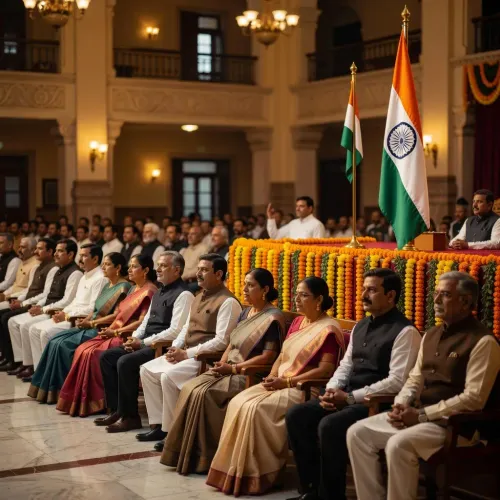
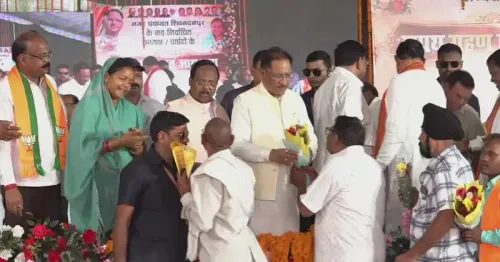
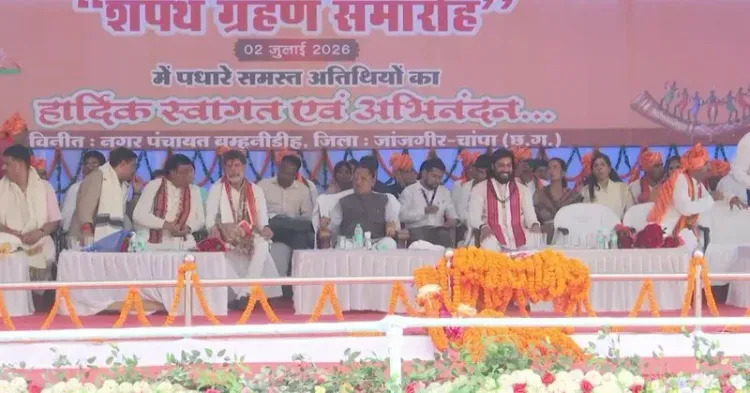
Chhattisgarh Chief Minister Vishnu Deo Sai attended the swearing-in ceremony of a newly elected municipal president and councillors on Thursday, 2 July 2026, marking the formal constitution of an urban local body under the state's ongoing municipal election cycle.
Context
Chief Minister Sai shared coverage of the event on X, captioning it 'नवनिर्वाचित अध्यक्ष एवं समस्त पार्षदगणों का शपथ ग्रहण समारोह' — 'oath-taking ceremony of the newly elected president and all councillors.' The post included a livestream broadcast link, indicating the ceremony was made available to the public in real time.
Oath ceremonies of this kind formally operationalise the results of urban local body elections, transferring administrative authority to elected representatives at the grassroots level.
Policy Backdrop
Urban local body elections and their subsequent swearing-in ceremonies are mandated by the 74th Constitutional Amendment Act of 1992, which institutionalised elected municipal governance across Indian states. The amendment requires states to hold periodic elections to nagar palikas and municipal corporations and to constitute these bodies without undue delay after results are declared.
Chhattisgarh has followed this constitutional cycle consistently, conducting elections for urban local bodies in line with the State Election Commission's schedule. Elected councils serve five-year terms, during which they oversee local infrastructure, sanitation, water supply, and urban development schemes.
Stakeholders and Impact
The newly sworn-in municipal president and councillors will now hold executive and legislative authority over their respective urban local body. Urban residents of the area stand to be the primary beneficiaries, as the constituted council can begin approving budgets, initiating civic works, and implementing centrally and state-sponsored urban development schemes.
For municipal councillors, the oath marks the start of their five-year elected term — a period during which they are accountable to ward-level constituents for delivery of basic civic services.
What's Next
Following the swearing-in, the newly constituted body is expected to hold its first formal council meeting to elect standing committee members and set procedural rules. Budget approvals and the rollout of urban welfare schemes are among the earliest agenda items councils typically take up after constitution.
The Chhattisgarh government will be watching the pace at which newly elected bodies activate local governance machinery — a key metric for the state's urban administration performance in the months ahead.
Point of View
Strong performance at the urban local body level is increasingly seen as a bellwether for voter sentiment ahead of future electoral cycles. The pace at which these newly constituted bodies deliver on civic promises will be a key test of the party's urban governance credibility in the state.
NationPress
1 Oct 2026
Frequently Asked Questions
What is the oath-taking ceremony of municipal councillors in Chhattisgarh?
It is a formal swearing-in event where newly elected municipal presidents and councillors take their oath of office, constituting the urban local body and authorising it to begin governance functions such as budget approvals and civic scheme implementation.
Why did CM Vishnu Deo Sai attend the municipal swearing-in ceremony?
As Chief Minister of Chhattisgarh, Vishnu Deo Sai attended the ceremony to mark the formal constitution of the urban local body, underscoring the state government's commitment to local self-governance under the 74th Constitutional Amendment.
What does the 74th Constitutional Amendment say about urban local bodies?
The 74th Constitutional Amendment Act of 1992 mandates that Indian states hold regular elections to urban local bodies such as nagar palikas and municipal corporations, and constitute these bodies promptly after election results, giving elected representatives a five-year term.
What happens after a municipal council is sworn in in Chhattisgarh?
After the swearing-in, the newly constituted council typically holds its first formal meeting, elects standing committee members, and begins approving budgets and implementing urban development and welfare schemes.
How often are urban local body elections held in Chhattisgarh?
Urban local body elections in Chhattisgarh are held every five years, in line with the constitutional mandate and the schedule set by the State Election Commission.