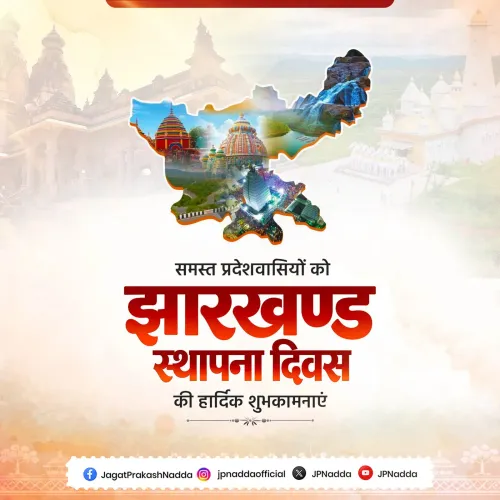
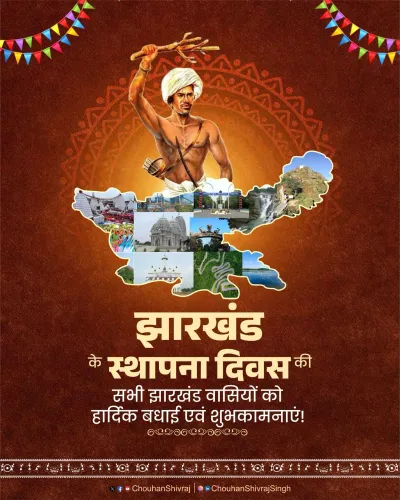
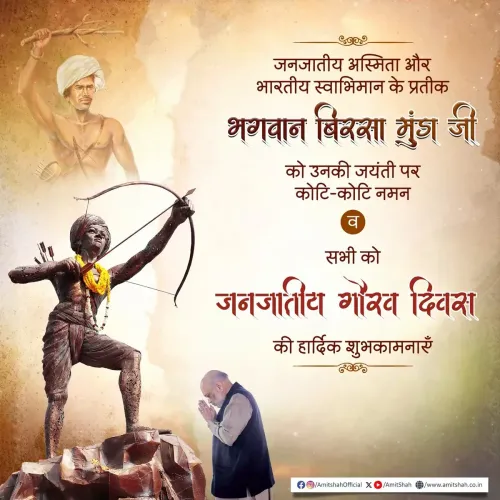
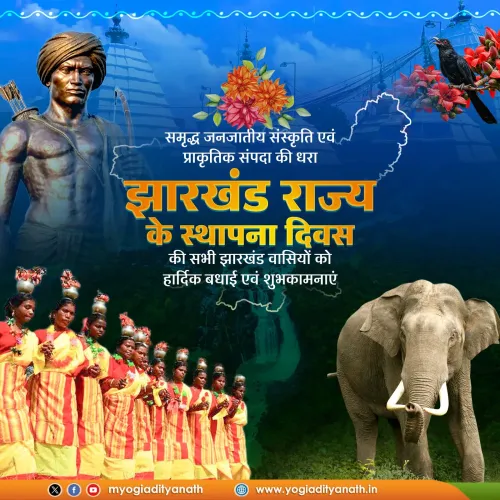
Amit Shah greets Jharkhand on its 26th Foundation Day
Synopsis
On Jharkhand's 26th Foundation Day, Union Home Minister Amit Shah honoured tribal heroes Birsa Munda and Sido-Kanhu Murmu, invoked Baba Baidyanath's blessings, and wished the state new heights of development and self-reliance.
Key Takeaways
Jharkhand Foundation Day falls on 15 November every year — the date was chosen to coincide with the birth anniversary of tribal icon Birsa Munda .
The state was carved out of Bihar on 15 November 2000 under the Bihar Reorganisation Act, fulfilling a long-standing demand for a separate tribal homeland.
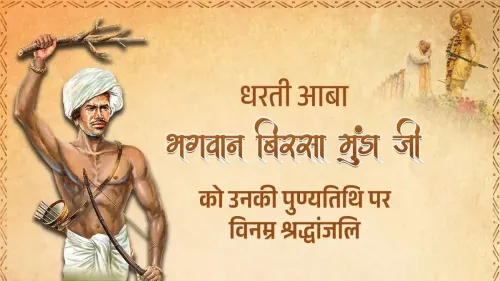
Birsa Munda led the Ulgulan movement against British rule in the 19th century and is venerated as Dharti Aaba — father of the earth.
Brothers Sido and Kanhu Murmu led the Santhal Hul of 1855 , one of the largest pre-independence tribal uprisings in eastern India.
Shah offered his wishes through a prayer to Baba Baidyanath , the Jyotirlinga at Deoghar , calling for Jharkhand's development, prosperity, and self-reliance ( aatmanirbharta ).
Twenty-six years after a long tribal homeland movement finally bore fruit, Union Home Minister Amit Shah marked Jharkhand Foundation Day on 15 November 2026 with a warm tribute to the state's revolutionary heroes and a prayer for its future prosperity.
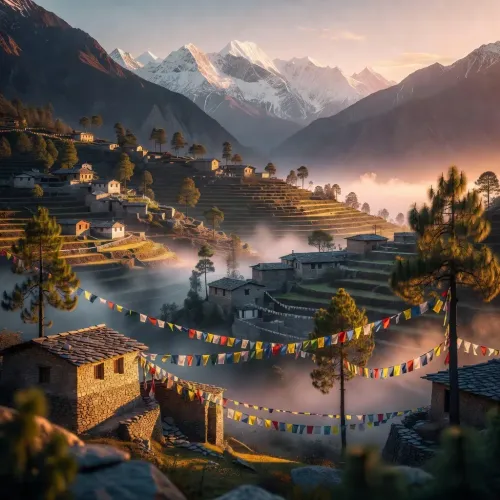
Posting in Hindi, Shah called Jharkhand 'praakritik vaibhav, gauravshali itihas aur samridh janjateeya sanskriti ki bhoomi' — 'a land of natural splendour, glorious history, and rich tribal culture.' He singled out two towering figures from the state's freedom struggle: Birsa Munda and the brothers Sido and Kanhu Murmu, honouring their bravery and sacrifice as a 'glorious legacy' that Jharkhand continues to carry forward.
Birsa Munda and Sido-Kanhu: the icons Shah invoked
Birsa Munda, the 19th-century tribal leader, is among the most revered figures in eastern India. His Ulgulan — 'the great tumult' — was a fierce resistance movement against British colonial rule that shook the administration of undivided Bihar. He died in British custody in 1900 and is worshipped as Dharti Aaba, father of the earth, by tribal communities across the region.
Sido and Kanhu Murmu led an even earlier uprising: the Santhal Hul of 1855, a mass rebellion against British revenue extraction and local landlord exploitation that mobilised tens of thousands of Santhals across what is now Jharkhand and West Bengal. Both brothers were killed, cementing their status as martyrs of the region's pre-independence resistance.
A state born on this date in 2000
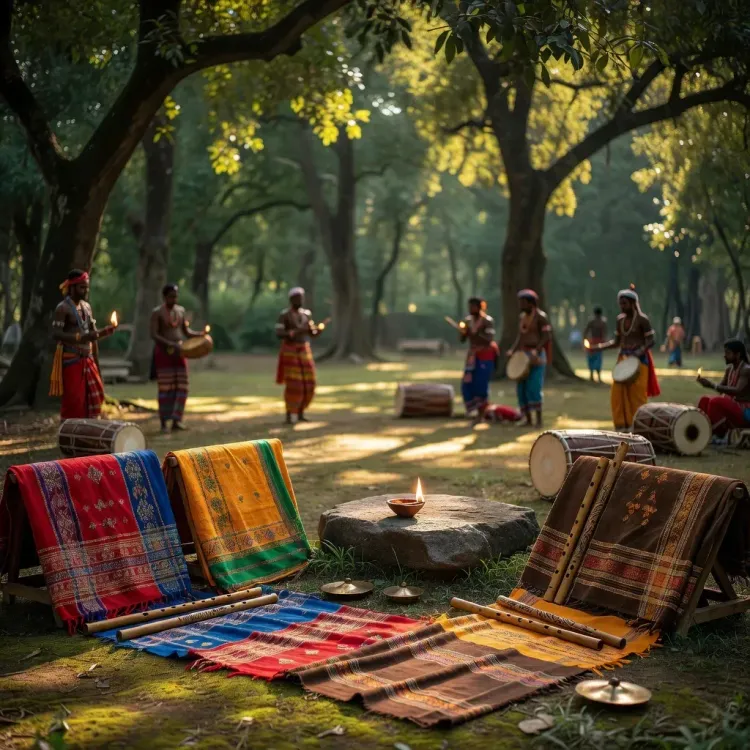
Jharkhand came into existence on 15 November 2000 under the Bihar Reorganisation Act, fulfilling decades of demand by tribal communities for a separate homeland. The date was deliberately chosen to coincide with the birth anniversary of Birsa Munda, lending the statehood moment deep cultural resonance. The state sits atop some of India's richest mineral deposits and is home to a significant Scheduled Tribe population whose cultural identity — music, dance, forest traditions — remains central to its self-image.
Shah closed his message with a personal prayer at Baba Baidyanath, the sacred Jyotirlinga temple at Deoghar, one of the twelve holiest Shiva shrines in Hinduism: 'Baba Vaidyanath se yahi kamana karta hoon' — 'this is my wish before Baba Baidyanath' — that the state touch new heights of development, prosperity, and self-reliance (aatmanirbharta).
As the minister responsible for internal affairs and tribal welfare policy at the Centre, Shah's invocation of both historical memory and economic aspiration on Foundation Day reflects the standard cadence of such messages — but the specific naming of Birsa Munda and Sido-Kanhu, alongside the Deoghar prayer, grounds the tribute in Jharkhand's distinctive spiritual and cultural geography rather than generic statecraft.
Point of View
But Shah's deliberate invocation of Birsa Munda and Sido-Kanhu — alongside the Baba Baidyanath prayer — signals a conscious effort to blend tribal historical pride with religious identity, a combination that carries political resonance in a state with a significant tribal vote share. The pairing of aatmanirbharta (self-reliance) with development and prosperity also echoes the broader BJP governance vocabulary, threading national economic messaging into a state-specific tribute. For the Centre, Jharkhand remains an important political and strategic canvas given its mineral wealth and tribal demographics, making such symbolic moments more than mere courtesy.
NationPress
15 Nov 2026
Frequently Asked Questions
When was Jharkhand formed and why on 15 November?
Jharkhand was formed on 15 November 2000 under the Bihar Reorganisation Act. The date was chosen to honour Birsa Munda , the revered tribal leader, whose birth anniversary falls on that day.
Who was Birsa Munda?
Birsa Munda was a 19th-century tribal leader from the Chota Nagpur region who led the Ulgulan movement against British colonial rule. He is worshipped as Dharti Aaba and remains Jharkhand's most iconic historical figure.
Who were Sido and Kanhu Murmu?
Sido and Kanhu Murmu were brothers who led the Santhal Hul uprising of 1855 , mobilising tens of thousands against British revenue extraction and landlord exploitation in what is now Jharkhand and West Bengal. Both were killed and are revered as martyrs.
What is Baba Baidyanath and where is it located?
Baba Baidyanath is a sacred Jyotirlinga (one of twelve holiest Shiva shrines in Hinduism) located at Deoghar in Jharkhand. It is among the most visited pilgrimage sites in eastern India.
What did Amit Shah say on Jharkhand Foundation Day 2026?
Union Home Minister Amit Shah greeted Jharkhand residents, honoured tribal icons Birsa Munda and Sido-Kanhu Murmu , and prayed to Baba Baidyanath that the state achieve new heights of development, prosperity, and self-reliance.