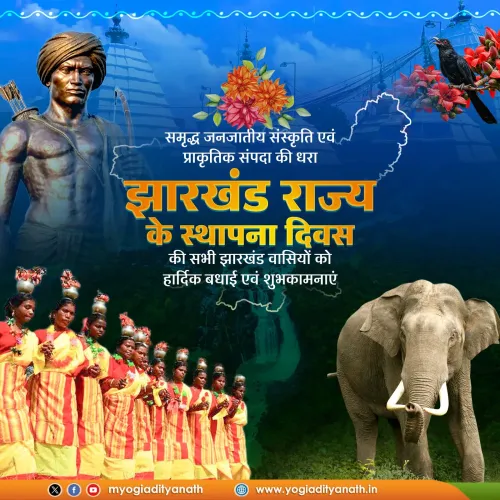
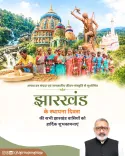
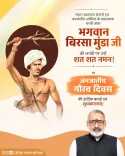
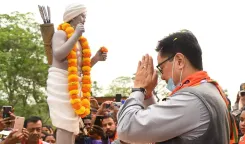
Nadda greets Jharkhand on its 26th Foundation Day
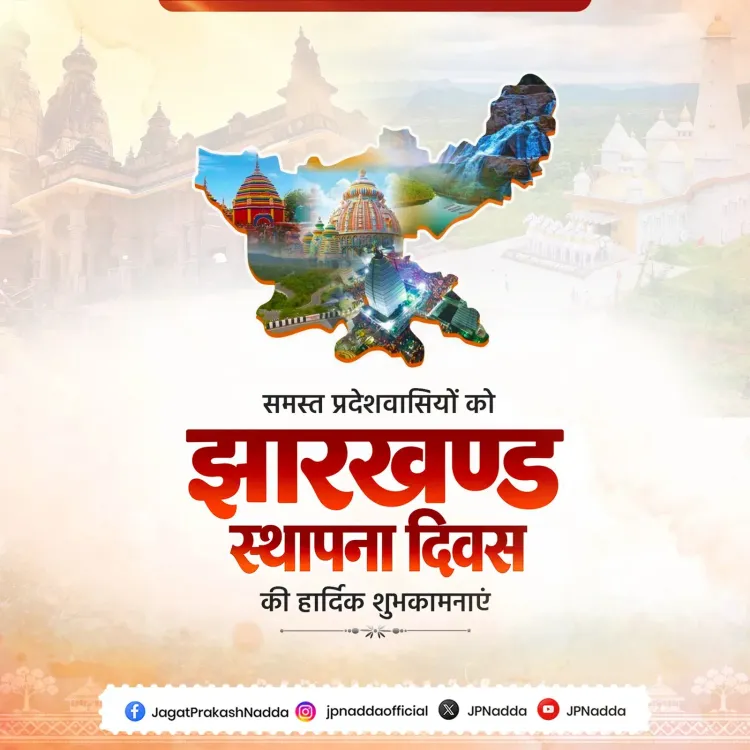
Synopsis
On Jharkhand's 26th Foundation Day, Union Health Minister J. P. Nadda honoured the state's tribal heritage and the legacy of Birsa Munda, praised residents' contributions to nation-building, and prayed to Baba Baidyanath for the state's prosperity.
Key Takeaways
Jharkhand Foundation Day falls on 15 November — the birth anniversary of tribal hero Birsa Munda — marking the state's creation from Bihar in 2000 .
Union Health Minister J.
Nadda posted a tribute on X calling Jharkhand the sacred karmabhoomi of Birsa Munda.
Nadda praised the 'incomparable' contribution of Jharkhand's tribal society to India's freedom struggle and nation-building.
Birsa Munda , revered as Dharti Aaba , led the Ulgulan uprising against British land-alienation policies in the late 19th century.
Nadda concluded with a prayer to Baba Baidyanath at Deoghar for the state's development, prosperity and happiness.
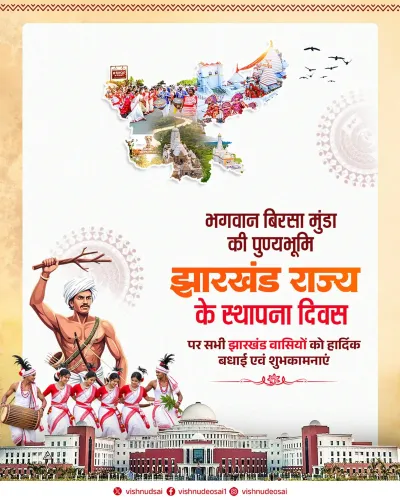
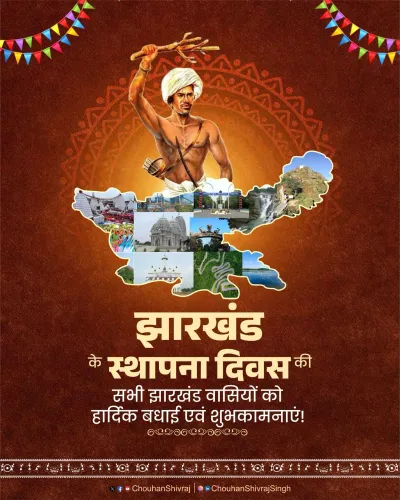
Twenty-six years after a long tribal and regional struggle gave birth to a new state, Union Health Minister J. P. Nadda marked Jharkhand Foundation Day on 15 November 2026 with a warm tribute to the land, its people, and the towering legacy of Birsa Munda — the 19th-century freedom fighter whom millions revere as Dharti Aaba (Father of the Earth).
In a message posted on X, Nadda called Jharkhand the sacred karmabhoomi (land of deeds) of Birsa Munda, praising the state's 'glorious history, rich tribal culture and natural wealth.' He extended heartfelt congratulations to every resident of the state and prayed to Baba Baidyanath — the Jyotirlinga deity enshrined at Deoghar — that Jharkhand 'establish new dimensions of development, prosperity and happiness.'
Birsa Munda's rebellion and the making of a state
Jharkhand was carved out of Bihar on 15 November 2000 under the Bihar Reorganisation Act, fulfilling decades of demand by tribal communities and regional leaders for self-governance over their land, culture and mineral resources. The date was chosen deliberately: it is the birth anniversary of Birsa Munda, who in the late 19th century led the Ulgulan (Great Tumult) uprising against British colonial land-grab policies that had devastated Munda farming communities. His defiance made him an enduring symbol of indigenous resistance and pride across eastern India.
Nadda's message invoked that lineage directly, saying the contribution of 'Jharkhand's brave sons and tribal society — from the freedom struggle to nation-building — has been incomparable.' It is a framing national leaders across parties have consistently used on this day, anchoring Jharkhand's contemporary identity in its tribal history rather than merely its economic profile.
Mineral wealth, tribal heritage and the state's dual identity
Jharkhand sits on some of India's richest mineral deposits — coal, iron ore, copper, mica — and hosts a substantial industrial corridor. Yet the state also carries one of the country's largest concentrations of Scheduled Tribe populations, communities whose land rights and cultural continuity have remained at the centre of political debate since well before 2000. That tension between resource extraction and tribal welfare has shaped every Jharkhand government since the state's formation.
Nadda described residents as 'hardworking and talented,' playing 'an important role in the progress of the country' — a nod to both the industrial workforce and the state's growing presence in professional and public life nationally.
Baba Baidyanath: the prayer that closes the message
Closing with an invocation of Baba Baidyanath was a culturally specific touch. The Deoghar temple is one of the twelve Jyotirlingas of Shaivite tradition and draws millions of pilgrims from across eastern India every year, making it a shared spiritual reference point for the state's diverse population. Invoking the deity's blessings for the state's future gave Nadda's message a register that goes beyond routine political courtesy.
As Jharkhand enters its 27th year, the intersection of tribal rights, mineral governance and welfare delivery will continue to define what 'development' means in this young state — and how leaders in New Delhi choose to speak about it.
Point of View
A strategy that has intensified since the Centre designated 15 November as Janjatiya Gaurav Diwas (Tribal Pride Day) in 2021. By invoking both Birsa Munda and Baba Baidyanath, the message simultaneously addresses tribal sentiment and the state's Hindu pilgrimage culture. As a BJP national president addressing a state currently governed by a rival coalition, Nadda's warm, non-partisan tone signals a deliberate effort to claim the tribal-heritage space without direct political confrontation. The broader arc here is a national competition over who can most credibly champion Jharkhand's tribal identity ahead of any future electoral cycle.
NationPress
15 Nov 2026
Frequently Asked Questions
When is Jharkhand Foundation Day and why is it celebrated on 15 November?
Jharkhand Foundation Day is celebrated on 15 November because that date in 2000 marked the state's creation from Bihar, and the date was chosen to coincide with the birth anniversary of tribal icon Birsa Munda .
Who is Birsa Munda and why is he called Dharti Aaba?
Birsa Munda was a 19th-century tribal leader from the Munda community who led the Ulgulan uprising against British colonial land-grab policies. He is called Dharti Aaba — 'Father of the Earth' — out of deep reverence for his role as a protector of tribal land and identity.
What did JP Nadda say on Jharkhand Foundation Day 2026?
J. P. Nadda congratulated all Jharkhand residents, called the state Birsa Munda's sacred karmabhoomi , praised the tribal society's 'incomparable' contribution to India's freedom struggle, and prayed to Baba Baidyanath for the state's development and prosperity.
Where is Baba Baidyanath temple and what is its significance?
Baba Baidyanath temple is located in Deoghar, Jharkhand , and is one of the twelve Jyotirlingas of Shaivite tradition, drawing millions of pilgrims from across eastern India every year.
How was Jharkhand formed as a separate state?
Jharkhand was carved out of Bihar on 15 November 2000 under the Bihar Reorganisation Act, fulfilling long-standing demands by tribal communities and regional groups for self-governance over their land, culture and mineral resources.