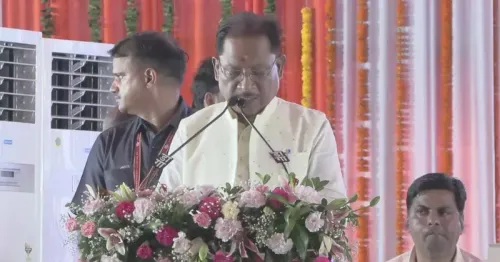
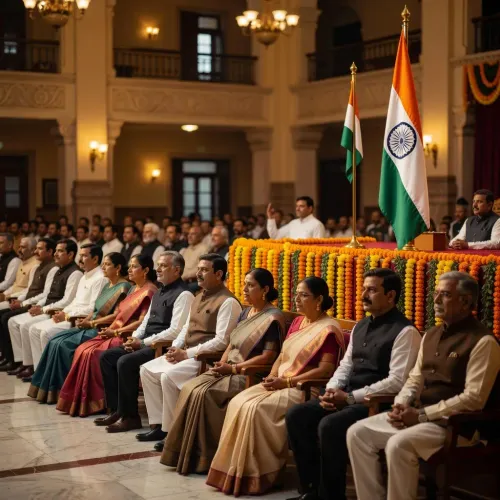
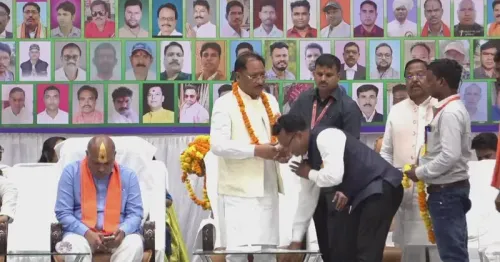
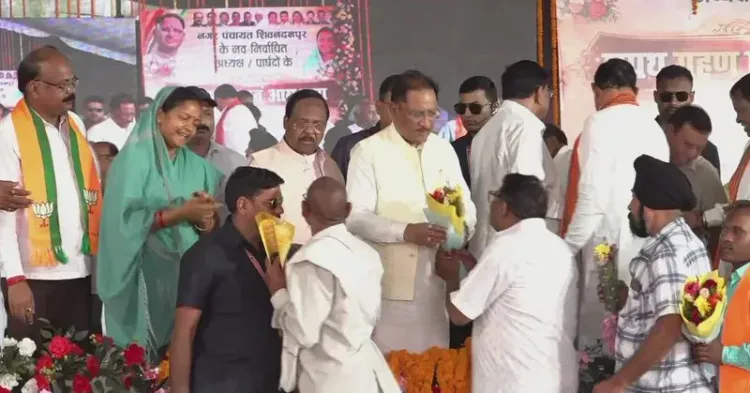
Chhattisgarh CMO hosts oath ceremony for newly elected councillors
Synopsis
The Chief Minister's Office of Chhattisgarh conducted a formal oath-taking ceremony for newly elected urban local body presidents and councillors on 17 June 2026, constituting civic councils under the 74th Constitutional Amendment and enabling elected representatives to begin exercising statutory powers.
Key Takeaways
The Chief Minister's Office of Chhattisgarh hosted the swearing-in of newly elected urban local body presidents and councillors on 17 June 2026 .
The ceremony is titled Nav-Nirvaachit Adhyaksh/Paarshdon ka Shapath Grahan and was broadcast live.
Urban local body elections in Chhattisgarh are held every five years under the 74th Constitutional Amendment .
The Chhattisgarh State Election Commission is the constitutional body responsible for supervising these elections and oath formalities.
Newly sworn-in councillors can now legally exercise powers over civic budgets, infrastructure, and local development works.
First formal council meetings and standing committee formations are expected to follow the oath ceremony.
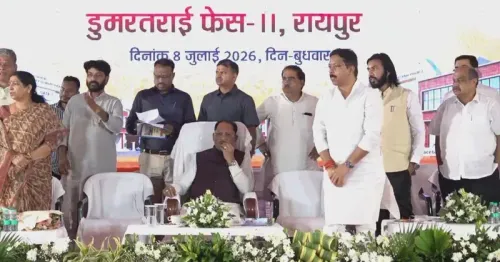
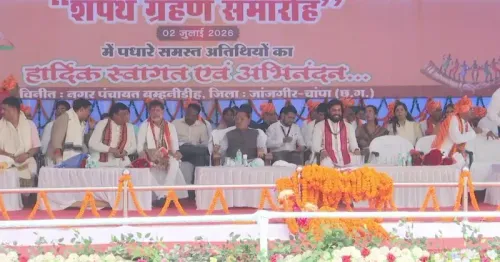
The Chief Minister's Office of Chhattisgarh announced a swearing-in ceremony for newly elected presidents and councillors of urban local bodies on Wednesday, 17 June 2026, marking the formal constitution of freshly elected civic bodies across the state. The event, titled 'Nav-Nirvaachit Adhyaksh/Paarshdon ka Shapath Grahan' ('Oath-taking ceremony of newly elected presidents and councillors'), was broadcast live.
Context
The oath-taking ceremony is the constitutionally mandated step that converts election results into a functioning civic government. Until elected representatives are formally sworn in, the reconstituted councils cannot exercise any statutory powers over civic administration, budgets, or local development works.
Chhattisgarh's urban local bodies — ranging from nagar panchayats to municipal councils — are governed under the 74th Constitutional Amendment, which requires states to hold elections to these bodies every five years and to ensure that elected representatives assume charge through a formal oath of office.
Policy Backdrop
Local-body elections in Chhattisgarh are supervised by the Chhattisgarh State Election Commission, a constitutional body that also oversees the procedural formalities surrounding oath-taking. The 73rd and 74th Constitutional Amendments, enacted in 1992, established the framework for decentralised governance by mandating elected panchayats and urban local bodies across all states.
The completion of an election cycle and the subsequent swearing-in of new office-bearers is a routine but constitutionally significant milestone. It restores democratic governance at the grassroots level and enables newly elected presidents and councillors to begin deliberating on local budgets, civic infrastructure, and community welfare schemes.
Stakeholders and Impact
The most immediate beneficiaries of the ceremony are the newly elected presidents and councillors themselves, who gain legal authority to function as representatives of their respective wards and towns from the moment they take the oath. Citizens in the jurisdictions of these urban local bodies can expect their elected councils to begin functioning formally, opening avenues for grievance redressal and local development decisions.
Urban residents, contractors engaged in civic works, and local government staff all operate within the framework set by these councils. A constituted council can pass resolutions, approve expenditures, and engage with state-level development programmes — activities that remain in abeyance until the oath is administered.
What's Next
The first formal meetings of the reconstituted municipal councils are expected to follow shortly after the oath ceremony. These inaugural sessions typically take up immediate administrative matters, including the formation of standing committees and preliminary discussions on local budgets and pending development works.
The Chhattisgarh government will be watched to see how quickly the newly sworn-in bodies are integrated into ongoing state-sponsored urban development schemes, and whether the new office-bearers signal any early priorities for their respective constituencies.
Point of View
But it carries political weight for the ruling dispensation in Chhattisgarh, as the composition of these councils reflects the most recent expression of voter preference at the grassroots level. A smooth and well-publicised oath ceremony signals the state government's commitment to decentralised governance under the constitutional framework. The CMO's decision to broadcast the event live and announce it on social media underscores a broader trend of state governments using digital platforms to demonstrate institutional transparency. How quickly the new councils translate their mandate into tangible local development outcomes will be the real test of this democratic exercise.
NationPress
19 Sept 2026
Frequently Asked Questions
What is the oath-taking ceremony for newly elected councillors in Chhattisgarh?
It is a constitutionally required swearing-in event where newly elected presidents and councillors of urban local bodies formally take an oath of office, after which they are legally empowered to govern their respective civic bodies.
When was the Chhattisgarh councillors oath ceremony held?
The ceremony was held on Wednesday, 17 June 2026 , as announced and broadcast by the Chief Minister's Office of Chhattisgarh.
Which constitutional amendment governs urban local body elections in Chhattisgarh?
The 74th Constitutional Amendment of 1992 mandates that states hold elections to urban local bodies every five years and ensure elected representatives are formally sworn in to exercise civic powers.
What happens after the oath ceremony for newly elected councillors?
After the oath is administered, the reconstituted councils hold their first formal meetings, form standing committees, and begin deliberating on local budgets and pending civic development works.
Who supervises local body elections and oath ceremonies in Chhattisgarh?
The Chhattisgarh State Election Commission , a constitutional body, is responsible for conducting elections to panchayats and urban local bodies and overseeing related formalities including oath-taking.