SpiceJet market share falls to 0.6% in September, trails Star Air
Synopsis
SpiceJet has fallen below regional carrier Star Air in domestic market share for the first time — a sobering milestone for an airline that held nearly 4% of the market just nine months ago. With passengers down over 87% since January and a CCPA penalty for dark patterns on top, SpiceJet's path back to relevance looks increasingly uncertain.
Key Takeaways
SpiceJet's domestic market share fell to 0.6 per cent in September 2026 , according to DGCA data.
This is the first time SpiceJet has trailed regional carrier Star Air , which held 0.7 per cent share in September.
SpiceJet carried just 7.3 lakh passengers in September, down sharply from 59.2 lakh in January — a decline of over 87 per cent .
India's domestic airlines carried 11.823 million passengers in September, down 6.49 per cent year-on-year amid high fares and fuel costs.
The CCPA fined SpiceJet ₹1 lakh in July for 'dark pattern' practices on its booking platform.
Domestic passenger traffic for January–September fell 0.82 per cent to 122.35 million versus 123.37 million a year earlier.
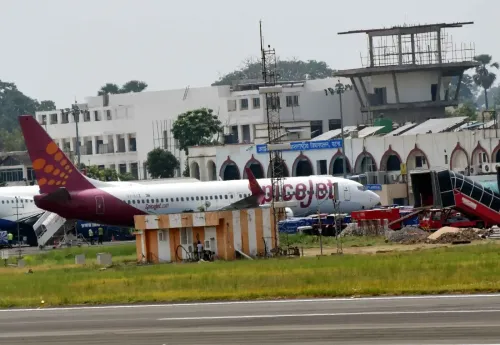
SpiceJet's share of India's domestic aviation market slipped to 0.6 per cent in September 2026, falling below regional carrier Star Air's 0.7 per cent for the first time, according to data released by the Directorate General of Civil Aviation (DGCA). The cash-strapped airline carried just 7.3 lakh passengers last month, a dramatic contraction from 59.2 lakh passengers in January, as financial pressures and grounded aircraft continued to erode its operational base.
A Year-Long Freefall in Market Share
SpiceJet's decline through 2026 has been steep and consistent. The airline commanded a 3.9 per cent market share in both January and February, before sliding to 1.2 per cent in August and reaching the historic low of 0.6 per cent in September. Passenger volumes have tracked the same downward curve, falling from 5.92 million in January to 7.3 lakh in September — a decline of over 87 per cent in nine months.
This is not a seasonal blip. Successive flight cancellations in recent months due to operational disruptions have affected scores of passengers, accelerating the erosion of consumer trust and bookings.
Star Air's Steady Climb in Context
By contrast, Star Air — a regional carrier with a far smaller overall footprint — held its market share at 0.6 per cent in January before inching up to 0.7 per cent by June and maintaining that level through September. The optics of a regional airline overtaking a once-major carrier on market share underscore how significantly SpiceJet's standing has deteriorated.
India's Domestic Aviation Market Under Pressure
The broader market also showed strain in September. India's domestic airlines collectively carried 11.823 million passengers last month, a decline of 6.49 per cent on an annual basis. High airfares, driven by elevated fuel costs and rupee depreciation, are weighing on demand. For the January–September period, domestic passenger traffic fell 0.82 per cent year-on-year to 122.35 million, compared with 123.37 million in the same period last year, the DGCA data showed.
Regulatory Action and Dark Pattern Penalty
SpiceJet's troubles extend beyond the tarmac. The Central Consumer Protection Authority (CCPA) imposed a penalty of ₹1 lakh on SpiceJet Limited in July for deploying deceptive design practices — commonly known as 'dark patterns' — on its flight booking platform. The airline was found to have automatically enrolled consumers into its loyalty programme and obtained consent for promotional communications through pre-selected options, violating consumer protection norms.
What Happens Next
With SpiceJet's market share now in single-digit fractions and its passenger base dramatically reduced, the airline faces an increasingly narrow window to stabilise operations and reassure travellers. Industry observers will watch whether fresh funding or a fleet recovery plan materialises before the peak winter travel season. Any further decline could put the airline's commercial viability into sharper question.
Point of View
A CCPA penalty for dark patterns, and a grounded fleet have compounded each other into what now looks like structural decline rather than a cyclical dip. The irony of a full-service legacy low-cost carrier being overtaken by a regional feeder airline on market share should not be lost on regulators or investors. The DGCA data also flags a broader market problem: total domestic traffic is shrinking year-on-year, a signal that high fares and macroeconomic pressure are dampening the post-pandemic aviation boom India had counted on.
NationPress
28 Oct 2026
Frequently Asked Questions
Why has SpiceJet's market share fallen so sharply in 2026?
SpiceJet's domestic market share has declined from 3.9 per cent in January to 0.6 per cent in September 2026, according to DGCA data, due to a combination of financial pressures, grounded aircraft, and repeated flight cancellations that have reduced its operational capacity and passenger bookings significantly.
How does SpiceJet compare to Star Air in September 2026?
In September 2026, Star Air held a 0.7 per cent share of India's domestic aviation market, while SpiceJet fell to 0.6 per cent — marking the first time SpiceJet has trailed the regional carrier in market share.
What penalty did SpiceJet receive from the CCPA?
The Central Consumer Protection Authority (CCPA) imposed a ₹1 lakh penalty on SpiceJet Limited in July 2026 for using 'dark pattern' practices on its booking platform, including auto-enrolling users into its loyalty programme and using pre-selected options to obtain consent for promotional communications.
How is India's overall domestic aviation market performing?
India's domestic airlines carried 11.823 million passengers in September 2026, down 6.49 per cent year-on-year, with high airfares driven by elevated fuel costs and rupee depreciation dampening demand. For January–September, cumulative traffic fell 0.82 per cent to 122.35 million passengers.
What is next for SpiceJet?
SpiceJet faces a critical period heading into the peak winter travel season, with its market share at a historic low and passenger volumes sharply reduced. Industry observers are watching for any announcement of fresh funding or a fleet recovery plan that could stabilise the airline's operations.