India domestic air traffic falls 6.5% in September: DGCA data
Synopsis
India's domestic aviation sector has posted its fourth consecutive monthly decline, with September traffic falling 6.49% to 1.18 crore passengers. SpiceJet's market share has more than halved in a month to just 0.6%, while IndiGo and Air India Group now jointly command over 92% of the market — a consolidation that has few parallels in recent Indian aviation history.
Key Takeaways
India's domestic air passenger traffic fell 6.49 per cent month-on-month to 1.18 crore passengers in September 2026 , per DGCA data.
IndiGo carried 77.30 lakh passengers , commanding a 65.4 per cent market share.
The Air India Group flew 31.65 lakh passengers with a 26.8 per cent share; together the two airlines hold over 92 per cent of the market.
SpiceJet 's share fell sharply to 0.6 per cent after carrying approximately 73,000 passengers , down from 1.2 per cent in August.
Domestic traffic growth has decelerated from 13 per cent in FY24 to just 1.2 per cent in FY26, with sequential declines worsening since June 2026.
India's domestic air passenger traffic declined 6.49 per cent month-on-month to 1.18 crore passengers in September 2026, according to data released by the Directorate General of Civil Aviation (DGCA). The drop extends a sequential slide that began in June and has deepened with each passing month, raising fresh questions about the pace of aviation recovery in the current financial year.
Market Share Breakdown
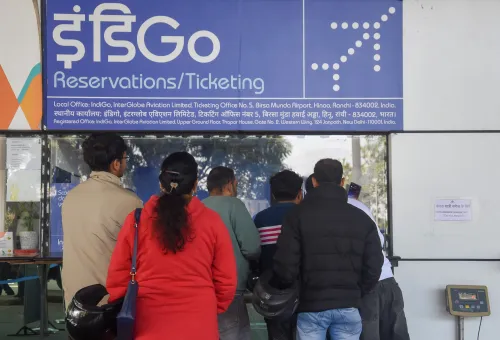
IndiGo retained its commanding lead, carrying 77.30 lakh passengers in September and holding a market share of 65.4 per cent — accounting for nearly two-thirds of all domestic air traffic. The Air India Group remained the second-largest carrier, flying 31.65 lakh passengers and securing a 26.8 per cent share. Together, the two airlines controlled more than 92 per cent of the domestic market.
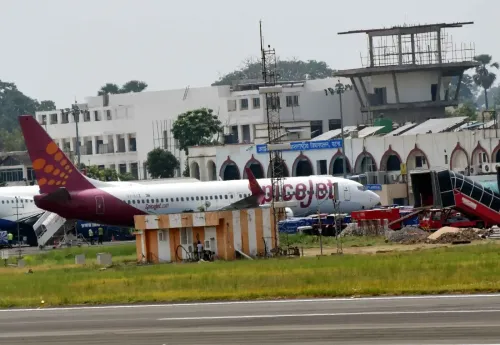
Akasa Air held its position as the third-largest domestic carrier with 6.64 lakh passengers and a 5.6 per cent market share. SpiceJet continued to face significant headwinds, its share slipping to just 0.6 per cent after carrying approximately 73,000 passengers — a steep fall from 1.2 per cent in August when it had transported 1.40 lakh passengers.
A Worsening Sequential Trend
The September decline mirrors a comparable drop in August, when domestic traffic fell 6.34 per cent month-on-month to 1.21 crore passengers. The pattern over the current financial year paints a sobering picture: after a 5 per cent year-on-year fall in April 2026, traffic briefly rebounded with 9 per cent growth in May, only to weaken again. Traffic fell 1 per cent in June, 5 per cent in July, 6 per cent in August, and 7 per cent in September — a clear deterioration in momentum.
Notably, this comes after a sustained multi-year expansion. Domestic passenger traffic grew 13 per cent year-on-year in FY24, reaching 153.6 million passengers. Growth moderated to 7.7 per cent in FY25, when traffic touched 165.5 million, and slowed further to just 1.2 per cent in FY26, with passenger numbers edging up to 167.5 million. The current year's sequential declines suggest the sector may be entering a more sustained period of consolidation.
SpiceJet's Continued Struggle
SpiceJet's market share erosion is among the starkest developments in the data. From a 1.2 per cent share in August to 0.6 per cent in September, the airline's operational challenges — including fleet grounding and financial stress that have been widely reported — continue to shrink its footprint. This is the third consecutive month in which SpiceJet has posted a market share below 1.5 per cent, compared with the double-digit shares it commanded in earlier years.
What the Numbers Signal
The back-to-back monthly contractions across the industry — set against a backdrop of stable fuel prices and no major disruption event — point to softening consumer demand rather than supply-side constraints. Analysts and aviation observers will be watching October and November traffic figures closely, as the festive season typically provides a seasonal uplift. Whether that seasonal demand is sufficient to reverse the current trajectory will be a key indicator for the sector's near-term health.
Point of View
And it is deepening. That trajectory matters more than any single monthly figure. India's post-pandemic aviation boom, fuelled by pent-up demand and rapid capacity addition, has clearly plateaued; FY26 growth of just 1.2 per cent is a fraction of FY24's 13 per cent. The concentration story is equally striking: IndiGo and Air India Group now control over 92 per cent of domestic seats, a duopoly that leaves consumers with little pricing power and raises legitimate competition-policy questions. SpiceJet's near-disappearance — from a double-digit market share a few years ago to 0.6 per cent — is a cautionary tale about fleet mismanagement and financial distress. The festive season uptick, if it arrives, will mask but not resolve the structural demand moderation underway.
NationPress
27 Oct 2026
Frequently Asked Questions
How much did India's domestic air passenger traffic fall in September 2026?
Domestic air passenger traffic declined 6.49 per cent month-on-month to 1.18 crore passengers in September 2026, according to DGCA data. This marks the fourth consecutive monthly sequential decline in the current financial year.
Which airline has the highest market share in Indian domestic aviation?
IndiGo leads India's domestic aviation market with a 65.4 per cent share in September 2026, having carried 77.30 lakh passengers. Together with the Air India Group's 26.8 per cent share, the two carriers account for over 92 per cent of domestic traffic.
What is happening with SpiceJet's market share?
SpiceJet's domestic market share fell sharply to 0.6 per cent in September 2026, down from 1.2 per cent in August, after carrying approximately 73,000 passengers. The airline has been grappling with fleet grounding and financial stress that have significantly reduced its operational capacity.
How has India's domestic aviation growth trend changed over recent years?
Domestic passenger traffic grew 13 per cent year-on-year in FY24, slowed to 7.7 per cent in FY25, and moderated sharply to 1.2 per cent in FY26. Sequential monthly declines have worsened since June 2026, pointing to softening consumer demand in the current financial year.
Could the festive season reverse the declining air traffic trend?
The October-November festive season traditionally provides a seasonal boost to domestic air travel in India. Whether this uplift is strong enough to reverse the consecutive monthly declines seen since June 2026 will be a key indicator of the sector's near-term trajectory, with the next DGCA data release closely watched.