Stanlow Methanol to Jet SAF hub clears Pre-FEED, targets 200,000 tpa output
Synopsis
Essar Energy Transition has cleared a critical engineering milestone for one of the UK's largest SAF facilities — a Methanol to Jet plant at Stanlow targeting 200,000 tpa of output. With government grant funding secured, FEED due later this year, and a Final Investment Decision set for early 2028, the project has shifted from concept to credible delivery, just as the UK's 22% SAF mandate obligation for 2040 begins to bite.
Key Takeaways
Essar Energy Transition has completed the Pre-FEED stage for the Stanlow Methanol to Jet (MtJ) SAF project, announced on 18 May .
The facility will produce more than 200,000 tpa of advanced SAF using approximately 550,000 tpa of renewable e-methanol and bio-methanol feedstock.
The Pre-FEED was part-funded by an up to £2.5 million grant from the UK Government's DfT Advanced Fuel Fund .
Front-End Engineering Design (FEED) is planned for later in 2025 , with a Final Investment Decision targeted by early 2028 .
The project targets participation in the UK SAF Revenue Certainty Mechanism (RCM) and is designed to help meet the UK's 22% SAF mandate by 2040 .
The Stanlow MtJ facility forms part of Essar Energy Transition's wider multi-billion-dollar energy transition investment programme in the North West of England .
Essar Energy Transition (EET) has completed the Pre-Front End Engineering Design (Pre-FEED) stage for the Stanlow Methanol to Jet (MtJ) project, positioning it as one of the UK's largest advanced sustainable aviation fuel (SAF) production hubs. The milestone, announced on 18 May, confirms the project has moved from concept to an investment-grade development, with a target output of more than 200,000 tonnes per annum (tpa) of advanced SAF.
What the Stanlow MtJ Project Involves
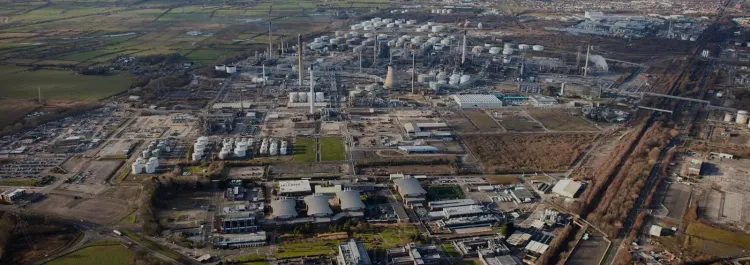
The planned facility will be integrated within Essar Energy Transition's existing Stanlow refinery in the North West of England, using approximately 550,000 tpa of renewable e-methanol and bio-methanol as feedstock. Co-locating the MtJ unit with the refinery enables on-site blending of SAF with conventional jet fuel volumes, reducing both cost and carbon intensity.
Distribution will leverage existing infrastructure, including access to the Manchester Jet, Midlands, and UKOP pipeline systems, as well as road and marine routes — enabling direct supply to major UK airports and airlines. Renewable feedstock will be sourced from domestic and international suppliers, with import and storage capabilities provided by Stanlow Terminals Ltd helping to contain capital expenditure.
Government Backing and Pre-FEED Findings
The Pre-FEED phase was part-funded by an up to £2.5 million grant through the third window of the UK Government's Department for Transport (DfT) Advanced Fuel Fund (AFF), and was completed in partnership with engineering contractor Genesis.
The study reconfirmed several critical findings: the Stanlow Manufacturing Complex is an optimal site with sufficient capacity; there are no material barriers to permitting and consenting; strong market interest exists in renewable methanol supply; and meaningful integration opportunities are available to lower cost and carbon intensity. Essar Energy Transition Fuels has also committed to underpinning the full SAF volumes offtake in line with anticipated UK SAF Mandate requirements.
Next Steps Toward Final Investment Decision
Front-End Engineering Design (FEED) is planned for later in 2025, with a Final Investment Decision (FID) targeted by the start of 2028. The project is now pursuing participation in the UK SAF Revenue Certainty Mechanism (RCM) process, which provides long-term price support for qualifying SAF producers.
Notably, the UK's SAF Mandate sets an obligation of 22% of total jet fuel by 2040. The Stanlow MtJ facility is designed to help EET meet its own SAF obligations in the 2030s while providing spare capacity to decarbonise the broader UK and European aviation sectors.
What Industry Leaders Said
Ruth Herbert, Managing Director and Chief Business Development Officer at Essar Energy Transition, said: 'Completing Pre-FEED confirms that Stanlow MtJ is a leading UK SAF project; it is a fully integrated, delivery-ready solution built for scale. By embedding advanced SAF production directly within a large-scale refinery system, with existing blending, logistics and offtake in place, we have fundamentally reduced risk, cost and complexity.'
Helen Coleman, Managing Director at Genesis, said: 'We are proud to have played an integral role in the successful completion of this significant Pre-FEED study. By leveraging our best-in-class technical and advisory capabilities, we delivered a robust and forward-looking assessment that has reaffirmed the Stanlow Manufacturing Complex as a highly credible location for a large-scale MtJ SAF project.'
Broader Significance for UK Energy Transition
The Stanlow MtJ project forms a crucial part of Essar Energy Transition's wider multi-billion-dollar investment programme into energy transition initiatives across the North West of England, which the company says will support the growth of high-skilled employment in the region. According to EET, the development of a North West SAF production hub backed by a robust regulatory regime represents a vital opportunity for UK fuel resilience, energy security, and industrial growth.
With FEED scheduled for later this year and an FID window opening in early 2028, the project's trajectory will be closely watched by both the UK aviation industry and clean energy investors.
Point of View
But the distance between engineering validation and operational delivery in large-scale SAF remains considerable. The UK's 22% SAF mandate by 2040 is ambitious, and the country currently has a thin pipeline of projects that can deliver at the scale and timeline required — Stanlow is one of the few that has credible infrastructure integration working in its favour. The real test arrives at Final Investment Decision in 2028: whether private capital commits at scale when RCM support structures are tested against global feedstock competition and volatile methanol markets. The government's £2.5 million grant is catalytic but modest relative to the overall capital requirement, and the project's multi-billion-dollar programme framing will need to be backed by firm financing commitments, not just engineering confidence.
NationPress
2 Oct 2026
Frequently Asked Questions
What is the Stanlow Methanol to Jet SAF project?
The Stanlow Methanol to Jet (MtJ) project is a planned advanced sustainable aviation fuel (SAF) production facility integrated within Essar Energy Transition's Stanlow refinery in the North West of England. It aims to produce more than 200,000 tonnes per annum of SAF using renewable e-methanol and bio-methanol feedstock, supplying major UK airports and airlines.
What is the Pre-FEED milestone and why does it matter?
Pre-Front End Engineering Design (Pre-FEED) is an early-stage technical and commercial assessment that evaluates site suitability, technology readiness, integration options, and regulatory compliance before full engineering design begins. Completing it confirms the Stanlow MtJ project is viable and investment-grade, allowing development to proceed toward full FEED and ultimately a Final Investment Decision.
When will the Stanlow MtJ project reach a Final Investment Decision?
Full Front-End Engineering Design (FEED) is planned for later in 2025, with the Final Investment Decision (FID) targeted by the start of 2028. The project is also pursuing participation in the UK SAF Revenue Certainty Mechanism to secure long-term price support.
How is the UK Government supporting the project?
The Pre-FEED stage received part-funding of up to £2.5 million through the third window of the UK Department for Transport's Advanced Fuel Fund (AFF). The broader project is also designed to participate in the UK SAF Revenue Certainty Mechanism, which provides eligible SAF producers with long-term revenue support.
How does the Stanlow MtJ project relate to the UK's SAF Mandate?
The UK's SAF Mandate requires that 22% of total jet fuel used in the country comes from sustainable sources by 2040. The Stanlow MtJ facility is designed to help Essar Energy Transition meet its own SAF mandate obligations in the 2030s while providing additional capacity to decarbonise the wider UK and European aviation sectors.