Did Tata Deliver the 250th C-130J Tail Component in Partnership with Lockheed Martin?
Synopsis
Tata Lockheed Martin Aerostructures Limited has achieved a remarkable milestone by delivering the 250th tail component for the C-130J Super Hercules to Lockheed Martin. This achievement showcases the strength of the India-US aerospace partnership and highlights India's growing role in the global defense market.
Key Takeaways
Tata Lockheed Martin Aerostructures Limited delivered the 250th tail component for the C-130J.
The component was manufactured in Hyderabad .
This milestone emphasizes the India-US aerospace partnership .
India's defense technology market is projected to grow significantly by 2030 .
TLMAL supports India's Make in India initiative.
New Delhi, Dec 6 (NationPress) The US-based aerospace giant Lockheed Martin has received the 250th tail component manufactured by Tata Lockheed Martin Aerostructures Limited (TLMAL) for its C-130J Super Hercules, marking a significant achievement in the India-US aerospace collaboration.
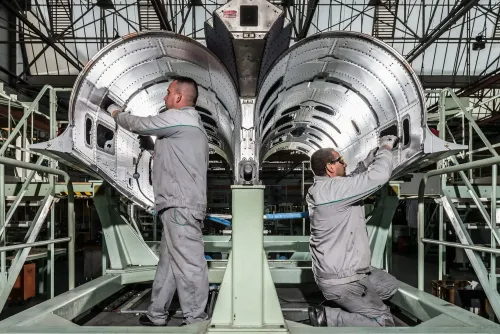
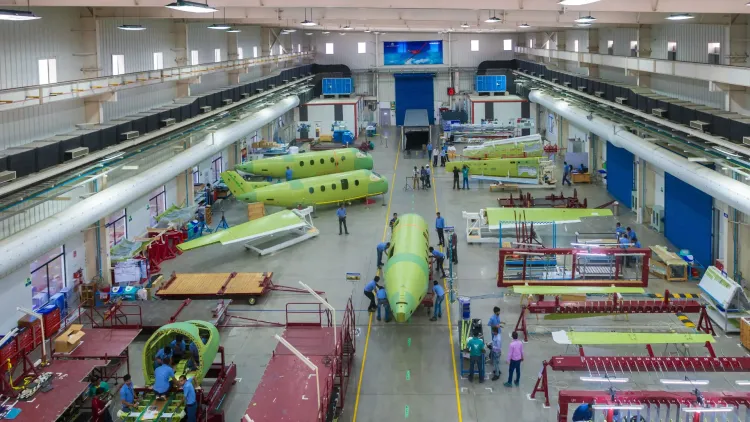
The empennage, which encompasses the entire tail assembly including the horizontal and vertical stabilizers necessary for aircraft stability and control, was produced at the TLMAL facility located in Hyderabad.
It was subsequently shipped to Lockheed Martin’s facility in Marietta, Georgia for integration into the C-130J aircraft, as indicated in the release.
“The quality, precision, and reliability demonstrated by our Indian partners directly bolster the C-130J fleet servicing 23 nations worldwide for over 20 missions, ranging from humanitarian assistance to special operations. This is a product crafted for performance and longevity,” the release stated.
TLMAL is a joint venture established in 2010 between Tata Advanced Systems Limited and Lockheed Martin, dedicated to producing assemblies that contribute to the C-130J production line while also supporting India’s “Make in India” initiative.
In addition to manufacturing, both companies engage in collaboration regarding quality systems and workforce training.
Rod McLean, Vice President for Air Mobility & Maritime Missions at Lockheed Martin, emphasized that this milestone highlights the cooperative efforts with Indian partners and acknowledges India’s role within the company's supply chain.
The global C-130J fleet is operated by 23 countries as a tactical airlifter, including the Indian Air Force, with over 560 aircraft that have logged more than 3 million flight hours across various operations such as transport, rescue, refueling, medical evacuation, and humanitarian efforts.
A recent report indicated that India’s defense technology market, valued at $7.6 billion in 2025, is anticipated to reach $19 billion by 2030, with a growth rate nearing 20 percent compound annual growth rate (CAGR).
Technology-driven systems are projected to account for nearly 50 percent of India’s overall defense market by 2030, signifying a pivotal shift from platform-driven development to advanced engineering and digital capability enhancement.
Point of View
I recognize the significance of Tata's milestone in the context of India's defense capabilities and global partnerships. This development reflects the growing expertise and collaboration in the aerospace sector, reinforcing India's position on the global stage. We remain committed to bringing you updates on such pivotal advancements.
NationPress
2 Oct 2026
Frequently Asked Questions
What is the significance of the 250th tail component delivery?
The delivery signifies a major milestone in the India-US aerospace partnership, showcasing India's growing capabilities in defense manufacturing.
Which company produced the C-130J tail component?
The tail component was produced by Tata Lockheed Martin Aerostructures Limited (TLMAL).
How many countries operate the C-130J fleet?
The global C-130J fleet is operated by 23 countries.
What is the projected growth of India's defense technology market?
India's defense technology market is projected to grow from $7.6 billion in 2025 to $19 billion by 2030.
What role does TLMAL play in India's defense sector?
TLMAL contributes to the C-130J production line and supports India's 'Make in India' initiative.