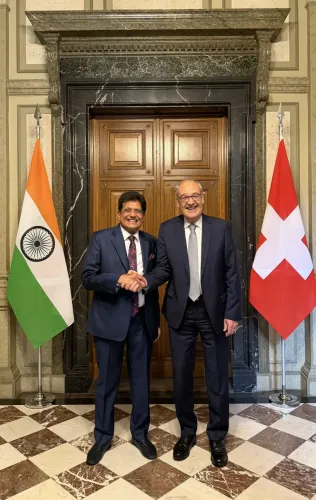
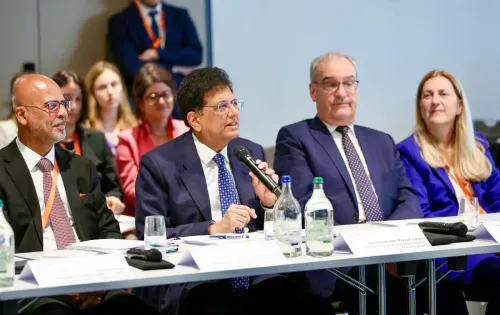
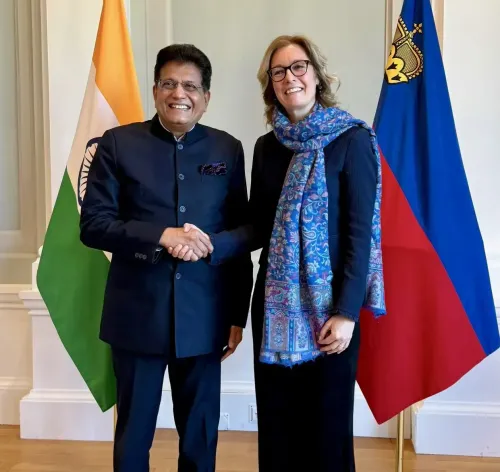
India-EFTA TEPA turns one: Goyal flags $100bn investment pledge, job push

Synopsis
One year into India's landmark trade deal with Switzerland, Norway, Iceland and Liechtenstein, Commerce Minister Piyush Goyal is pointing to early export wins in motor vehicles and industrial goods — and flagging a $100 billion investment commitment tied to one million jobs. The real test now is whether the investment pledge starts moving from paper to projects.
Key Takeaways
India-EFTA TEPA completed one year in force on 1 October 2026 , Commerce Minister Piyush Goyal confirmed.
EFTA nations — Switzerland, Norway, Iceland, and Liechtenstein — have committed to facilitate $100 billion in investments in India over 15 years .
The investment commitment is expected to create one million direct jobs in India's manufacturing and services sectors.
TEPA covers 92.2% of tariff lines and 99.6% of India's exports to EFTA, with full coverage for non-agricultural products.
Sensitive sectors including dairy , soya , and coal have been protected from full liberalisation under the agreement.
Early export growth has been recorded in motor cars and other vehicles , heavy waters , and moulding patterns since TEPA's implementation.
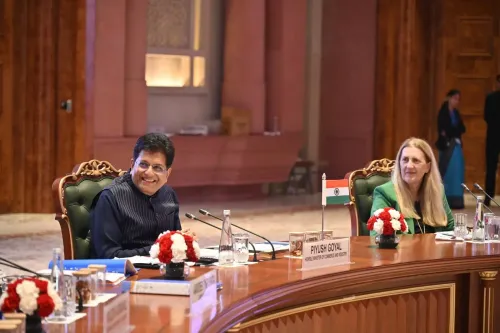
Union Commerce and Industry Minister Piyush Goyal on 1 October 2026 marked the first anniversary of the India-EFTA Trade and Economic Partnership Agreement (TEPA) coming into force, saying the pact has opened significant new opportunities for Indian businesses and exporters. Goyal made the remarks in a post on social media platform X, describing TEPA as a milestone in India's economic engagement with the four European Free Trade Association (EFTA) member nations — Switzerland, Norway, Iceland, and Liechtenstein.
The Investment and Jobs Commitment
At the heart of the agreement is a pledge by EFTA nations to facilitate $100 billion in investments in India over the next 15 years, a commitment the minister said is expected to generate one million direct jobs. According to Goyal, these investment inflows are designed to strengthen both India's manufacturing and services sectors, contributing to long-term economic growth. This positions TEPA as one of the more ambitious investment-linked trade deals India has signed in recent years.
Market Access and Sensitive Sector Protections
TEPA provides India with market access on 92.2 per cent of tariff lines, covering 99.6 per cent of India's exports to EFTA countries, including complete coverage for non-agricultural products. At the same time, New Delhi has safeguarded politically and economically sensitive sectors — including dairy, soya, coal, and certain other agricultural products — from full liberalisation under the agreement. This dual structure reflects India's characteristic approach of securing export gains while ring-fencing domestic producers.
Early Export Gains Since Implementation
Highlighting the pact's early trade impact, Goyal pointed to measurable export growth in specific categories. 'A notable outcome is that India's exports of motor cars and other motor vehicles, heavy waters and moulding patterns have grown significantly since the implementation of TEPA. This is just the beginning,' he said. While the minister did not provide specific trade volume figures in his statement, the sectors cited represent higher-value export segments, suggesting the agreement is beginning to shift India's export basket toward more complex goods in these corridors.
Broader Context and What Comes Next
TEPA, signed in March 2024 and ratified into force in October 2025, was widely regarded as a template for India's broader free trade ambitions, particularly as negotiations with the European Union continue separately. The pact was notable for including a binding investment facilitation clause — a first for India in a trade agreement — making the $100 billion figure legally anchored rather than aspirational. This comes amid India's push to diversify trade partnerships beyond traditional markets and attract high-quality foreign direct investment tied to job creation. As the agreement enters its second year, industry stakeholders and trade analysts will be watching whether investment disbursements begin to track the commitments made at the time of signing.
Point of View
A design feature that distinguishes it from India's previous trade deals. The early export gains in motor vehicles and industrial goods are encouraging, but they are narrow. The broader test of TEPA's worth will come when investment disbursements are audited against the 15-year timeline — a process India has historically struggled to enforce. With EU-India FTA talks still grinding along, TEPA's execution record will heavily influence whether Brussels takes India's investment-linkage model seriously as a replicable template.
NationPress
1 Oct 2026
Frequently Asked Questions
What is India-EFTA TEPA?
The India-EFTA Trade and Economic Partnership Agreement (TEPA) is a trade and investment pact between India and the four European Free Trade Association nations — Switzerland, Norway, Iceland, and Liechtenstein. It came into force in October 2025 and covers 92.2% of tariff lines, including full market access for non-agricultural exports.
What is the $100 billion investment commitment under TEPA?
EFTA nations have pledged to facilitate $100 billion in investments in India over 15 years as part of TEPA's binding investment facilitation clause. This is expected to create one million direct jobs across India's manufacturing and services sectors.
Which Indian sectors are protected under TEPA?
India has shielded sensitive domestic sectors — including dairy, soya, coal, and certain other agricultural products — from full tariff liberalisation under TEPA, while securing near-complete market access for its own exports to EFTA countries.
What early export gains has India seen from TEPA?
Since TEPA's implementation, India has recorded significant export growth in motor cars and other motor vehicles, heavy waters, and moulding patterns, according to Commerce Minister Piyush Goyal. Specific trade volume data was not provided in the ministerial statement.
How does TEPA fit into India's broader trade strategy?
TEPA is seen as a template for India's wider free trade ambitions, particularly its ongoing negotiations with the European Union. Its binding investment-for-jobs clause is a structural first for India and could influence the design of future agreements if implementation meets targets.