UP's 'Learning by Doing' push: 586 PM SHRI schools to get ₹2.34 crore for hands-on education
Synopsis
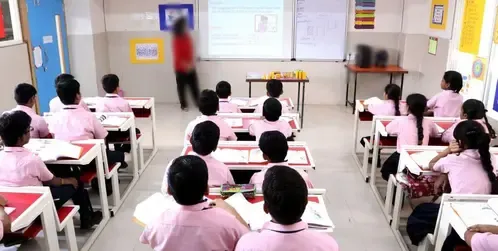
Uttar Pradesh is putting ₹2.34 crore behind a shift from textbooks to hands-on learning, covering 586 PM SHRI schools in 2024-25. Each school gets ₹40,000 for consumables and raw materials — a modest but deliberate bet on experiential pedagogy that, if tracked rigorously, could become a model for NEP 2020 implementation across India.
Key Takeaways
The Yogi Adityanath government is rolling out 'Learning by Doing' across 586 upper primary and composite PM SHRI schools in Uttar Pradesh for 2024-25 .
Total outlay for consumables and raw materials stands at ₹2.34 crore , with each school receiving up to ₹40,000 .
The initiative replaces rote learning with experiments, participatory activities, and direct hands-on experience.
Minister of State for Basic Education Sandeep Singh said the programme aims to make learning 'engaging, participatory, and aligned with the children's curiosity.' The education department will monitor activity documentation and integrate findings from each cycle into future planning.
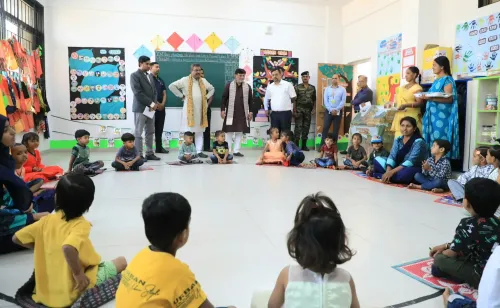
Uttar Pradesh's 'Learning by Doing' initiative is gaining traction across the state, with the Yogi Adityanath-led government committing resources to embed activity-based teaching in 586 upper primary and composite PM SHRI schools for the academic year 2024-25. The programme, operating under the Pradhan Mantri Schools for Rising India (PM SHRI) framework, aims to shift classroom learning from rote memorisation to experiential, hands-on engagement.
What the Initiative Entails
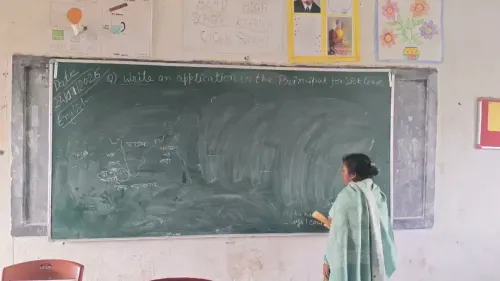
The programme moves education beyond textbooks by introducing structured experiments, participatory activities, and practical experiences into daily classroom instruction. Students are expected to observe, experiment, and actively engage with subject matter rather than passively absorb it. The state government views this as central to the wholesome development of children — not merely academic achievement.
Financial Outlay and School Coverage
To operationalise the initiative, the Uttar Pradesh government has approved the procurement of consumables and raw materials at a total cost of ₹2.34 crore, with each of the 586 selected schools receiving a budgetary allocation of up to ₹40,000. These materials will be channelled directly into activity-based teaching, ensuring that schools have the resources needed to make practical learning a routine, rather than an exception.
What the Government Said
Minister of State for Basic Education Sandeep Singh described the initiative as a deliberate effort to align education with children's natural curiosity. 'Through 'Learning by Doing', the children will get opportunities to learn via experimentation and experience. Our endeavour is to make the learning process engaging, participatory, and aligned with the children's curiosity,' Singh said. The state education department has also outlined a monitoring mechanism that includes documentation of classroom activities and the integration of insights from each cycle into future planning.
Bridging Theory and Practice
A central goal of the initiative is to close the gap between textbook knowledge and real-world understanding. By enabling students to engage with concepts through direct experience, the programme seeks to make learning more intuitive and retention stronger. Officials have noted that this approach aligns with the broader vision of the National Education Policy (NEP) 2020, which emphasises competency-based and experiential learning at the foundational and middle-school levels.
Oversight and Next Steps
The education department will monitor both the usage of materials and the documentation of activities in participating schools. Emphasis will be placed on learning from each implementation cycle to refine the programme going forward. With 586 schools set to benefit in 2024-25, the state's push toward experiential pedagogy could serve as a scalable model for other states operating under the PM SHRI framework — contingent on how effectively outcomes are tracked and reported.
Point of View
000-per-school allocation is a starting point, not a transformation — consumables alone do not change pedagogy if teachers are not retrained alongside. The real test of 'Learning by Doing' in UP is whether the promised monitoring mechanism produces usable outcome data, or whether it becomes another paper trail. India has a long history of activity-based learning pilots that looked promising at launch and faded without accountability frameworks. The NEP 2020 gives this initiative a policy spine, but state-level execution — particularly teacher capacity and assessment reform — will determine whether 586 schools become a proof of concept or a footnote.
NationPress
1 Oct 2026
Frequently Asked Questions
What is the 'Learning by Doing' initiative in Uttar Pradesh?
It is a government-backed programme that introduces hands-on, activity-based teaching into 586 upper primary and composite PM SHRI schools in Uttar Pradesh for the academic year 2024-25. The initiative replaces passive, textbook-only instruction with experiments, participatory activities, and direct practical experiences.
How much funding has the UP government allocated for this initiative?
The state government has approved ₹2.34 crore for the procurement of consumables and raw materials, with a per-school budgetary limit of ₹40,000. These funds are specifically earmarked for activity-based teaching resources.
Which schools are covered under this programme?
A total of 586 upper primary and composite PM SHRI (Pradhan Mantri Schools for Rising India) schools in Uttar Pradesh have been selected for the 2024-25 academic year.
What did the UP education minister say about this initiative?
Minister of State for Basic Education Sandeep Singh stated that the programme will give children opportunities to learn via experimentation and experience, with the goal of making the process 'engaging, participatory, and aligned with the children's curiosity.'
How will the initiative be monitored?
The Uttar Pradesh education department will oversee documentation of classroom activities in all participating schools and will incorporate insights from each cycle into future planning, aiming for continuous improvement of the programme.