China's Tibet renewable energy projects mask deeper geopolitical goals: Report
Synopsis
A new report on bitterwinter.org warns that China's renewable energy push in Tibet — anchored by the world's largest photovoltaic park, a 10,000 GW solar potential, and a new ultra-high-power transmission line to Guangdong — may be less about clean energy and more about extracting Tibet's resources for China's industrial south, with critical mineral exploitation raising additional red flags.
Key Takeaways
A report on bitterwinter.org questions whether China's renewable energy projects in Tibet serve geopolitical as much as environmental goals.
Researchers estimate Tibet's solar power potential at up to 10,000 GW , making it a prime target for Chinese energy expansion.
The Gonghe Photovoltaic Park , described as the world's largest, covers an area several times the size of Manhattan .
China is building an ultra-high-power transmission line from Tibet to Guangdong Province , due by 2029 , channelling Tibetan electricity to China's industrial south.
China also supplies approximately 70% of global wind power equipment and 80% of solar photovoltaic modules.
The report flags accelerating critical mineral exploitation — including copper — as evidence the strategy extends well beyond green energy claims.
China's renewable energy projects in Tibet have been publicly framed as clean energy initiatives, but their location, unprecedented scale, and installed capacity warrant far closer scrutiny, according to a new report published on bitterwinter.org. The report raises a pointed question: are these projects purely environmental, or do they serve deeper geopolitical objectives?
Tibet as China's Energy Frontier
Researchers estimate that Tibet's solar power potential could reach as high as 10,000 GW — a figure that makes the region enormously attractive for Chinese energy companies. The report notes that Tibet is being positioned to gradually become a centre of exploration for China's energy transition, a shift with implications that extend well beyond climate policy.
China already dominates global clean energy supply chains, reportedly supplying around 70 per cent of the world market for wind power equipment and approximately 80 per cent of global solar photovoltaic modules. That industrial heft gives Beijing both the capacity and the commercial incentive to accelerate large-scale deployment in Tibet.
The Gonghe Project and Its Contested Impact
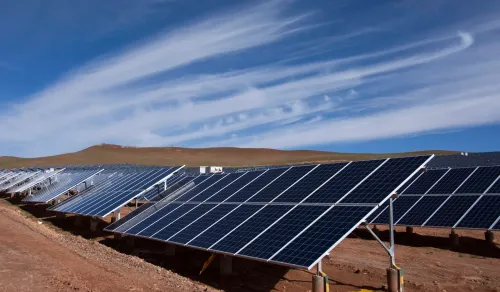
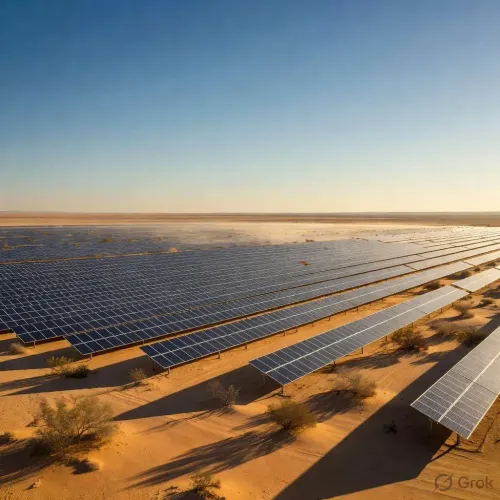
The Gonghe Photovoltaic Park is widely described as the world's largest photovoltaic power station. Chinese state media has claimed that agrivoltaic practices at the site have restored grasslands, supported animal husbandry, and benefited local herders.
The report, however, pushes back on that narrative. 'Yet the scale of the project, several times larger than Manhattan, raises concerns about its necessity, sustainability, and long-term effects. Covering vast areas with solar panels inevitably alters landscapes, affects traditional livelihoods, and reshapes local economies,' it stated. The report added that while several studies highlight the social and economic benefits of photovoltaic solar energy in China, the 'land-intensive model can also transform local landscapes, with potentially far-reaching consequences when the land is damaged,' and that official accounts systematically underplay wider social and environmental impacts.
Transmission Infrastructure and Energy Extraction
China has begun construction of an ultra-high-power transmission line running from Tibet to Guangdong Province, scheduled for completion by 2029. The electricity generated in Tibet will be routed to Guangdong and Shenzhen — described by Beijing as major industrial and manufacturing hubs in southern China.
'This shows how Tibet's energy resources are being used to meet the growing demand for electricity in parts of southern China,' the report stated. Critics argue this positions Tibet less as a beneficiary of clean energy development and more as a resource extraction zone serving China's industrial heartland.
Critical Minerals: Beyond the Green Energy Narrative
The report's concerns extend beyond solar and wind power. China has also significantly stepped up the exploration and exploitation of mineral resources across Tibet, including strategic and critical minerals. The region holds abundant copper reserves, and some of China's largest copper mines are located there.
The report concludes that China's rapid expansion of critical mineral exploitation in Tibet 'goes beyond green energy and the so-called environmental efforts it claims to pursue' — suggesting that the renewable energy framing may serve, in part, as a legitimising cover for a broader resource-capture strategy. This comes amid growing international concern over supply chain dependencies on Chinese-controlled critical minerals.
Broader Implications for Global Scrutiny
The findings land at a moment of heightened geopolitical attention to Tibet, with international observers increasingly questioning whether large-scale infrastructure projects in the region are consistent with the rights and livelihoods of its indigenous population. The report's authors argue that the unprecedented scale of these projects demands independent environmental and social impact assessments — assessments that Chinese authorities have not publicly committed to providing.
Point of View
And when copper mines expand alongside solar parks, the narrative of environmental stewardship wears thin. What is unfolding looks less like a climate initiative and more like a classic resource-extraction logic wearing a green label — a pattern Beijing has deployed elsewhere along its strategic periphery. International scrutiny has so far been muted, partly because climate credentials provide political cover that resource extraction alone would not. That asymmetry is precisely what the report, and analysts tracking China's critical mineral strategy, are trying to close.
NationPress
14 Nov 2026
Frequently Asked Questions
What does the report say about China's renewable energy projects in Tibet?
The report, published on bitterwinter.org, argues that China's renewable energy projects in Tibet — given their unprecedented scale, location, and installed capacity — may serve deeper geopolitical objectives beyond clean energy goals. It points to the Gonghe Photovoltaic Park, the planned Tibet-Guangdong transmission line, and accelerating critical mineral extraction as evidence.
What is Tibet's estimated solar power potential?
Researchers estimate that Tibet's solar power potential could reach up to 10,000 GW, making it one of the most significant untapped solar resources on Earth. This scale is a key reason Chinese energy companies view the region as a priority for expansion.
What is the Gonghe Photovoltaic Park?
The Gonghe Photovoltaic Park in China is considered the world's largest photovoltaic power station. The report notes it covers an area several times larger than Manhattan, raising concerns about its long-term impact on local landscapes, traditional livelihoods, and sustainability despite official claims of ecological benefit.
What is the Tibet-Guangdong transmission line and when will it be completed?
China is constructing an ultra-high-power transmission line from Tibet to Guangdong Province, scheduled for completion by 2029. It is designed to carry renewable electricity generated in Tibet to Guangdong and Shenzhen, which Beijing describes as major industrial and manufacturing hubs in southern China.
Why does the report raise concerns about critical minerals in Tibet?
The report notes that China has significantly expanded exploration and exploitation of strategic and critical minerals in Tibet, including copper, home to some of China's largest copper mines. It argues this activity goes beyond green energy objectives, suggesting the renewable energy framing may partly legitimise a broader resource-capture strategy in the region.