Trump's praise for Modi signals leader-driven diplomacy, says CRF chief
Synopsis
A think-tank chief's reading of Trump's public praise for Modi cuts to the core of how 21st-century diplomacy actually works: less about treaties, more about personal bonds. After a 16-month gap, the Modi-Trump bilateral is being watched not just for what was agreed, but for what the two leaders chose to say in front of the world's cameras.
Key Takeaways
CRF President Shishir Priyadarshi said Trump 's praise for Modi reflects the growing role of personal chemistry in modern diplomacy.
The Modi-Trump bilateral was the first in-person meeting between the two leaders in 16 months .
Priyadarshi described the India-US relationship as one of the most important strategic partnerships of the 21st century .
He credited PM Modi with a distinctive ability to build personal rapport with global leaders across political and geographical lines.
Priyadarshi argued that public statements made before the world press were as significant as the closed-door discussions.
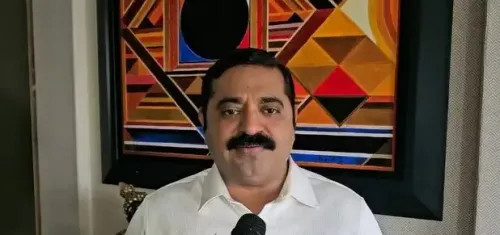
Chintan Research Foundation (CRF) President Shishir Priyadarshi on Thursday, 18 June said that US President Donald Trump's public praise for Prime Minister Narendra Modi reflects a broader shift in how modern international relations are shaped — increasingly driven by personal chemistry between heads of state rather than institutional frameworks alone.
Key Developments
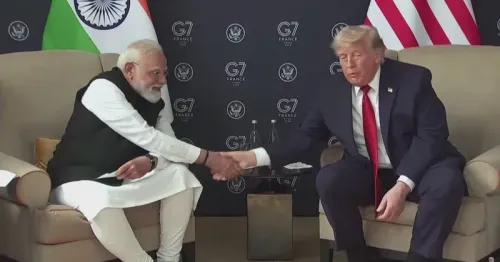
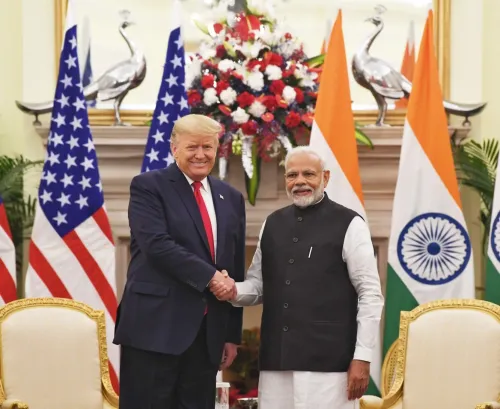
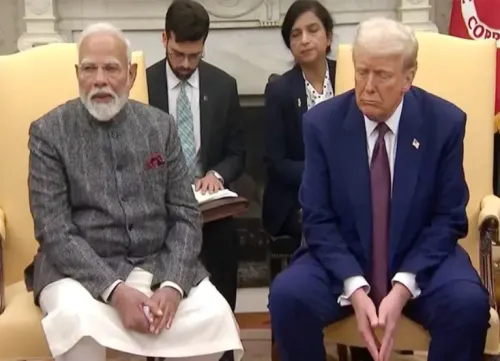
Priyadarshi made the remarks reacting to the outcome of the bilateral meeting between Prime Minister Modi and President Trump, the first such in-person engagement between the two leaders in 16 months. He noted that the meeting had generated considerable public expectations in both countries.
'India-US relations are very old and span multiple spheres. In the 21st century, this is one of the most important relationships for both countries, especially for India,' Priyadarshi said.
What Priyadarshi Said
The CRF president argued that the significance of the summit extended beyond closed-door deliberations. 'The key point is not only what the two leaders said during the meeting, but also what they stated publicly in front of the world press afterward,' he said.
He credited Modi with a distinctive ability to cultivate personal rapport with global leaders across political and geographical boundaries — a trait he described as central to India's current diplomatic standing.
'This is clearly a reflection of 2025 realities, something that perhaps did not exist 40–50 years ago, where relations between two countries depend significantly on the chemistry between their leaders,' Priyadarshi stated. 'In this context, I would like to give a lot of credit to our Prime Minister for his remarkable ability to build personal rapport,' he added.
Why It Matters
The India-US strategic partnership spans defence, trade, technology, and the diaspora — making it one of the most consequential bilateral relationships of the 21st century, according to Priyadarshi. He noted that India has had many distinguished leaders historically, but argued that Modi's capacity to establish personal bonds with counterparts globally represents a qualitative shift in Indian diplomacy.
This comes amid a broader global trend where summit optics and leader-to-leader signalling carry growing weight alongside formal treaty frameworks and institutional dialogue.
What's Next
Analysts and policymakers are likely to watch closely for concrete outcomes from the bilateral — particularly on trade negotiations and defence cooperation — to assess whether the personal warmth on display translates into policy deliverables for both nations.
Point of View
But it rarely sustains policy outcomes on its own — trade disputes, visa friction, and defence procurement timelines have their own institutional gravity. The 16-month gap between Modi-Trump in-person meetings itself suggests that warmth has limits. The real question mainstream coverage sidesteps is whether India is building durable institutional architecture in the relationship, or relying too heavily on a leader-to-leader dynamic that is, by definition, term-limited.
NationPress
24 Sept 2026
Frequently Asked Questions
What did CRF President Shishir Priyadarshi say about Trump's praise for Modi?
Priyadarshi said Trump's public praise for Modi reflects a 2025 diplomatic reality where personal chemistry between leaders significantly shapes bilateral relations. He credited Modi with a distinctive ability to build personal rapport with global leaders.
When did PM Modi and President Trump last meet bilaterally?
The bilateral meeting between PM Modi and President Trump took place after a gap of 16 months, according to Priyadarshi. He noted the meeting had generated high public expectations in both countries.
Why does the India-US relationship matter so much?
According to Priyadarshi, the India-US partnership spans defence, trade, technology, and people-to-people ties, making it one of the most important strategic relationships of the 21st century — particularly for India.
What is the Chintan Research Foundation?
The Chintan Research Foundation (CRF) is an Indian think-tank. Its president, Shishir Priyadarshi, commented on the India-US bilateral following Trump's public praise for PM Modi.
What should we watch for after the Modi-Trump meeting?
Analysts will track whether the personal warmth between the two leaders translates into concrete policy outcomes — particularly on trade negotiations and defence cooperation — in the weeks following the summit.