India Receives LPG Carriers Pine Gas and Jag Vasant from Hormuz
Synopsis
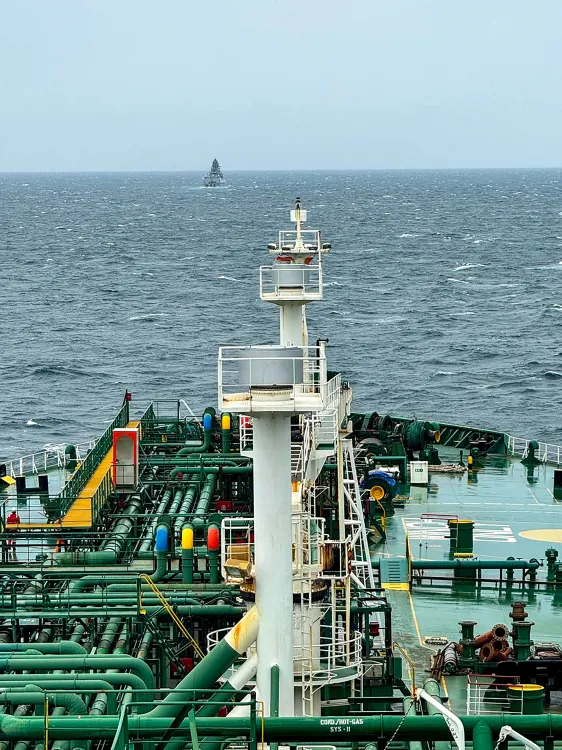
The Indian government reports that two LPG carriers, Pine Gas and Jag Vasant, successfully navigate the Strait of Hormuz, highlighting the ongoing efforts to maintain energy security amidst regional tensions.
Key Takeaways
Pine Gas and Jag Vasant are carrying a combined total of 92,600 tonnes of LPG.
Both vessels have successfully crossed the Strait of Hormuz .
The Pine Gas is set to dock in New Mangalore on March 27.
Jag Vasant is expected at Kandla on March 26.
Indian government aims to boost 'Made in India' shipbuilding initiatives.
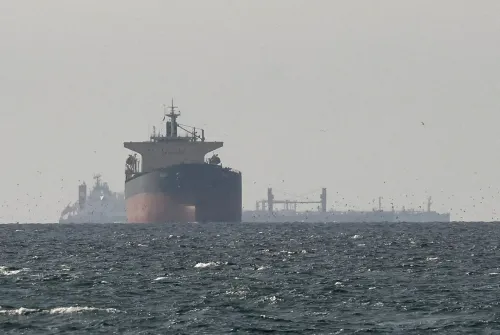
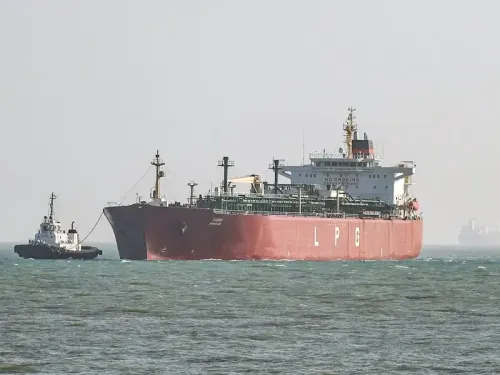
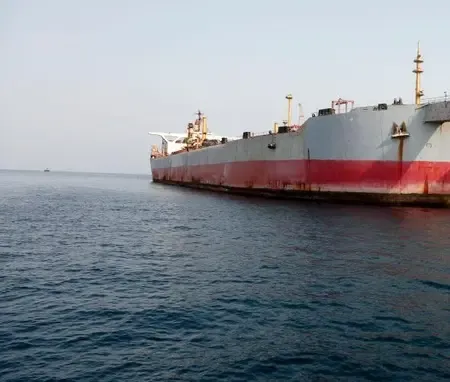
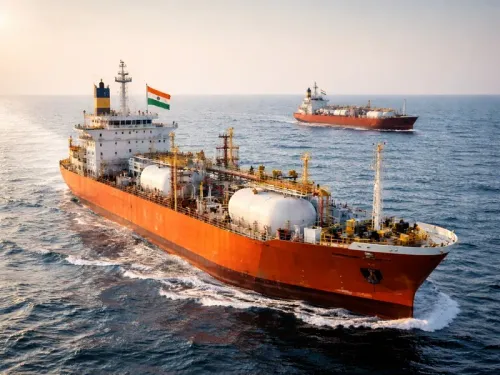
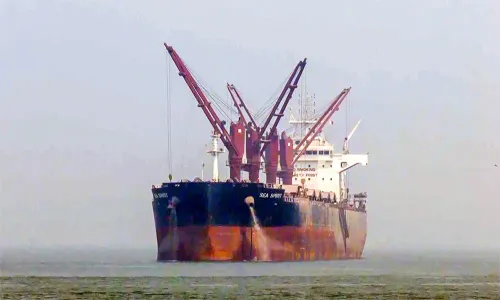
New Delhi, March 24 (NationPress) The Indian government announced on Tuesday that two liquefied petroleum gas (LPG) carriers, Pine Gas and Jag Vasant, have successfully navigated the Strait of Hormuz and are en route to India.
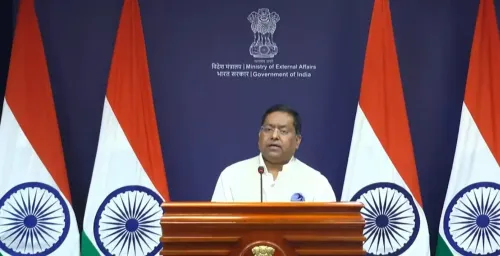
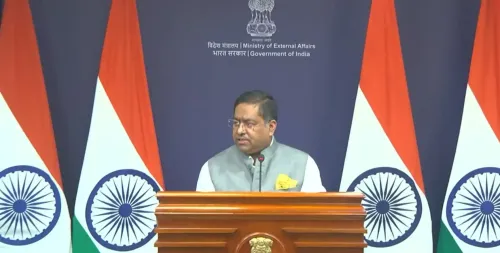
During an inter-ministerial briefing, Rajesh Kumar Sinha, Special Secretary at the Ministry of Ports, Shipping and Waterways, stated that the Pine Gas is expected to dock at New Mangalore port on March 27, carrying 45,000 metric tonnes of LPG.
Furthermore, Jag Vasant is set to arrive at Kandla port on March 26 with a load of 47,600 metric tonnes of LPG. There are also twenty Indian-flagged vessels positioned to the west of the Strait of Hormuz, Sinha noted.
Previously, tracking data indicated that the vessels Jag Vasant and Pine Gas were traversing the strategically vital Strait of Hormuz after receiving clearance for safe passage. Reports suggest that the complete journey through the strait usually takes about 14 hours.
This announcement comes amidst escalating tensions in the region, particularly following recent US and Israeli military actions in late February that have impacted this critical global shipping route for oil and gas.
The Jag Vasant loaded its LPG in Kuwait, while the Pine Gas sourced its cargo from Ruwais in the UAE. These vessels had been stalled in the region due to the prevailing tensions but have now been permitted to proceed.
Earlier this month, two additional Indian-flagged LPG carriers successfully completed their respective journeys through the strait.
In related developments, Prime Minister Narendra Modi on Tuesday reiterated the government's strategies to shield citizens from global oil price fluctuations, while emphasizing the Center's commitment to maintaining operational energy supply routes.
While addressing the Rajya Sabha concerning the crisis in West Asia, PM Modi made a compelling case for national self-reliance across all sectors, including global fuel transport and maritime pathways.
He stated, “Atmanirbharta is the sole remedy to protect the nation and its citizens from international disturbances. Currently, about 90 percent of Indian trade relies on foreign vessels, which exacerbates our vulnerability during global conflicts or wars.”
The Prime Minister also mentioned that the government plans to invest a substantial Rs 70,000 crore towards promoting 'Made in India' ships.
Point of View
The successful transit of LPG carriers through the Strait of Hormuz amidst geopolitical tensions reflects the Indian government's commitment to ensuring energy security. It underscores the importance of self-reliance in maritime logistics and highlights the challenges posed by global conflicts.
NationPress
23 Sept 2026
Frequently Asked Questions
What cargo are the vessels carrying?
The vessels Pine Gas and Jag Vasant are carrying a total of 92,600 metric tonnes of LPG.
When will the vessels arrive in India?
Pine Gas is expected to arrive at New Mangalore port on March 27, while Jag Vasant will reach Kandla port on March 26.
What significance does the Strait of Hormuz hold?
The Strait of Hormuz is a critical global shipping route for oil and gas, making its security vital for energy supplies.
How does this situation impact India's energy policy?
The successful transit highlights India's efforts to ensure energy security while emphasizing the need for self-reliance in fuel transport.
What are the government's plans for maritime shipping?
The government plans to invest Rs 70,000 crore to enhance the construction of 'Made in India' ships.