Udyam platforms cross 7.9 crore MSME registrations, formalising India's informal economy
Synopsis
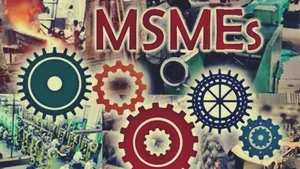
India has crossed 7.9 crore MSME registrations on the Udyam and Udyam Assist platforms — a number that rivals entire national populations. With ₹5,050 crore in PM Vishwakarma loans approved, a doubled credit guarantee ceiling, and a ₹10,000 crore SME Growth Fund, the Centre is betting that formal registration is the gateway to a credit-linked, digitally-enabled MSME economy.
Key Takeaways
Over 7.9 crore enterprises have registered through the Udyam and Udyam Assist platforms as of 14 May 2025 .
The PM Vishwakarma Scheme has registered over 30 lakh artisans , approved nearly 5.9 lakh loans worth approximately ₹5,050 crore , and issued over 25.8 lakh e-vouchers .
Credit guarantee ceiling under the CGS-CGTMSE doubled from ₹5 crore to ₹10 crore for banks under Union Budget 2025–26 .
A ₹10,000 crore SME Growth Fund and additional SRI Fund allocations were announced under Union Budget 2026–27 .
MSMEs contribute 31.1% to India's GDP, account for 48.58% of exports, and employ approximately 32.8 crore people .
More than 7.9 crore micro, small, and medium enterprises and informal micro enterprises have registered through the Udyam and Udyam Assist platforms, the government said in an official statement on Thursday, 14 May, marking a significant milestone in the Centre's push to bring India's vast informal economy into the formal fold.
Scale of Formalisation
The registrations span the full breadth of India's MSME sector, which the government estimates encompasses more than 7.47 crore enterprises across manufacturing, services, and trade. The sector contributes approximately 31.1% to India's GDP, accounts for 48.58% of total exports, and generates around 35.4% of manufacturing output. It provides livelihoods to roughly 32.8 crore people — making it the second-largest source of employment after agriculture.
PM Vishwakarma Scheme: Key Numbers
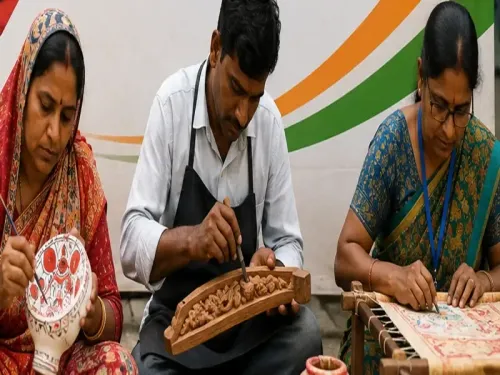
The government also highlighted progress under the PM Vishwakarma Scheme, under which over 30 lakh artisans have registered. Of these, more than 26.7 lakh completed skill verification and over 23.7 lakh underwent basic training. Nearly 5.9 lakh loans amounting to approximately ₹5,050 crore have been approved, and more than 25.8 lakh e-vouchers have been issued to support toolkit incentives and enterprise development.
Credit Access and Capital Support
To widen capital availability, the government pointed to a ₹10,000 crore SME Growth Fund and additional allocations to the Self-Reliant India (SRI) Fund under the Union Budget 2026–27. The MSME Ministry has also implemented the Credit Guarantee Scheme (CGS) through the Credit Guarantee Fund Trust for Micro and Small Enterprises (CGTMSE). Under the Union Budget 2025–26, the ceiling of guarantee coverage was enhanced from ₹5 crore to ₹10 crore for banks — effectively doubling the protection available to lenders extending credit to smaller enterprises.
Digital Platforms Driving Market Access
Beyond credit, the statement noted that digital platforms — including the Government e-Marketplace (GeM), the Trade Receivables Discounting System (TReDS), and the SAMADHAAN portal — are enabling better market access and faster payment cycles for MSMEs. Targeted policy measures are also improving legal safeguards and easing the cost of doing business for smaller operators. This comes amid a broader government emphasis on inclusive growth, particularly across rural and semi-urban India, where informal enterprises have historically been excluded from formal financial systems.
What Comes Next
According to the official statement, continued convergence between digital platforms, financial institutions, and grassroots implementation agencies will be critical to ensuring benefits reach last-mile entrepreneurs, artisans, rural traders, and first-generation micro enterprise owners. The government's framing signals that registration numbers, while substantial, are a means to an end — with credit access, skilling, and market linkage forming the next frontier of MSME policy.
Point of View
But registration and formalisation are not the same thing. Millions of these enterprises may be registered on paper while remaining effectively outside the credit and market-access systems the government is promoting. The real test is uptake — how many of those 7.9 crore entities have actually accessed a GeM order, a TReDS invoice discount, or a CGTMSE-backed loan? The PM Vishwakarma numbers suggest a gap: 30 lakh registered, but only 5.9 lakh loans approved. Closing that conversion gap, not adding to the registration count, is where MSME policy needs to focus next.
NationPress
3 Oct 2026
Frequently Asked Questions
What are the Udyam and Udyam Assist platforms?
Udyam is the government's official online registration portal for micro, small, and medium enterprises, while Udyam Assist is a parallel platform designed to bring informal and unregistered micro enterprises into the formal economy. Together, they have registered over 7.9 crore enterprises as of May 2025.
What is the PM Vishwakarma Scheme and how many have benefited?
The PM Vishwakarma Scheme is a Central government programme supporting traditional artisans and craftspeople with skilling, toolkits, and credit access. Over 30 lakh artisans have registered, with nearly 5.9 lakh loans worth approximately ₹5,050 crore approved and more than 25.8 lakh e-vouchers issued.
How has the Credit Guarantee Scheme been upgraded?
Under Union Budget 2025–26, the ceiling for guarantee coverage under the Credit Guarantee Scheme through CGTMSE was doubled from ₹5 crore to ₹10 crore for banks, making it easier for lenders to extend larger loans to micro and small enterprises without requiring collateral.
Why does MSME formalisation matter for India's economy?
MSMEs contribute approximately 31.1% to India's GDP, generate around 35.4% of manufacturing output, account for 48.58% of total exports, and employ roughly 32.8 crore people — second only to agriculture. Bringing them into the formal economy improves their access to credit, legal protections, and government schemes.
What digital platforms are supporting MSMEs beyond registration?
The government has deployed GeM (Government e-Marketplace) for procurement access, TReDS for invoice-based financing, and SAMADHAAN for delayed payment resolution. These platforms are intended to improve market linkage and accelerate payment cycles for registered MSMEs.