9 crore MSMEs on Udyam platforms, employing 38 crore across India

Synopsis
India's Udyam platforms have quietly crossed a landmark: nearly 9 crore MSMEs registered, supporting 38 crore jobs. The numbers reveal the scale of formalisation underway — but the real test is whether registration translates into credit access, scheme uptake, and durable employment for India's vast informal sector.
Key Takeaways
Nearly 9 crore MSMEs are now registered on the Udyam Registration Portal and Udyam Assist Platform as of 14 July 2025 .
The registered enterprises collectively employ over 38 crore people across India.
The Udyam Assist Platform enables informal micro-enterprises outside GST and Income Tax systems to obtain formal recognition via banks and NBFCs.
Registered MSMEs gain access to institutional credit, delayed-payment protection, government procurement, and digitalisation support.
The initiative specifically targets women entrepreneurs , SC/ST entrepreneurs , rural enterprises , artisans , and youth-led startups .
MSMEs contribute approximately 30% to India's GDP and represent a major share of the country's non-farm workforce.
Nearly 9 crore micro, small and medium enterprises (MSMEs) have been registered on the government's Udyam Registration Portal and Udyam Assist Platform, collectively employing over 38 crore people across India, the Ministry of Micro, Small & Medium Enterprises (MSME) said on 14 July 2025. The figures, released in an official statement, underscore the scale of the Centre's push to formalise India's vast informal business sector.
Two Platforms, One Goal
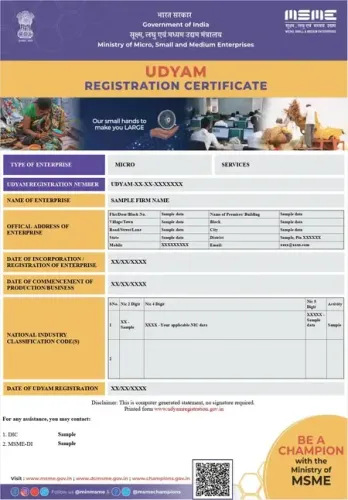
The Udyam Registration Portal offers MSMEs an official digital identity through a paperless, self-declaration-based and free online process — removing the bureaucratic friction that historically kept small businesses out of the formal economy. Its companion, the Udyam Assist Platform, extends this reach further by enabling informal micro-enterprises — including those outside the Goods and Services Tax (GST) or Income Tax systems — to obtain formal recognition through authorised partners such as banks, non-banking financial companies (NBFCs), and other lending institutions.
Enterprises registered via the Udyam Assist route receive an 'Udyam Assist Certificate', which makes them eligible for a range of government support programmes specifically designed for micro enterprises.
What Registration Unlocks for MSMEs
According to the ministry, Udyam registration opens the door to government schemes spanning finance, technology upgradation, quality certification, skill development, market access, and entrepreneurship promotion. Beyond scheme eligibility, registered enterprises gain easier access to institutional credit, statutory protection against delayed payments, participation in government procurement, and support for digitalisation and productivity enhancement.
Notably, the platforms are also being used as a vehicle for financial inclusion — drawing previously unbanked and under-served enterprises into the formal credit ecosystem for the first time.
Who Benefits Beyond the Numbers
The ministry highlighted that the initiative is making a measurable difference for historically underserved segments: women entrepreneurs, SC/ST entrepreneurs, rural enterprises, traditional artisans, first-generation entrepreneurs, and youth-led startups. By simplifying registration and lowering barriers to government support, the platforms are broadening who can access the formal MSME ecosystem.
This is particularly significant given that India's informal sector has long been estimated to account for a substantial share of employment — formalising even a fraction of it has outsized implications for credit access, social security coverage, and tax compliance.
Broader Economic Significance
MSMEs are widely regarded as the backbone of India's economy, contributing approximately 30% to GDP and accounting for a significant share of exports. The 38 crore employment figure registered on Udyam platforms represents a substantial portion of India's non-farm workforce, signalling that formalisation efforts are gaining traction at scale.
The combined impact of both platforms, according to the ministry, is strengthening entrepreneurship, accelerating formalisation, and contributing to the country's long-term economic development goals. With the registration base approaching the 9 crore mark, the next phase of the initiative is expected to focus on deepening scheme uptake among already-registered enterprises — translating registration into tangible economic outcomes.
Point of View
But registration and formalisation are not the same thing. The harder question is how many of these enterprises have actually accessed institutional credit, benefited from delayed-payment protections, or participated in government procurement — the outcomes that registration is supposed to unlock. India's MSME sector has historically suffered from a credit gap running into tens of lakh crore rupees; a portal entry does not close that gap. The ministry's next disclosure should move beyond headcount to scheme uptake rates, loan disbursals, and employment verification — or the 38 crore jobs figure risks being a ceiling rather than a floor.
NationPress
12 Oct 2026
Frequently Asked Questions
What is the Udyam Registration Portal?
The Udyam Registration Portal is a government platform that provides MSMEs with an official digital identity through a free, paperless, and self-declaration-based online process. It enables registered enterprises to access government schemes related to finance, technology, skill development, and market access.
What is the Udyam Assist Platform and how is it different?
The Udyam Assist Platform extends formalisation to informal micro-enterprises that are not covered under GST or Income Tax systems. These enterprises can register through authorised partners such as banks and NBFCs, receiving an 'Udyam Assist Certificate' that makes them eligible for government support programmes.
How many MSMEs are registered on Udyam platforms and how many jobs do they support?
As of 14 July 2025, nearly 9 crore MSMEs are registered across the Udyam Registration Portal and Udyam Assist Platform, collectively employing over 38 crore people across India, according to the MSME Ministry.
Who are the key beneficiaries of the Udyam platforms?
Beyond mainstream businesses, the platforms are designed to support women entrepreneurs, SC/ST entrepreneurs, rural enterprises, traditional artisans, first-generation entrepreneurs, and youth-led startups by simplifying registration and improving access to government schemes.
What benefits do registered MSMEs receive?
Registered MSMEs gain access to institutional credit, statutory protection against delayed payments, eligibility for government procurement contracts, and support for quality improvement, digitalisation, and productivity enhancement through various central government schemes.