Punjab Police Conducts 667 Raids on Day 174 of Gangsteran Te Vaar
Synopsis
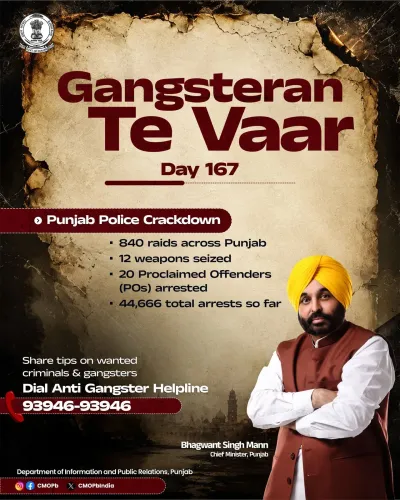
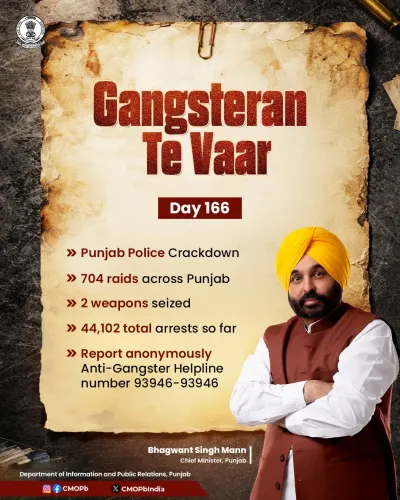
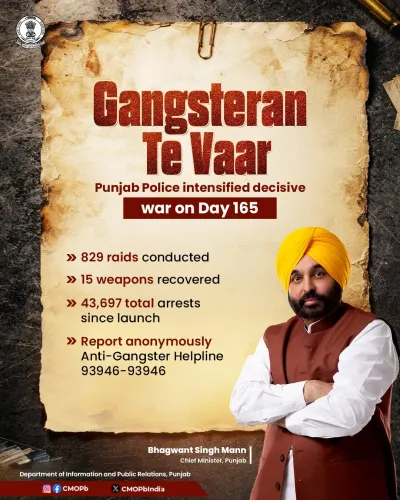
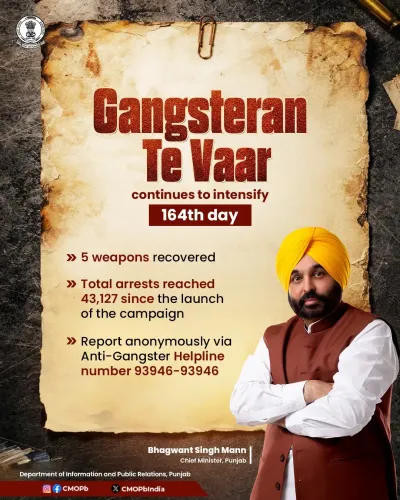
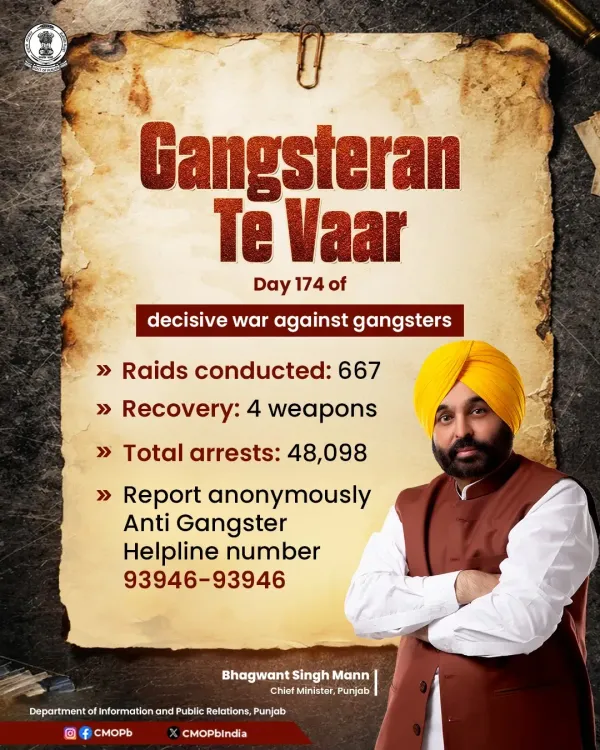
On Day 174 of Punjab's Gangsteran Te Vaar anti-gangster drive, police conducted 667 raids at mapped locations linked to gangster associates, recovered four weapons, and pushed the campaign's cumulative arrest tally to 48,098, the Chief Minister's Office announced on 14 July 2026.
Key Takeaways
667 raids were conducted on Day 174 of the Gangsteran Te Vaar campaign across Punjab.
Four weapons were recovered during the Day 174 operations.
Total arrests since the campaign's launch have reached 48,098 .
Raids targeted identified and mapped locations linked to associates of gangsters, reflecting intelligence-led policing.
The campaign was flagged as 'decisive' by the Chief Minister's Office of Punjab in its official update.
The crackdown forms part of a sustained post- 2022 push by the Punjab government against organised crime networks.
The Chief Minister's Office of Punjab announced on Tuesday, 14 July 2026 that Punjab Police conducted 667 raids at identified and mapped locations linked to gangster associates across the state, marking the 174th day of the ongoing Gangsteran Te Vaar (War on Gangsters) campaign.
What Happened
On Day 174, police teams carried out the raids at locations mapped to associates of active gangsters, resulting in fresh arrests and the recovery of four weapons. The cumulative arrest count since the campaign's launch has now reached 48,098, according to the official update from the Chief Minister's Office.
The CMO described the drive as 'decisive', underscoring the state government's intent to frame the crackdown as a sustained, long-term operation rather than a one-time sweep. The hashtag #GangsteranTeVaar has accompanied each official update, building a consistent public record of daily operational data.
Context
Punjab has faced persistent challenges from organised crime networks tied to drug trafficking, extortion rackets, and syndicate violence, particularly in its border districts. The Gangsteran Te Vaar campaign was launched as a structured, statewide policing initiative targeting not just named gangsters but also their wider networks of associates and logistical supporters.
A defining feature of the campaign is the use of mapped and identified locations — suggesting intelligence-led policing rather than random sweeps. This approach of systematically targeting associate networks is designed to disrupt the operational capacity of gangs even when principal figures are in custody, abroad, or in hiding.
Policy Backdrop
Punjab governments have periodically launched anti-gangster and anti-drug operations since the 2010s, but the current administration intensified such efforts following the 2022 state elections. The scale of the present campaign — with daily raid counts and cumulative arrest figures released publicly — reflects a shift toward accountability-driven policing communication.
Similar state-level crackdowns on mafia-style gangs have been undertaken across several Indian states grappling with drug-trafficking corridors and syndicate violence. Punjab's geographic position as a border state gives organised crime networks particular strategic relevance, making sustained enforcement a political as well as a law-and-order priority.
Stakeholders and Impact
Punjab Police is the primary operational agency executing the campaign, with teams conducting coordinated raids across multiple districts simultaneously. The recovery of weapons — four firearms on Day 174 alone — adds to an ongoing tally that the government uses to demonstrate the campaign's material impact on gang armament.
Communities in areas historically affected by gang activity, extortion, and drug-linked violence stand to benefit directly from sustained enforcement pressure. At the same time, civil liberties observers and legal advocates continue to monitor whether due process is maintained across the large volume of arrests the campaign has generated.
What's Next
The CMO's consistent daily or near-daily updates suggest the campaign is designed for long-haul visibility, with each milestone serving as a public accountability marker. Observers will watch for disclosures on court proceedings, asset seizures, and whether the arrest figures translate into successful prosecutions.
As the campaign moves deeper into its sixth month, the government faces the dual challenge of maintaining operational intensity and demonstrating that arrests lead to durable reductions in gang activity rather than temporary disruption.
Point of View
Quantifiable political deliverable. With cumulative arrests now at 48,098, the campaign has become one of the most publicly documented state-level anti-crime drives in recent Indian history. The emphasis on 'mapped locations' and associate networks signals a maturation from reactive policing toward intelligence-led disruption, though the true test will be whether prosecution rates and long-term crime indices validate the headline arrest numbers. For the Punjab government, sustaining public confidence in the campaign's impact beyond raw statistics will be the defining challenge as it enters its sixth month.
NationPress
14 Jul 2026
Frequently Asked Questions
What is the Gangsteran Te Vaar campaign in Punjab?
Gangsteran Te Vaar , meaning 'War on Gangsters', is a statewide anti-organised crime drive by Punjab Police that targets gangsters, their associates, and mapped locations linked to criminal networks across the state.
How many arrests have been made in the Gangsteran Te Vaar campaign?
As of Day 174 of the campaign ( 14 July 2026 ), total arrests since the launch have reached 48,098 , according to the Chief Minister's Office of Punjab.
How many raids did Punjab Police conduct on Day 174?
Punjab Police conducted 667 raids at identified and mapped locations linked to gangster associates on Day 174 of the Gangsteran Te Vaar campaign.
Were any weapons recovered in the latest Punjab Police raids?
Yes, four weapons were recovered during the Day 174 operations of the Gangsteran Te Vaar campaign on 14 July 2026 .
Why is Punjab running an anti-gangster campaign?
Punjab has long faced challenges from organised crime networks linked to drug trafficking, extortion, and syndicate violence, particularly in border districts. The current administration intensified anti-gangster operations after the 2022 state elections as a law-and-order and political priority.