How are Union Ministers Promoting Clean Mobility with Hydrogen Fuel Cell Vehicles?
Synopsis
Union Ministers Pralhad Joshi and Nitin Gadkari recently promoted clean mobility by taking a ride in the Toyota Mirai Fuel Cell Electric Vehicle. This initiative highlights India's commitment to advancing green hydrogen and clean transportation solutions, aiming to make India a leader in the global green hydrogen market by 2030.
Key Takeaways
Union Ministers promote green hydrogen through a joint vehicle ride.
The Toyota Mirai exemplifies zero-emission technology.
India aims for 5 million metric tonnes of green hydrogen by 2030.
The National Green Hydrogen Mission focuses on cost reduction and incentives.
Significant investments are being made in electrolyser and production capacities.
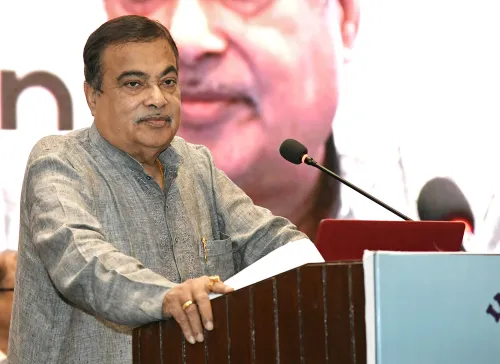
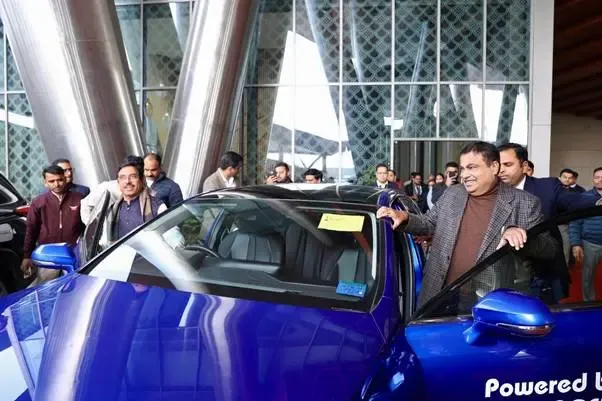
New Delhi, Jan 6 (NationPress) In a significant move to advocate for green hydrogen and clean mobility in India, Union Minister for New and Renewable Energy, Pralhad Joshi, and Union Minister for Road Transport and Highways, Nitin Gadkari, took a collaborative journey in the Toyota Mirai Fuel Cell Electric Vehicle (FCEV) on Tuesday.
Minister Joshi drove the Mirai from Bharat Mandapam to Minister Gadkari's residence in the national capital, emphasizing the government's dedication to advancing green hydrogen and clean transportation solutions, as stated by the Ministry of New and Renewable Energy.
The Toyota ‘Mirai’, a second-generation hydrogen fuel-cell electric vehicle, generates electricity through a chemical reaction between hydrogen and oxygen, releasing only water vapor as a by-product.
With an impressive driving range of around 650 km and a refueling duration of under five minutes, it stands out as one of the most sophisticated and efficient zero-emission transportation solutions globally.
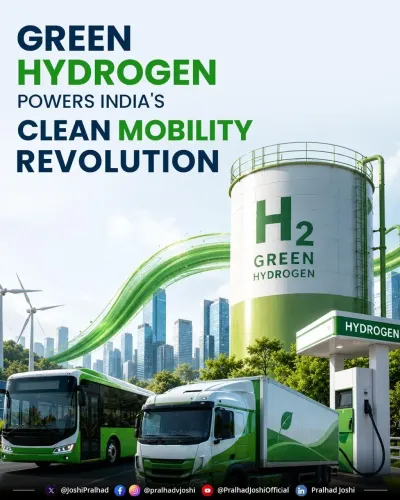
Furthermore, India's green hydrogen production capacity is projected to achieve 5 million metric tonnes annually by 2030. The National Green Hydrogen Mission (NGHM) aspires to position India as a global leader in the production, usage, and export of green hydrogen and its derivatives.
The minister elaborated on various incentives and manufacturing initiatives under the NGHM aimed at reducing the cost of green hydrogen.
As part of the incentive program for electrolyser manufacturing, 15 companies have been awarded a total capacity of 3,000 MW per year, with incentives amounting to Rs 4,440 crore. Additionally, 18 companies have been granted a cumulative production capacity of 8,62,000 tonnes annually under the green hydrogen production incentive scheme.
Two companies have received incentives for 20,000 tonnes annually designated for refineries. Other measures to lower costs include exemptions from interstate transmission system charges for 25 years for plants commissioned by December 31, 2030, according to a recent official statement.
Point of View
I recognize the significance of initiatives aimed at enhancing sustainable practices in transportation. This joint effort by Union Ministers reflects a pivotal moment in India's journey towards embracing clean energy solutions. The push for green hydrogen not only supports environmental goals but also positions India strategically in the global market for renewable energy.
NationPress
30 Sept 2026
Frequently Asked Questions
What is the purpose of the Toyota Mirai ride?
The ride symbolizes the Indian government's commitment to promoting green hydrogen and clean mobility solutions.
What are the benefits of hydrogen fuel-cell vehicles?
Hydrogen fuel-cell vehicles like the Toyota Mirai produce electricity with zero emissions, only releasing water vapor, making them an environmentally friendly transportation option.
What is the National Green Hydrogen Mission?
The National Green Hydrogen Mission aims to establish India as a global hub for the production, use, and export of green hydrogen and its derivatives.