Hydrogen transport trials launched on 10 routes across India: Gadkari
Synopsis
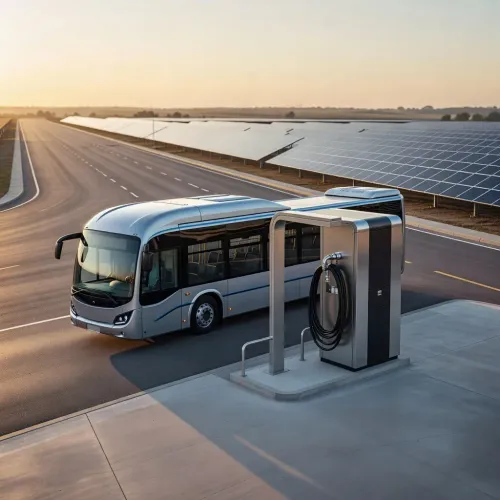
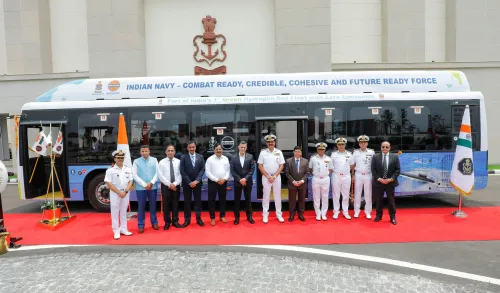
India has quietly begun hydrogen transport trials on 10 major corridors — from Greater Noida–Delhi–Agra to Visakhapatnam–Voyyuru — as the government looks to chip away at a ₹22 lakh crore annual fossil fuel import bill. With refuelling stations planned at eight cities, this is the most geographically distributed hydrogen mobility push India has attempted.
Key Takeaways
Nitin Gadkari announced hydrogen mobility pilots on 10 transport corridors across India on 9 July at Gandhinagar .
Corridors span major routes including Greater Noida–Delhi–Agra , Pune–Mumbai , Thiruvananthapuram–Kochi , and Visakhapatnam–Voyyuru .
Hydrogen refuelling stations are planned at 8 locations including Greater Noida, Bhubaneswar, Vadodara, Faridabad, Rajkot, Kochi, Thiruvananthapuram, and Voyyuru.
The transport sector accounts for roughly 40 per cent of India's air pollution, according to Gadkari.
India's annual fossil fuel import bill is approximately ₹22 lakh crore , a key driver of the clean-fuel push.
Hydrogen trials are part of a broader alternative-fuels strategy that also includes ethanol, methanol, bio-diesel, LNG, and electric mobility.
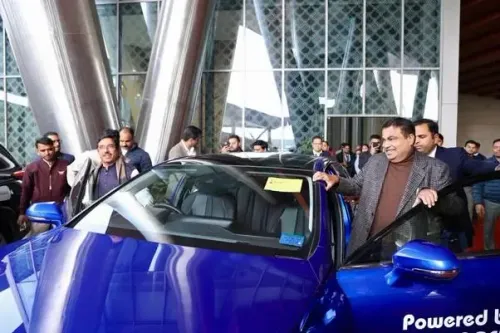
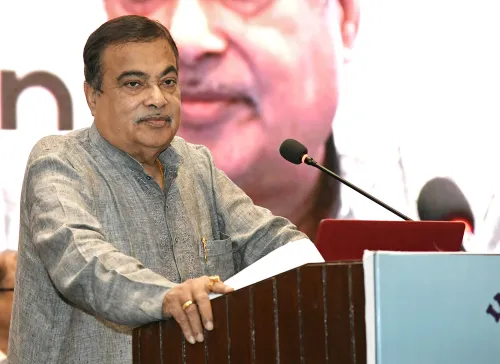
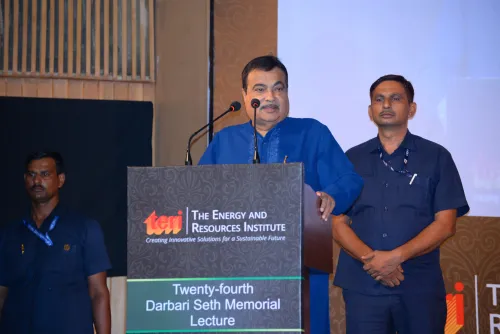
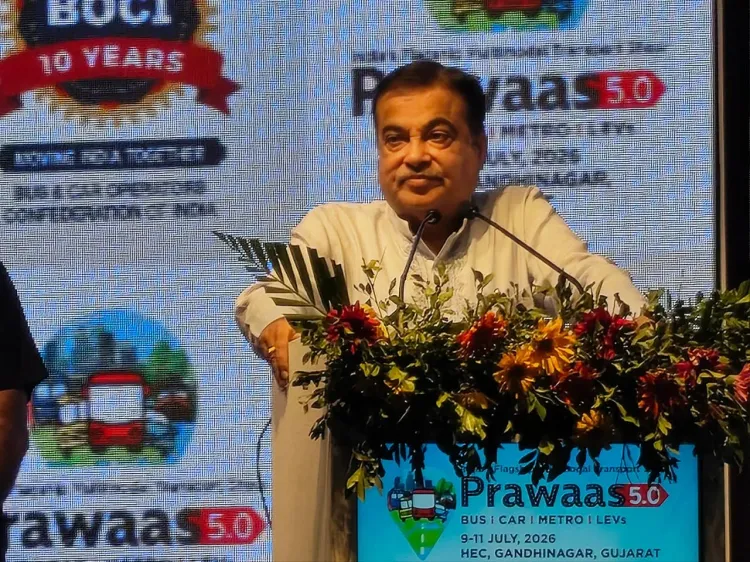
Union Road Transport and Highways Minister Nitin Gadkari on Thursday, 9 July announced that the Ministry of Road Transport and Highways has launched pilot hydrogen mobility projects across 10 transport corridors in India, aiming to cut dependence on imported fossil fuels and accelerate the shift to cleaner public transport. The announcement came at Gandhinagar, where Gadkari inaugurated Prawas 5.0, the multimodal transport expo organised by the Bus and Car Operators Confederation of India (BOCI).
The 10 Pilot Corridors
The hydrogen trial routes span the length and breadth of the country. The designated corridors are Greater Noida–Delhi–Agra, Bhubaneswar–Konark–Puri, Ahmedabad–Vadodara–Surat, Sahibabad–Faridabad–Delhi, Pune–Mumbai via the Mumbai-Pune Expressway, Jamshedpur–Kalinganagar, Thiruvananthapuram–Kochi, Kochi–Edappally, Jamnagar–Ahmedabad, and Visakhapatnam–Voyyuru.
Hydrogen refuelling stations have been planned at strategic locations including Greater Noida, Bhubaneswar, Vadodara, Faridabad, Rajkot, Kochi, Thiruvananthapuram, and Voyyuru.
Why Hydrogen, Why Now
Gadkari underscored the urgency of the transition, noting that the transport sector accounts for roughly 40 per cent of India's total air pollution. India's annual fossil fuel import bill stands at approximately ₹22 lakh crore, a figure the minister described as unsustainable. 'To save on imports and reduce pollution, it is necessary for public policy to focus on import substitutes, cost-effectiveness, pollution-free and indigenous solutions. This is the most important agenda for the government,' he said, urging transport operators to back the shift.
Notably, hydrogen is being pursued alongside a broader alternative-fuels push that includes bio-fuels, ethanol, methanol, bio-diesel, LNG, and electric mobility — signalling that the Ministry is not betting on a single technology but hedging across the clean-energy spectrum.
Industry Collaboration and Technology Push
Gadkari said the Ministry was working closely with the automobile industry to speed up adoption of advanced transport technologies. He stressed that next-generation public transport must pair cleaner fuels with superior passenger experience. 'Timely service and last-mile connectivity are very crucial. We must have a good and comfortable transport system from a technological standpoint. This is the time we should have world-class technology,' he said.
This comes amid growing global momentum for hydrogen in heavy transport, where battery-electric solutions face range and payload constraints — making fuel-cell technology an increasingly viable alternative for long-haul corridors.
Who Was Present
The Prawas 5.0 event was attended by Gujarat state ministers Jitu Vaghani and Kantilal Amrutiya, ministers from Uttarakhand and West Bengal, BOCI President Prasanna Patwardhan, and representatives from the transport and automobile industries.
What Comes Next
The pilot projects are in early-stage trials, and the outcomes on route performance, refuelling infrastructure, and operational costs will likely determine the pace of any wider rollout. With ₹22 lakh crore in annual import costs on the line and clean-air targets pressing, the government's appetite for scaling hydrogen mobility will be tested by how quickly these corridors demonstrate commercial viability.
Point of View
But India has announced clean-transport pilots before without a clear path to scale. The real question is whether hydrogen refuelling infrastructure — planned at just eight cities — can reach commercial density fast enough to make the economics work for bus and truck operators who run on thin margins. Gadkari's ₹22 lakh crore import-bill argument is compelling on paper, but green hydrogen in India still costs significantly more per kilometre than diesel, and that gap has not been publicly addressed. Without a transparent cost-subsidy framework and a firm timeline for results from these pilots, the 10-corridor announcement risks being a headline without a roadmap.
NationPress
8 Oct 2026
Frequently Asked Questions
What are the 10 hydrogen transport pilot corridors announced by Nitin Gadkari?
The 10 corridors are Greater Noida–Delhi–Agra, Bhubaneswar–Konark–Puri, Ahmedabad–Vadodara–Surat, Sahibabad–Faridabad–Delhi, Pune–Mumbai via the Mumbai-Pune Expressway, Jamshedpur–Kalinganagar, Thiruvananthapuram–Kochi, Kochi–Edappally, Jamnagar–Ahmedabad, and Visakhapatnam–Voyyuru. These routes were announced by Union Minister Nitin Gadkari at the Prawas 5.0 expo in Gandhinagar on 9 July.
Where will hydrogen refuelling stations be set up in India?
Hydrogen refuelling stations have been planned at eight strategic locations: Greater Noida, Bhubaneswar, Vadodara, Faridabad, Rajkot, Kochi, Thiruvananthapuram, and Voyyuru. These stations are designed to support the 10 pilot transport corridors announced by the Ministry of Road Transport and Highways.
Why is India pursuing hydrogen as a transport fuel?
India imports fossil fuels worth approximately ₹22 lakh crore annually, and the transport sector contributes around 40 per cent of the country's air pollution, according to Minister Gadkari. Hydrogen is being explored as a pollution-free, potentially indigenous alternative that could reduce both the import burden and urban air quality problems.
Is hydrogen the only alternative fuel India is promoting for transport?
No. Hydrogen is part of a broader alternative-fuels strategy that also includes bio-fuels, ethanol, methanol, bio-diesel, LNG, and electric mobility. The Ministry of Road Transport and Highways is working with the automobile industry across all these technologies simultaneously.
What is Prawas 5.0 and why was the announcement made there?
Prawas 5.0 is a multimodal transport expo organised by the Bus and Car Operators Confederation of India (BOCI), held in Gandhinagar. Minister Nitin Gadkari inaugurated the event on 9 July and used the platform to address transport operators directly, urging them to support India's clean-fuel transition.