UPI hits 80 crore daily transactions, now world's largest real-time payment system: FM Sitharaman
Synopsis
UPI now handles nearly 80 crore transactions every single day — a 13,000-fold rise since 2016–17 — cementing India's status as the global leader in real-time payments. Finance Minister Sitharaman made the disclosure at the RBI's new Greenfield Data Centre in Odisha, which will house RTGS and NEFT, adding critical resilience to the country's financial backbone.
Key Takeaways
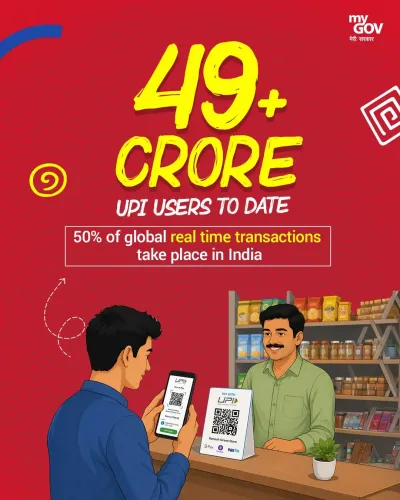
UPI now processes over 2,400 crore transactions a month , or nearly 80 crore transactions every day , as of October 2026 .
Annual UPI transaction volume has grown approximately 13,000 times since 2016–17 .
Finance Minister Nirmala Sitharaman called UPI the world's largest real-time payment system .
The RBI Greenfield Data Centre and Training Institute in Khordha, Odisha was inaugurated by PM Narendra Modi on 25 October 2026 .
The facility will host mission-critical systems including RTGS and NEFT , and train experts in cybersecurity, AI, and data centres .
Data centres were granted infrastructure status in 2022 ; Budget 2026–27 introduced a tax holiday for foreign cloud service providers operating from Indian data centres.
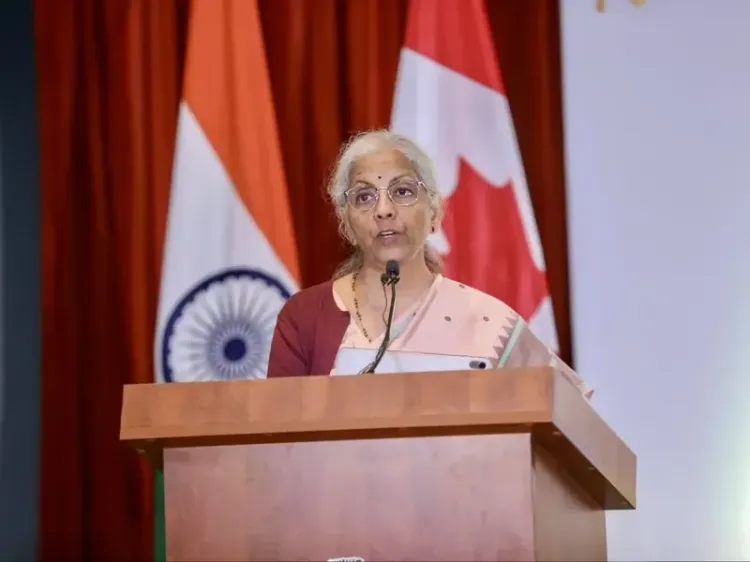
India's Unified Payments Interface (UPI) has crossed 80 crore transactions per day — equivalent to more than 2,400 crore transactions a month — making it the world's largest real-time payment system, Union Finance Minister Nirmala Sitharaman said on Sunday, 25 October 2026. She was speaking at the inauguration of the Reserve Bank of India's (RBI) Greenfield Data Centre and Training Institute in Khordha, Odisha, which was inaugurated by Prime Minister Narendra Modi.
UPI's Staggering Growth Since 2016
Sitharaman highlighted that UPI's annual transaction volume has surged approximately 13,000 times since 2016–17, underscoring one of the most dramatic adoption curves in global payments history. What began as a nascent interbank transfer protocol has, within less than a decade, become the backbone of India's retail financial system — processing more digital transactions daily than most nations handle in a year.
The scale is notable not just domestically. UPI has already expanded to multiple countries, and its daily volumes now comfortably exceed those of Visa and Mastercard combined in terms of transaction count, according to publicly available global payments data.
Fintech Ecosystem and First-Time Users
The Finance Minister said UPI's rapid growth has catalysed a vibrant fintech ecosystem that is extending credit, insurance, and investment access to millions of first-time users across India. This broadening of financial services beyond urban centres represents a structural shift in how retail finance reaches underserved populations — a goal that earlier banking correspondent models had only partially achieved.
"The vibrant fintech ecosystem built on these initiatives is bringing credit, insurance and investment opportunities to first-time users," Sitharaman said at the event.
Data Centres: The 'Vaults of the Digital Age'
Describing data centres as the 'vaults of the digital age,' Sitharaman outlined a series of government measures to strengthen digital infrastructure. She noted that data centres were granted infrastructure status in 2022, and the Union Budget 2026–27 announced a tax holiday for foreign companies providing global cloud services from data centres situated in India — a move aimed at attracting hyperscale investment.
The newly inaugurated RBI Greenfield Data Centre in Khordha will house the central bank's mission-critical systems, including the Real Time Gross Settlement (RTGS) and National Electronic Funds Transfer (NEFT) platforms. The co-located Training Institute, which includes a dedicated research wing, will focus on building expertise in cybersecurity, artificial intelligence, and data centre management, according to Sitharaman.
Strategic Significance of the RBI Facility
The Odisha facility is part of a broader push to geographically diversify and harden India's payments infrastructure, reducing systemic concentration risk that has historically centred on Mumbai. Housing RTGS and NEFT — the two rails that settle trillions of rupees in high-value transactions daily — outside the financial capital adds a critical layer of resilience to the national payments architecture.
This comes amid growing global concern over cyberattacks targeting financial infrastructure, and as India's digital payments footprint expands into Southeast Asia, the Gulf, and beyond through bilateral UPI linkages. With PM Modi inaugurating the facility and the Finance Minister underlining both its operational and symbolic significance, the RBI's Khordha campus signals that India is building the institutional depth to match its payments ambition.
Point of View
000-fold growth figure is striking, but the more consequential detail is structural: India is now hardening the infrastructure behind UPI, not just celebrating its scale. Housing RTGS and NEFT at a Greenfield facility in Odisha is a quiet but significant move to reduce the systemic concentration risk that has long shadowed Mumbai-centric settlement architecture. The tax holiday for foreign cloud providers, meanwhile, is a frank admission that India's hyperscale data centre ambitions require imported capital and expertise. The real question is whether the fintech ecosystem Sitharaman praises is generating durable financial inclusion or largely recirculating digital transactions among existing account holders — a distinction the transaction-count metric alone cannot resolve.
NationPress
25 Oct 2026
Frequently Asked Questions
How many transactions does UPI process daily in 2026?
UPI processes nearly 80 crore transactions every day, equivalent to more than 2,400 crore transactions in a single month, according to Finance Minister Nirmala Sitharaman's statement on 25 October 2026.
How much has UPI grown since it was launched?
UPI's annual transaction volume has grown approximately 13,000 times since 2016–17, when the platform was in its early stages. This makes it one of the fastest-scaling payments systems in global financial history.
What is the RBI Greenfield Data Centre in Khordha?
It is a new Reserve Bank of India facility in Khordha, Odisha, inaugurated by PM Narendra Modi on 25 October 2026. The campus will house mission-critical payment systems including RTGS and NEFT, and includes a Training Institute with a research wing focused on cybersecurity, AI, and data centres.
Why has the government granted infrastructure status to data centres?
Data centres were granted infrastructure status in 2022 to facilitate easier financing and investment in the sector. The Union Budget 2026–27 further added a tax holiday for foreign companies offering global cloud services from data centres in India, aimed at attracting hyperscale investment.
What does UPI's growth mean for financial inclusion in India?
Finance Minister Sitharaman said UPI's rapid growth has enabled a fintech ecosystem that brings credit, insurance, and investment access to millions of first-time users across India, including those in underserved communities who previously lacked formal financial services.