UPI hits 24,162 crore transactions in FY26, a 13,000-fold surge in a decade
Synopsis
A decade after its quiet launch in August 2016, UPI now processes nearly half of all real-time payment transactions on earth. The Finance Ministry's data — 13,000-fold volume growth, ₹314 lakh crore in annual value, and a new monthly record of 2,366 crore transactions in July 2026 — makes the case that India has built the world's most consequential payments infrastructure, one ₹500 grocery bill at a time.
Key Takeaways
UPI processed more than 24,162 crore transactions in FY 2025-26 , up from 1.78 crore in FY 2016-17 — a 13,000-fold increase.
Transaction value grew from ₹0.07 lakh crore to approximately ₹314 lakh crore over the same decade — a more than 4,000-fold rise.
UPI set an all-time monthly record of 2,366 crore transactions in July 2026 .
Banks live on UPI rose from 44 in FY17 to 703 by FY26.
UPI accounted for nearly 49 per cent of global real-time payment volume as of 2025 , per IMF data.
Around 86 per cent of person-to-merchant transactions in FY26 were below ₹500 , reflecting UPI's dominance in everyday small-value payments.
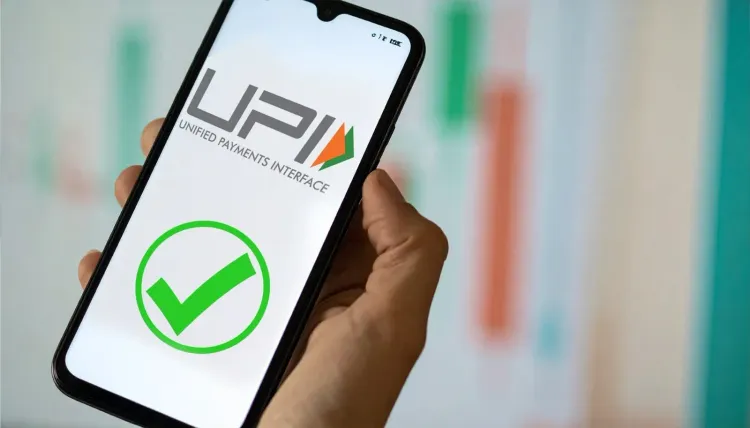
The Unified Payments Interface (UPI) recorded more than 24,162 crore transactions in FY 2025-26, a staggering 13,000-fold increase from just 1.78 crore transactions in FY 2016-17, the Ministry of Finance announced on Monday, 24 August. The milestone marks exactly a decade since UPI was launched on 25 August 2016 by the National Payments Corporation of India (NPCI) under the regulatory oversight of the Reserve Bank of India (RBI).
A Decade of Scale: The Numbers
The value of UPI transactions has grown in parallel, rising from ₹0.07 lakh crore in FY 2016-17 to approximately ₹314 lakh crore in FY 2025-26 — a more than 4,000-fold increase in transaction value over the same period. The number of banks live on the platform expanded from 44 in FY 2016-17 to 703 by FY 2025-26, spanning public sector banks, private banks, small finance banks, payment banks, and cooperative banks.
Record Monthly Volumes in 2026
Growth momentum has accelerated sharply through 2026. Monthly UPI transaction volume crossed the 2,300 crore mark for the first time in May 2026, when 2,320 crore transactions were recorded. The platform then set a new all-time monthly record in July 2026, registering 2,366 crore transactions — the highest monthly volume in its decade-long history.
How Indians Are Using UPI
According to the Ministry of Finance, person-to-merchant (P2M) transactions accounted for 63 per cent of total transaction volume, while person-to-person (P2P) transactions contributed 71 per cent of overall transaction value. Notably, small-value payments dominate both categories: around 86 per cent of P2M transactions in FY 2026 were below ₹500, and 59 per cent of P2P transactions also fell below the ₹500 threshold — underscoring UPI's deep penetration into everyday, low-ticket commerce.
Global Recognition and Financial Inclusion
The International Monetary Fund (IMF) has acknowledged UPI as the world's largest real-time payment system by transaction volume. As of 2025, UPI accounted for nearly 49 per cent of global real-time payment transaction volume — a remarkable share for a system that did not exist a decade ago. The Ministry described UPI as a key pillar of India's Digital Public Infrastructure, citing its role in advancing financial inclusion through an interoperable, real-time payments network available to merchants and individuals alike.
What Comes Next
With monthly volumes already testing new highs and institutional participation at its broadest ever, the trajectory points toward continued expansion. International UPI linkages — already active with several countries — are expected to deepen further, potentially pushing India's real-time payment dominance beyond its current near-majority share of global volume.
Point of View
000-fold volume figure is striking, but the more consequential data point is that 49 per cent of all real-time payments on the planet now run through a system built by India. That is an infrastructure export story as much as a domestic fintech story, and it is underreported as such. The dominance of sub-₹500 transactions also tells a more nuanced tale: UPI's real achievement is not digitising the middle class — it is digitising the kirana store and the daily commuter. The risk ahead is concentration: with a handful of third-party apps handling the bulk of volume, the 'interoperable' promise of UPI faces a structural test that regulation has yet to fully address.
NationPress
24 Aug 2026
Frequently Asked Questions
How much has UPI transaction volume grown in the last decade?
UPI transaction volume grew almost 13,000-fold in a decade, from 1.78 crore transactions in FY 2016-17 to more than 24,162 crore transactions in FY 2025-26, according to the Ministry of Finance. Transaction value also rose more than 4,000-fold, from ₹0.07 lakh crore to approximately ₹314 lakh crore.
What is UPI's share of global real-time payment volume?
As of 2025, UPI accounted for nearly 49 per cent of global real-time payment transaction volume. The International Monetary Fund has recognised it as the world's largest real-time payment system by transaction volume.
What was UPI's highest-ever monthly transaction record?
UPI set its all-time monthly record in July 2026, processing 2,366 crore transactions. The platform had crossed the 2,300 crore monthly mark for the first time just two months earlier, in May 2026, with 2,320 crore transactions.
How widely are banks participating in UPI today?
The number of banks live on UPI grew from 44 in FY 2016-17 to 703 by FY 2025-26, covering public sector banks, private banks, small finance banks, payment banks, and cooperative banks.
What types of transactions dominate UPI usage?
Person-to-merchant (P2M) transactions make up 63 per cent of total UPI transaction volume, while person-to-person (P2P) transactions account for 71 per cent of total value. Around 86 per cent of P2M transactions and 59 per cent of P2P transactions in FY26 were below ₹500, reflecting UPI's strong grip on small, everyday payments.