Indian scientists develop RK-251, a smart cancer drug targeting tumour cells

Synopsis
Indian researchers at IASST and IIT Guwahati have engineered RK-251, a cancer drug candidate that stays inactive in healthy cells but fires up inside tumours by exploiting their elevated reactive oxygen species levels. In preclinical tests, it hit aggressive triple-negative breast cancer cells hard while leaving healthy tissue largely unharmed — a design that could reshape how India approaches precision oncology.
Key Takeaways
RK-251 , a new smart cancer drug candidate, has been developed by Dr Asis Bala (IASST) and Dr K.P.
Bhabak (IIT Guwahati) .
The drug exploits elevated reactive oxygen species (ROS) in cancer cells to activate and release NBDHEX , a potent anticancer agent.
Preclinical tests showed strong activity against triple-negative breast cancer cells with considerably less effect on healthy cells.
Safety evaluation in zebrafish embryos showed no obvious toxicity and confirmed the expected ROS-triggered fluorescence mechanism.
RK-251 is still at the preclinical stage ; clinical trials in humans are required before it can be considered a treatment option.
Indian scientists have developed a promising cancer drug candidate, RK-251, engineered to remain dormant in healthy tissue and activate selectively inside cancer cells — a design that could significantly reduce the collateral damage associated with conventional cancer therapies. The research was published following preclinical trials conducted at two premier Indian institutions.
The Research Team and Institutions
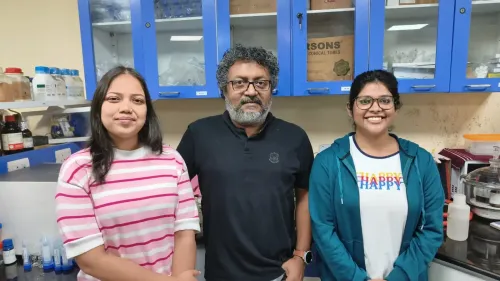
The study was led by Dr Asis Bala of the Institute of Advanced Study in Science and Technology (IASST), an autonomous institute under the Department of Science and Technology, Government of India, in collaboration with Dr K.P. Bhabak of the Indian Institute of Technology (IIT) Guwahati. The partnership brings together pharmacological and chemical biology expertise in what researchers describe as a precision oncology approach.
How RK-251 Works
The mechanism behind RK-251 exploits a well-documented biological distinction between cancerous and healthy cells: cancer cells typically generate elevated levels of reactive oxygen species (ROS) — molecules that, while capable of causing cellular damage, can also be harnessed as a biochemical trigger. When RK-251 enters a cancer cell, the heightened ROS environment activates the compound, releasing NBDHEX, a potent anticancer agent.
NBDHEX targets proteins critical to cancer cell survival and treatment resistance. By confining its release to the cancer-cell environment, RK-251 is designed to deliver its therapeutic action more selectively, potentially limiting exposure to surrounding healthy tissues — a key limitation of many existing chemotherapy regimens.
Preclinical Findings
In laboratory experiments, RK-251 demonstrated strong activity against aggressive triple-negative breast cancer cells — a subtype known for its resistance to standard hormone-targeted therapies — while producing considerably less effect on healthy cells. The selectivity of the ROS-responsive mechanism was identified as a key factor in these outcomes, according to the researchers.
The team also evaluated the compound using zebrafish embryos (Danio rerio), a widely used model in early-stage drug safety assessment. The embryos showed no obvious signs of toxicity, and the compound displayed the expected fluorescence in the presence of reactive oxygen species, providing further evidence supporting the proposed mechanism of action.
Stage of Development and What Comes Next
Notably, RK-251 remains at the preclinical research stage and is not yet available as a treatment for patients. Further laboratory studies, comprehensive safety assessments, and validation through appropriate clinical trials will be required before the drug candidate can be evaluated for use in humans. Researchers have indicated that the current findings support continued investigation, but the path from preclinical success to approved therapy typically spans several years and multiple regulatory hurdles.
This development comes amid a broader global push to engineer tumour-targeted drug delivery systems that minimise systemic toxicity — an area where Indian research institutions are increasingly making their presence felt. If subsequent trials validate the preclinical data, RK-251 could represent a meaningful step forward in the treatment of difficult-to-treat cancers such as triple-negative breast cancer.
Point of View
But an Indian team engineering it into a deployable candidate is a marker of maturing domestic research capability. The triple-negative breast cancer angle matters: it is one of the hardest subtypes to treat, with no approved targeted therapy for a large proportion of patients. The zebrafish safety data is encouraging but limited; the real test will be whether toxicity profiles hold in mammalian models and, eventually, human trials. Mainstream coverage risks overstating proximity to clinical use — the preclinical-to-approved-drug attrition rate globally exceeds 90%, and readers deserve that context alongside the genuine promise.
NationPress
8 Oct 2026
Frequently Asked Questions
What is RK-251 and who developed it?
RK-251 is a smart cancer drug candidate developed by Dr Asis Bala of the Institute of Advanced Study in Science and Technology (IASST) and Dr K.P. Bhabak of IIT Guwahati. It is designed to activate selectively inside cancer cells, releasing a potent anticancer agent called NBDHEX while remaining relatively inactive in healthy tissue.
How does RK-251 target cancer cells without harming healthy tissue?
RK-251 exploits the fact that cancer cells produce higher levels of reactive oxygen species (ROS) than healthy cells. When the drug enters a cancer cell, the elevated ROS levels trigger its activation, releasing NBDHEX specifically in the tumour environment and limiting exposure to surrounding healthy tissue.
Which type of cancer was RK-251 tested against?
In preclinical experiments, RK-251 showed strong activity against aggressive triple-negative breast cancer cells — a subtype that is particularly difficult to treat with standard hormone-targeted therapies — while producing considerably less effect on healthy cells.
Is RK-251 available as a cancer treatment for patients?
No. RK-251 is currently at the preclinical research stage and is not available as a treatment. Further laboratory studies, safety assessments, and clinical trials will be necessary before it can be evaluated for use in humans.
What role did zebrafish play in the RK-251 research?
Researchers evaluated RK-251 using zebrafish embryos (Danio rerio), a standard model in early-stage drug safety assessment. The embryos showed no obvious toxicity, and the compound displayed the expected ROS-triggered fluorescence, providing additional evidence for the proposed mechanism of action.