How Can We Make Cities More Economically Dynamic, Socially Inclusive, and Environmentally Sustainable?
Synopsis
Discover how India plans to transform its urban areas into thriving economic hubs that prioritize sustainability and inclusivity. The Economic Survey 2025-26 emphasizes the importance of integrated urban policy, highlighting critical investments needed for a prosperous future.
Key Takeaways
Economic dynamism of urban areas is key for national growth.
Integrated urban policy is essential for sustainability.
Investment in public transport is crucial for inclusivity.
Urban areas contribute significantly to GDP.
Recognition of cities as economic infrastructure is vital.
New Delhi, Jan 29 (NationPress) The vision for India's urban future hinges on transforming our cities to become economically vibrant, socially inclusive, environmentally sustainable, and institutionally robust, according to the Economic Survey 2025-26 released on Thursday.
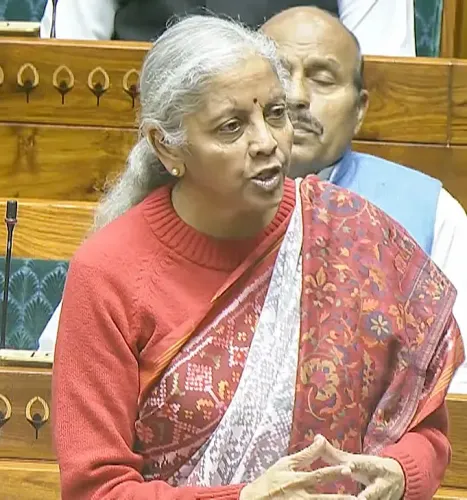
The Survey, presented in Parliament by Finance Minister Nirmala Sitharaman, emphasizes that future urban strategies should focus on system performance rather than isolated projects — merging housing, transport, sanitation, climate resilience, and financing — to create livable, climate-adaptive cities that foster inclusion and long-term economic viability.
"India's urban landscape is more advanced in economic and functional aspects than official statistics indicate," it highlighted.
Utilizing satellite data from the Global Human Settlements Layer (GHSL) by the Group on Earth Observations at the European Commission, it reported that India was 63% urban in 2015, which is almost twice the urbanization rate noted in the 2011 Census.
The Survey asserts that Indian cities serve not just as living spaces but as vital economic infrastructure.
Urban density and proximity foster agglomeration economies that enhance productivity, expand labor markets, and stimulate innovation.
Thus, the economic significance of cities is fundamental to India's growth trajectory, as highlighted in the Economic Survey.
The report states that India is already economically urbanized, with most national output stemming from cities and urban locales. The challenge now is to optimize this urbanization for the benefit of citizens in both tangible and intangible aspects.
It positions cities as economic assets requiring focused investment and strategic planning.
The World Bank has projected that by 2036, India's urban centers will accommodate 600 million people, or 40% of the population, up from 31% in 2011, with urban regions contributing nearly 70% to GDP.
Recognizing cities as essential economic infrastructure is the first crucial step towards aligning public policy, fiscal priorities, and planning frameworks with India's developmental goals.
To this end, the country has significantly enhanced its mass rapid transit systems over the past decade.
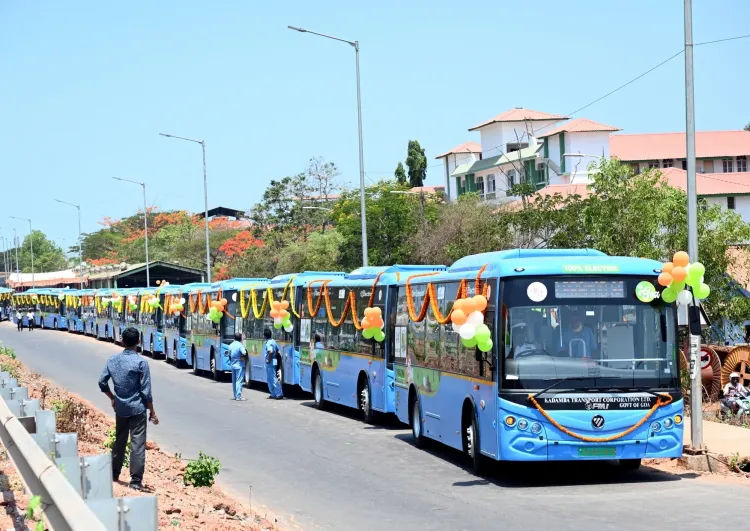
The Survey also advocates for expanding and digitizing bus fleets, prioritizing e-bus deployments, integrating last-mile and shared mobility solutions, operationalizing Transit-Oriented Development (TOD), and capturing value around transit stations.
As of 2025, approximately 1,036 km of Metro/RRTS services are operational across about 24 cities, with additional corridors under construction.
The government has initiated PM e-Bus Sewa to bolster city bus services, deploying 10,000 e-buses under a Public-Private Partnership (PPP) framework.
This initiative has received backing of Rs 20,000 crore from the central government and a Payment Security Mechanism (PSM) to ensure cash flows for operators.
The survey reports that in FY25, 7,293 e-buses have been sanctioned across 14 States and 4 Union Territories, with Rs 983.75 crore allocated for depot and power infrastructure, and Rs 437.5 crore already disbursed.
Additionally, the Swachh Bharat Mission-Urban (SBM–U) has been supported by investments from the Atal Mission for Rejuvenation and Urban Transformation (AMRUT) and AMRUT 2.0. By 2025–26, door-to-door collection of municipal solid waste (MSW) is expected to reach 98% of urban wards.
Point of View
It is essential to recognize the pivotal role cities play in India's economic landscape. The Economic Survey's insights reflect a comprehensive approach to urban planning that prioritizes inclusivity and sustainability. By aligning public policy with economic infrastructure, India can pave the way for a resilient urban future.
NationPress
29 Sept 2026
Frequently Asked Questions
What is the main focus of the Economic Survey 2025-26?
The main focus is on transforming Indian cities to be economically dynamic, socially inclusive, and environmentally sustainable, emphasizing integrated urban policy.
How urbanized is India according to the latest survey?
According to the survey, India was 63% urban in 2015, nearly double the urbanization rate reported in the 2011 Census.
What are the expected urban population projections for India by 2036?
By 2036, it is estimated that India's towns and cities will house 600 million people, accounting for 40% of the population.
What initiatives are being taken to improve public transportation in cities?
Initiatives include expanding and digitizing bus fleets, deploying e-buses, and operationalizing Transit-Oriented Development (TOD).
What has been the impact of the Swachh Bharat Mission-Urban?
The Swachh Bharat Mission-Urban aims to achieve 98% door-to-door collection of municipal solid waste by 2025–26, supported by investments from AMRUT.