Vaishnaw fires back at Bloomberg: Mobile PLI yielded ₹3 lakh crore GST, 12 lakh jobs
Synopsis
Electronics Minister Ashwini Vaishnaw took a rare public swing at Bloomberg, posting raw PLI numbers on X to argue the scheme paid for itself many times over: ₹19,000 crore in incentives disbursed against ₹25,000 crore in direct taxes and a striking ₹3 lakh crore in GST. The Bloomberg report's deeper point — that India assembles but does not yet manufacture — remains the harder question to answer.
Key Takeaways
Ashwini Vaishnaw rebutted a Bloomberg analysis on 28 October 2026 , defending India's mobile PLI scheme on social media platform X .
Government incentives paid under mobile PLI: ₹19,000 crore ; direct taxes collected from the sector: ₹25,000 crore ; GST collected: ₹3 lakh crore .
Electronics manufacturing supports 25 lakh jobs overall; mobile manufacturing alone accounts for nearly 12 lakh jobs .
Bloomberg argued India's value addition remains limited as processors, chips, batteries, and camera lenses are still largely imported.
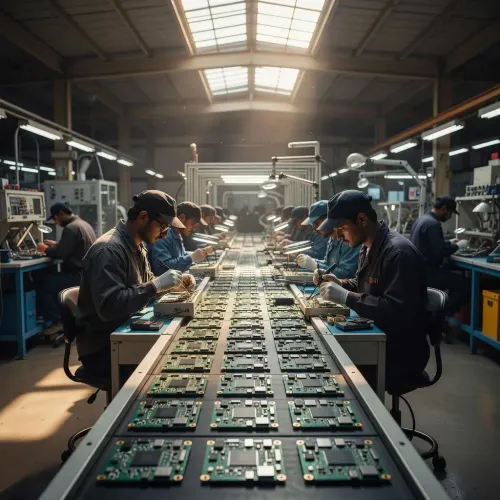
Nearly one in four iPhones is now produced in India, yet the domestic supply chain depth question remains unresolved.
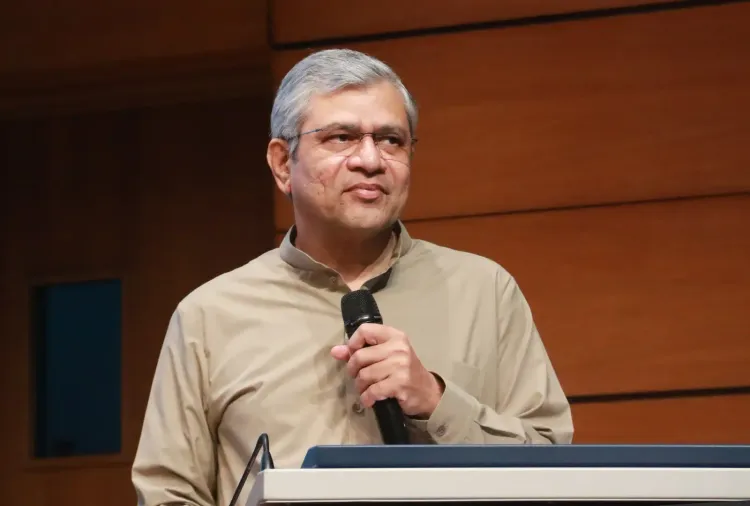
Union Electronics and IT Minister Ashwini Vaishnaw on Wednesday, 28 October 2026, sharply rebutted a Bloomberg analysis that questioned the economic rationale of India's electronics manufacturing push, pointing to tax revenues and employment figures generated under the Production Linked Incentive (PLI) scheme for mobile phones. The minister's defence, posted directly on social media platform X, put hard numbers on the table — numbers the Bloomberg report had not foregrounded.
The Numbers Vaishnaw Cited
According to the minister, the government has disbursed incentives worth ₹19,000 crore under the mobile PLI scheme. In return, direct tax collections from the sector have reached ₹25,000 crore — already exceeding the subsidy outlay — while GST collections have touched ₹3 lakh crore.
On jobs, Vaishnaw stated that electronics manufacturing as a whole currently supports approximately 25 lakh workers, with mobile phone manufacturing alone accounting for nearly 12 lakh jobs. In his post, the minister concluded with: 'Cope harder!!' — an unusually blunt sign-off for a cabinet minister and one that underscored the combative tone of the rebuttal.
What Bloomberg Argued
The Bloomberg analysis, which triggered the minister's response, questioned whether India could replicate China's electronics manufacturing success and generate comparable economic returns. The report acknowledged that India has emerged as a significant hub for smartphone production — noting that nearly one in every four iPhones is now assembled in the country — but argued that the value addition within India remains limited.
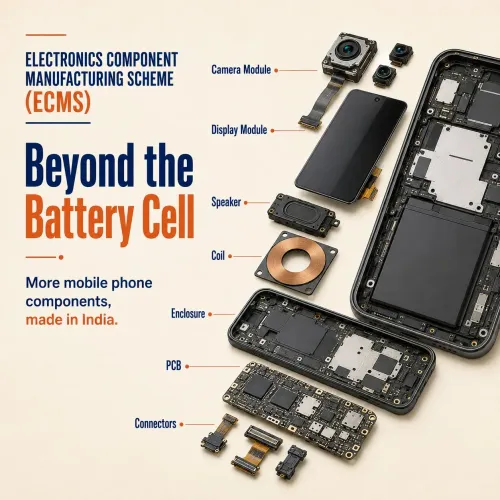
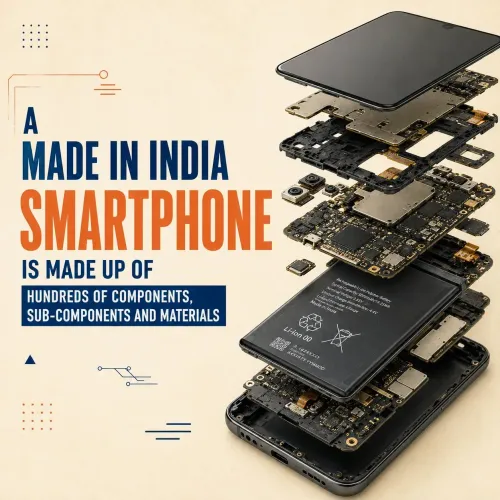
The analysis pointed out that critical components such as processors, memory chips, batteries, and camera lenses continue to be imported from overseas suppliers, meaning a large share of the manufacturing value chain sits outside India. Bloomberg also raised concerns about the scale of government subsidies being deployed to attract manufacturers and offset higher production costs relative to competing locations.
Why the Debate Matters
The exchange is more than a ministers-versus-media moment. It goes to the heart of a structural question that Indian policymakers have grappled with for years: does assembling smartphones domestically, even if components are imported, generate enough economic value — in taxes, wages, and multiplier effects — to justify the incentive spend?
Vaishnaw's arithmetic suggests a clear positive return on the incentive investment: ₹19,000 crore out versus ₹25,000 crore in direct taxes plus ₹3 lakh crore in GST. Critics would note, however, that GST collections are largely a function of sales volumes and not solely attributable to PLI-led domestic production. The Bloomberg critique on thin domestic value addition — the 'assembly without depth' concern — was not directly addressed in the minister's post.
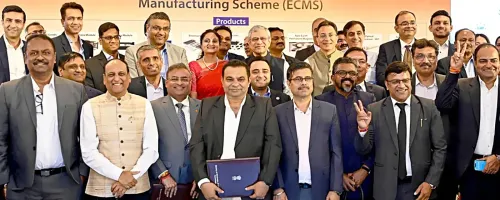
This comes amid sustained government efforts to deepen India's electronics supply chain. The Centre has announced separate schemes for semiconductors and components, aiming to shift the country from a high-volume assembler to a more integrated manufacturer over the coming decade.
Broader Context: India's Electronics Ambition
India's mobile phone production has scaled dramatically since the PLI scheme was introduced. The country went from producing negligible volumes of premium smartphones to hosting large-scale facilities for Apple's supply chain partners. The government has consistently cited this as proof of the PLI model's viability.
Notably, the Bloomberg report's timing — as India pushes for deeper semiconductor and component investments — adds political sensitivity to what might otherwise be a technical economic debate. The minister's swift, data-led rebuttal signals that the government intends to defend the PLI record aggressively ahead of further scheme expansions.
The debate over domestic value addition in electronics manufacturing is unlikely to be settled by a single exchange, and the Centre's next moves on component-level incentives will be closely watched.
Point of View
000 crore collected against ₹19,000 crore disbursed is a verifiable positive return. But Bloomberg's structural critique — that India is an assembler, not a manufacturer — stands unanswered. The real test of PLI's legacy will be whether India can move up the value chain into components and semiconductors, not just hold its position as a high-volume assembly destination. That transition is still in its early stages, and the government's own separate component incentive schemes implicitly acknowledge the gap.
NationPress
28 Oct 2026
Frequently Asked Questions
What did Ashwini Vaishnaw say about the mobile PLI scheme?
Vaishnaw stated on social media platform X that the mobile PLI scheme has generated ₹25,000 crore in direct taxes and ₹3 lakh crore in GST, against ₹19,000 crore in incentives paid. He also cited 12 lakh jobs in mobile manufacturing and 25 lakh across the broader electronics sector.
What did the Bloomberg analysis claim about India's electronics manufacturing?
Bloomberg argued that while India now produces nearly one in every four iPhones, domestic value addition remains limited because critical components — processors, memory chips, batteries, and camera lenses — are still imported. The report also questioned whether government subsidies under PLI justify the economic returns.
How much has the government paid out under the mobile PLI scheme?
According to Vaishnaw, the government has disbursed ₹19,000 crore in incentives under the mobile PLI scheme. In return, direct tax collections from the sector have reached ₹25,000 crore and GST collections have touched ₹3 lakh crore.
Why is India's electronics manufacturing value addition under scrutiny?
India's electronics output is heavily weighted toward assembly of imported components rather than domestic production of the components themselves. Processors, chips, batteries, and camera modules are largely sourced from overseas, meaning a significant share of the smartphone's manufacturing value chain sits outside India despite large-scale assembly within the country.
What comes next for India's electronics manufacturing push?
The Centre has announced separate incentive schemes targeting semiconductors and electronic components, aiming to shift India from a high-volume assembler to a more deeply integrated manufacturer. Progress on those schemes will be closely watched as the government looks to address the value-addition criticism.