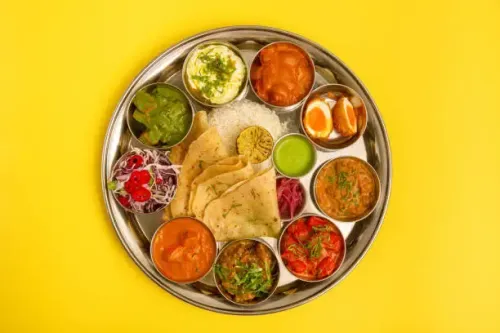
February Sees No Change in Veg Thali Prices, Non-Veg Thali Drops by 3%
Synopsis
In February, the price of a home-cooked vegetarian thali remained stable, while non-vegetarian thali prices fell by 3%. This reflects changes in vegetable prices influenced by market dynamics. Read on for details from the latest Crisil Intelligence report.
Key Takeaways
Veg thali prices remained stable in February.
Non-veg thali prices decreased by 3%.
Tomato prices surged, affecting overall thali costs.
Onion and potato prices saw significant year-on-year declines.
Market trends suggest potential future softening of vegetable prices.
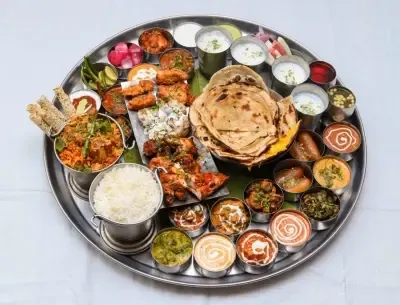
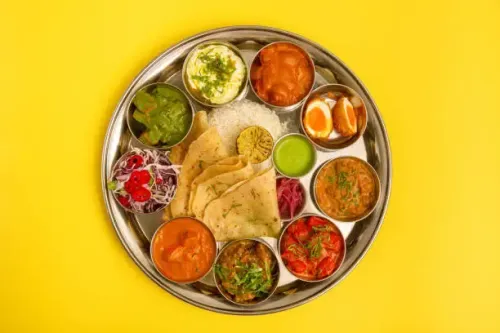
New Delhi, March 6 (NationPress) The price of a home-cooked vegetarian thali remained unchanged year-on-year in February, whereas the cost of a non-vegetarian thali saw a decrease of 3%, according to a report by Crisil Intelligence released on Friday.
Even though the prices of onions, potatoes, and pulses dropped, the expense for a vegetarian thali held steady due to a sharp rise in tomato prices.
The price of onions fell by 24% year-on-year, attributed to an influx of late kharif onions, while limited shelf life necessitated immediate market sales amidst lower export demand.
Potato prices decreased by 13% year-on-year as the crop entered its peak harvest season, coinciding with the ongoing liquidation of cold storage stock from the previous rabi season. Pulse prices declined by 9% year-on-year, thanks to higher opening stocks in the current fiscal year.
The average cost of making a thali at home is derived from the input prices across North, South, East, and West India. The monthly variations reflect changes in everyday expenses for the common man.
The cost of a non-veg thali dropped due to an estimated 7% year-on-year reduction in broiler prices, which accounts for half of the total cost, from a high base.
“Tomato prices surged due to delayed transplantation, affecting crop growth and yields. This was mirrored in a 32% year-on-year drop in crop arrivals in mandis from November 2025 to January 2026,” stated Pushan Sharma, Director at Crisil Intelligence.
Vegetable prices are anticipated to ease in the upcoming weeks. Tomato prices are expected to remain elevated year-on-year until mid-April, then stabilize as seasonal arrivals decrease and the market transitions to new crop cycles.
“Potato prices are likely to stay low through March and April during the peak arrival season, while onion prices may come under pressure in the next two to three months unless exports improve significantly,” Sharma added.
Uncertainties in the Middle East and potential trade disruptions could dampen demand for basmati rice, exerting downward pressure on prices.
Since Iran constitutes nearly 18% of India’s basmati rice exports, and other Middle Eastern nations account for 55-60%, exporters are cautious regarding possible logistical challenges.
“However, non-basmati rice exports, mainly directed towards African countries, are not likely to be significantly impacted,” Sharma concluded.
Point of View
The overarching trends reveal significant market influences that are essential for consumers to understand as they navigate their food expenses.
NationPress
10 Oct 2026
Frequently Asked Questions
Why did the price of the vegetarian thali remain flat?
The price remained stable due to a significant increase in tomato prices, despite drops in the costs of onions, potatoes, and pulses.
What caused the decrease in non-veg thali prices?
The non-veg thali prices fell primarily due to a 7% reduction in broiler prices.
What are the recent trends in vegetable prices?
Vegetable prices are expected to soften, with higher tomato prices projected until mid-April.
How do regional price variations affect thali costs?
The average cost of preparing a thali is based on input prices from various regions across India, reflecting the overall market dynamics.
What impact do Middle East uncertainties have on rice prices?
Uncertainties in the Middle East may lower demand for basmati rice, putting downward pressure on prices.