Vehicle scrapping rules revised, easing automakers' liabilities
Synopsis
Automakers continuing to operate in India need not treat future vehicle recycling obligations as current liabilities under amended scrapping rules. Industry estimates had warned of a potential one-time gross provisioning requirement running into tens of thousands of crores under the earlier interpretation.
Key Takeaways
The Centre amended the Environment Protection (End-of-Life Vehicles) Rules, 2025 to clarify automakers' obligations.
Unfulfilled extended producer responsibility obligations arise when a producer permanently ceases operations, according to the revised framework.
On closure, manufacturers must provide market-entry details covering 15 years for transport vehicles and 20 years for non-transport vehicles.
The Central Pollution Control Board will determine outstanding obligations after permanent closure.
The rules took effect on 1 April 2025 and retain annual scrappage targets and a certificate mechanism.
The Centre has amended vehicle scrapping rules to clarify that automakers operating in India need not account for future recycling obligations as current liabilities. The change, notified by the Ministry of Environment, Forest and Climate Change, addresses industry concerns about potentially large provisions in company financial statements.
Under the revised framework, obligations relating to unfulfilled extended producer responsibility commitments arise only when a producer permanently ceases operations. The source report is dated 24 November but does not specify a year.
What the amended rules change
The amendments refine manufacturers' responsibilities under the Environment Protection (End-of-Life Vehicles) Rules, 2025. They distinguish between producers that continue to operate in India and those that permanently close their operations.
On permanent closure, a manufacturer must provide details of transport vehicles introduced into the market over the preceding 15 years and non-transport vehicles introduced over the preceding 20 years. The Central Pollution Control Board (CPCB) will determine the company's outstanding extended producer responsibility obligations.
The clarification concerns when unfulfilled commitments become obligations in the circumstances described by the amendment. It does not remove the wider vehicle scrapping framework or its annual targets.
Why automakers sought clarity
Automobile manufacturers had raised concerns about how the original rules might interact with accounting standard Ind AS 37. They argued that the combination could require companies to make large financial provisions for the future cost of scrapping vehicles sold many years earlier.
Industry estimates submitted on the issue suggested that the earlier interpretation could lead to a one-time gross provisioning requirement running into tens of thousands of crores. Industry executives had also warned that the accounting impact could be substantial once environmental compensation rates for non-compliance were notified.
Those figures were industry estimates of a potential requirement, not an announced payment or a quantified liability under the amended rules. According to industry observers, the clarification reduces uncertainty over the possible impact on manufacturers' balance sheets.
How scrappage targets and certificates work
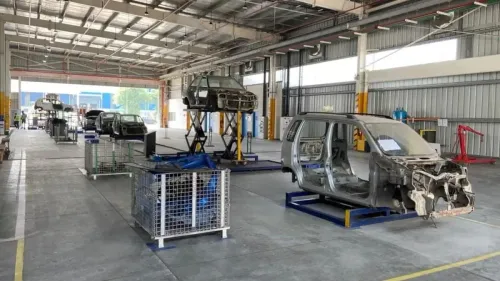
The end-of-life vehicle rules took effect on 1 April 2025 and require automakers to meet annual scrappage targets linked to vehicles sold 15 to 20 years earlier. The system places recycling responsibilities on manufacturers while allowing scrapping facilities to carry out the physical work.
Automakers can meet their obligations by purchasing extended producer responsibility certificates from registered vehicle scrapping facilities through a centralised portal. The certificates are generated according to the quantity of steel recovered from scrapped vehicles.
This arrangement lets manufacturers meet recycling obligations without directly scrapping vehicles themselves. Registered scrapping facilities, in turn, are part of the certificate mechanism through which producers can demonstrate compliance.
What remains in place
According to industry observers, the amendment retains the broader objective of environmentally responsible disposal and recycling of ageing vehicles while providing greater regulatory clarity. The annual target and certificate system remains relevant to producers that continue operating.
For a manufacturer that permanently closes, the CPCB's determination of outstanding obligations will be the next step under the revised framework.
Frequently Asked Questions
What has changed in India's vehicle scrapping rules?
The amended rules clarify that automakers continuing to operate in India need not account for future recycling obligations as current liabilities. Obligations relating to unfulfilled extended producer responsibility commitments arise when a producer permanently ceases operations.
Why did automakers seek a change to the scrapping rules?
Automakers feared the original rules, read with accounting standard Ind AS 37, could require large provisions for future scrapping costs. Industry estimates suggested a potential one-time gross requirement running into tens of thousands of crores.
What happens if a vehicle manufacturer permanently closes?
The manufacturer must provide details of transport vehicles introduced over the previous 15 years and non-transport vehicles introduced over the previous 20 years. The Central Pollution Control Board will determine its outstanding extended producer responsibility obligations.
How can automakers meet vehicle scrappage targets?
Automakers can purchase extended producer responsibility certificates from registered vehicle scrapping facilities through a centralised portal. Certificates are generated based on the quantity of steel recovered from scrapped vehicles.
When did the end-of-life vehicle rules take effect?
The end-of-life vehicle rules took effect on 1 April 2025. They require annual scrappage targets linked to vehicles sold 15 to 20 years earlier.