Did Rajasthan Cabinet Just Approve a New Vehicle Scrapping Policy?
Synopsis
In a groundbreaking decision, the Rajasthan government has approved the Rajasthan Vehicle Scrapping Policy-2025, aimed at phasing out polluting vehicles and promoting environmental sustainability. This innovative policy is set to reshape the automotive landscape while contributing to a greener future.
Key Takeaways
Environmental Conservation: The policy promotes the retirement of polluting vehicles.
Financial Incentives: Tax exemptions for owners purchasing new vehicles.
Support for Startups: Backing for recycling and scrapping startups.
Circular Economy: Encouragement of material reuse in various sectors.
Digital Integration: Transparency through the Vahan portal.
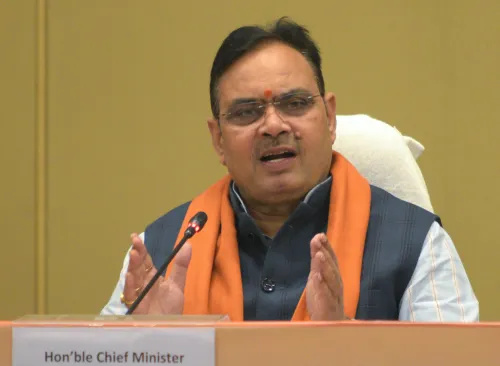
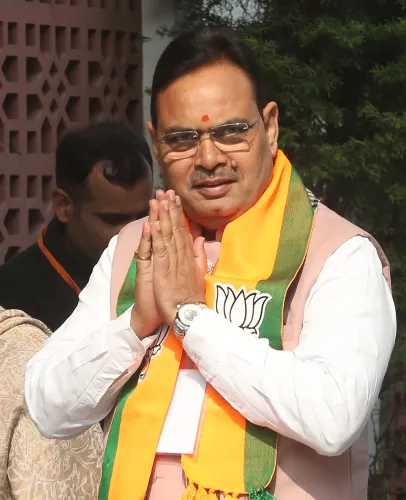
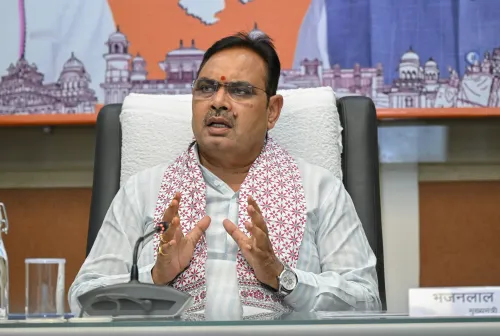
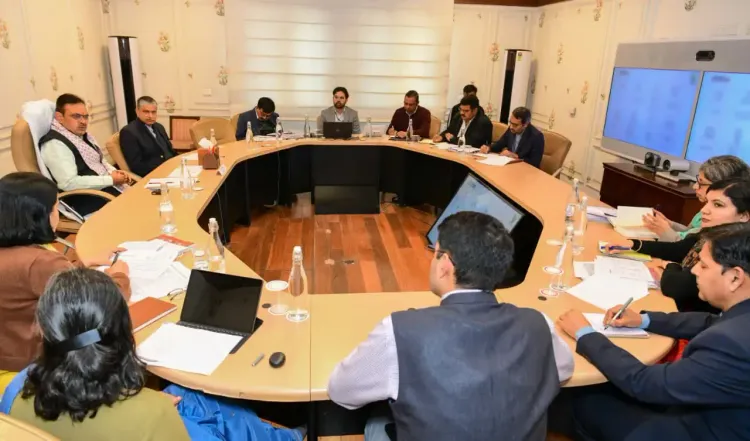
Jaipur, Dec 30 (NationPress) During a cabinet session led by Chief Minister Bhajan Lal Sharma at the Chief Minister’s Office, the Rajasthan government has sanctioned a series of pivotal policy measures aimed at environmental conservation, sustainable development, responsible Artificial Intelligence utilization, industrial advancement, and employee welfare.
In a collaborative press conference, Deputy Chief Minister Premchand Bairwa, Parliamentary Affairs Minister Jogaram Patel, and PHED Minister Kanhaiyalal announced the validation of the Rajasthan Vehicle Scrapping Policy-2025, initially proposed in the 2025–26 Budget.
The primary objective of this policy is to systematically retire unfit, unregistered, and polluting vehicles, ensuring their dismantling through safe, scientific, and environmentally friendly methods.
The establishment of Registered Vehicle Scrapping Facilities (RVSF) will be promoted throughout the state to facilitate transparent, digital, and traceable scrapping processes integrated with the Vahan portal, thereby eliminating any chance of unauthorized usage of scrapped vehicles.
The policy allows for the scrapping of government vehicles older than 15 years, unfit or unregistered vehicles, those damaged in accidents, auctioned scrap, unused, or voluntarily surrendered vehicles. Vehicle owners will be issued a Certificate of Deposit (CoD) and a Certificate of Vehicle Scrapping (CVS), both digitally uploaded on the portal.
Upon receiving the CoD, purchasers can avail themselves of a tax exemption of up to 50 percent on motor vehicle tax (maximum of Rs 1 lakh) when acquiring a new vehicle.
For six months, the authorized scrapper will securely store scrapped vehicle chassis pieces before handing them over to the District Transport Officer for an additional 18 months.
This policy seeks to fortify the circular economy by promoting the recycling of materials like steel, aluminum, plastic, and rubber, which will decrease raw material costs for the automobile, steel, and manufacturing sectors.
To attract investments, the policy outlines provisions for capital subsidies, state tax exemptions, interest subsidies, and reductions in stamp duty and electricity duty for the first 20 scrapping units.
Moreover, startups engaged in recycling and scrapping will receive backing under the Rajasthan Startup Policy.
Point of View
This policy represents a proactive approach by the Rajasthan government towards environmental sustainability and industrial growth. It showcases the commitment to modernize the state's vehicle management system while ensuring public health and welfare.
NationPress
23 Oct 2026
Frequently Asked Questions
What is the Rajasthan Vehicle Scrapping Policy-2025?
The Rajasthan Vehicle Scrapping Policy-2025 aims to phase out unfit, unregistered, and polluting vehicles, ensuring their scrapping through scientific and environmentally compliant methods.
Who will benefit from this vehicle scrapping policy?
Vehicle owners will benefit through tax exemptions on new vehicle purchases and by receiving certificates that facilitate the scrapping process.
How will the scrapping process be managed?
The scrapping process will be managed through Registered Vehicle Scrapping Facilities (RVSF) linked to the Vahan portal for transparency and traceability.