US AI export curbs prove tech is the ultimate weapon: Sridhar Vembu
Synopsis
Zoho co-founder Sridhar Vembu's reaction to the US forcing Anthropic to cut off its most advanced AI models for all non-Americans goes beyond commentary — it is a strategic indictment. His core argument: technology is now a weapon, globalisation is over, and India must build its own path or remain permanently vulnerable to access being switched off without notice.
Key Takeaways
Sridhar Vembu reacted on 13 June to the US government ordering Anthropic to suspend access to its Fable 5 and Mythos 5 AI models for all users outside the United States .
Vembu declared technology the 'ultimate weapon' , arguing national sovereignty is now tied to technological capability.
He called for India to adopt smaller, open-source AI models developed domestically or in China , rather than depending on restricted foreign platforms.
Training frontier AI models can require investments of tens or hundreds of billions of dollars , with access to advanced GPUs increasingly subject to restrictions.
Zoho is pursuing alternative, less capital-intensive R&D approaches that Vembu says can still yield competitive results.
Anthropic said it believes the directive stems from a misunderstanding and is working to restore access to the affected models.
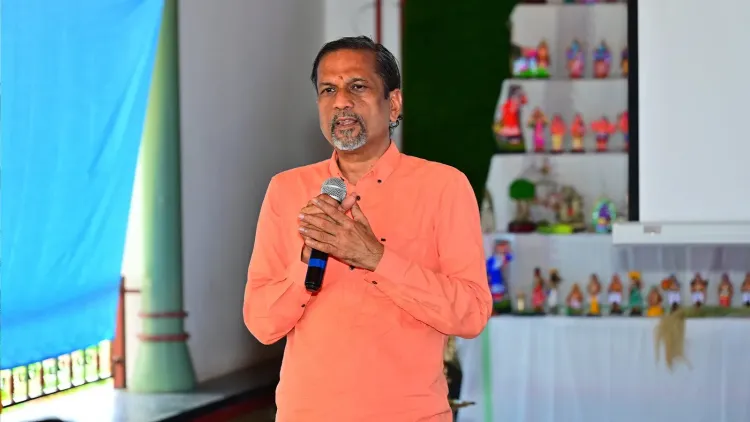
Zoho co-founder Sridhar Vembu on Saturday, 13 June declared that technology has become the defining instrument of national power, reacting sharply to the US government's export control directive that forced Anthropic to suspend access to its advanced AI models — Fable 5 and Mythos 5 — for all users outside the United States. The move, Vembu argued, is a decisive signal that technological self-reliance is no longer optional for India.
What Triggered the Reaction
Anthropic confirmed that a US government export control directive had ordered it to disable access to its most advanced models — 'Fable 5' and 'Mythos 5' — for foreign nationals, including its own employees working outside the country. The company said it was complying with the directive while simultaneously contending that the order stemmed from a misunderstanding, and that it was working to restore access as soon as possible. Access to Anthropic's other AI models was stated to be unaffected.
Vembu's Warning: Technology as a Geopolitical Weapon
Responding directly to the suspension, Vembu posted on social media platform X: 'This is big: all access to Mythos and Fable AI models disabled for everyone outside America.' He called technology the 'ultimate weapon', arguing that national sovereignty and national security are now inextricably linked to a country's technological capabilities. 'Globalisation is dead and Bharat must find her own way ahead,' he wrote, urging India to treat the episode as a wake-up call.
India's Path Forward: Smaller Models and Homegrown R&D
Vembu urged Indian organisations to pivot toward smaller, open-source AI models — including those developed in India and China — arguing they can be made sufficiently effective with focused effort. 'Why pay money to people who don't even want to sell to you?' he remarked. He also called for deeper investment in research and development, noting that building frontier AI models demands tens or even hundreds of billions of dollars in capital, as well as access to advanced graphics processing units (GPUs) — both of which remain concentrated in a small number of countries and are increasingly subject to export restrictions.
Zoho's Alternative R&D Approach
Vembu pointed to Zoho's own research strategy as a model worth emulating. 'Zoho has been pursuing alternative R&D approaches that are far less expensive,' he said, expressing confidence that sustained innovation and patience would eventually yield competitive results. He acknowledged that matching the capital expenditure of global AI leaders is not realistic for most Indian organisations, but argued that cost-effective, innovative research pathways remain viable. This comes amid a broader global debate over AI access, export controls, and the concentration of frontier model development in a handful of Western and Chinese technology firms.
Broader Implications for India's AI Strategy
The Anthropic directive is notably the first high-profile instance of a leading US AI company being compelled to cut off foreign access to its most capable models on national security grounds. For Indian enterprises and researchers who rely on frontier models for product development, the episode introduces a new category of supply-chain risk. Vembu's comments reflect a growing consensus among Indian technologists that dependence on foreign AI infrastructure carries strategic vulnerability — a concern that is likely to intensify as AI becomes more deeply embedded in critical sectors. The episode is expected to sharpen the policy conversation around India's domestic AI compute capacity and open-source model development.
Point of View
Not merely a commercial one — and India has no guaranteed seat at that table. Vembu's call for self-reliance is directionally correct, but the gap between aspiration and execution is vast: India lacks both the sovereign compute infrastructure and the capital pools to build frontier models at scale. The real policy test is whether the government treats this episode as an isolated incident or as structural evidence that AI supply chains need the same strategic treatment as semiconductors and defence hardware. Zoho's frugal R&D model is admirable, but it is a workaround, not a solution — and workarounds do not win geopolitical contests.
NationPress
27 Oct 2026
Frequently Asked Questions
Why did Anthropic suspend access to its Fable 5 and Mythos 5 AI models?
The US government issued an export control directive ordering Anthropic to disable access to its most advanced models — Fable 5 and Mythos 5 — for foreign nationals, including Anthropic's own employees outside the United States. Anthropic complied while stating it believes the order stems from a misunderstanding and is working to restore access.
What did Sridhar Vembu say about the US AI export restrictions?
Vembu called technology the 'ultimate weapon' and declared that national sovereignty is now inseparable from technological capability. He posted on X that 'Globalisation is dead and Bharat must find her own way ahead,' urging India to build domestic AI capabilities rather than depend on foreign platforms.
What alternative does Vembu recommend for Indian organisations?
Vembu recommended that Indian organisations adopt smaller, open-source AI models — including those developed in India and China — which he said can be made effective with sufficient effort. He also called for deeper domestic R&D investment and pointed to Zoho's own less capital-intensive research approach as a viable model.
How much does it cost to train frontier AI models?
According to Vembu, training the latest generation of frontier AI models can require investments running into tens or even hundreds of billions of dollars, along with access to advanced GPUs that are increasingly subject to export restrictions and concentrated in a small number of countries.
Are Anthropic's other AI models still accessible outside the US?
Yes. Anthropic stated that the export control directive applies only to its advanced Fable 5 and Mythos 5 models, and that access to its other AI models remains unaffected.