Why Do Venezuela's Vast Oil Reserves Remain Untapped?
Click to start listening
Synopsis
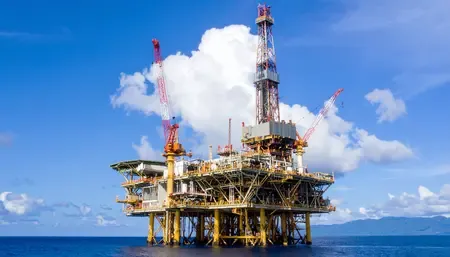
Venezuela's vast oil reserves remain largely untapped due to a combination of corruption, political instability, and international sanctions. Despite its potential, the country struggles with low production levels, which impact global oil markets. Could this open opportunities for Indian oil companies amid fluctuating prices?
Key Takeaways
- Venezuela has the world's largest proven oil reserves.
- Current oil production is significantly low at 1 million barrels per day.
- Political turmoil and corruption hinder production efforts.
- Indian oil companies like ONGC may find profitable opportunities.
- Global oil prices could experience fluctuations due to Venezuelan instability.
New Delhi, Jan 5 (NationPress) Venezuela holds the title for the world’s largest proven oil reserves, estimated at 303.8 billion barrels as of 2020. However, a myriad of challenges including lack of technical expertise, insufficient investment, political meddling, mismanagement, corruption, and international sanctions have stymied the development of these resources, according to a report released on Monday.
With the dawn of a new year, the US has intensified its focus on Venezuela, even apprehending President Nicolas Maduro and his spouse.
“Since Maduro’s election in 2013, he has primarily governed through decrees. This situation is likely to induce short-term volatility in the oil markets,” stated the report from PL Capital.
Following Venezuela's staggering reserves, Saudi Arabia follows closely with 297.5 billion barrels, while Canada, Iran, and Iraq hold significantly lower amounts of 168.1 billion barrels, 157.8 billion barrels, and 145 billion barrels, respectively. For context, the United States possesses only 68.8 billion barrels of oil reserves,” explained Swarnendu Bhushan, a Research Analyst at PL Capital.
Despite its vast reserves, Venezuela's oil production has been disappointing, averaging just 1 million barrels per day as of November 2025, compared to 13.7 million bopd in the United States and 9.7 million bopd in Saudi Arabia.
“In fact, production is now only one-third of its level a decade ago,” Bhushan added.
Historically, Venezuela was a powerhouse in oil production, with output peaking at 3.7 million bopd back in 1970, second only to the US at 11.7 million bopd and the USSR at 7.1 million bopd, while being on par with Saudi Arabia’s 3.9 million bopd.
“However, there is no magical solution akin to the Elder Wand from Harry Potter that can instantly elevate Venezuela's oil production. Any noticeable improvement would require a minimum of 3-6 months,” the report pointed out.
In the short term, the risk premium is expected to escalate due to global uncertainties, potentially causing minor price fluctuations based on reactions from Russia and China.
With Brent crude priced at $60 per barrel, “we are optimistic about upstream companies ONGC and Oil India. Oil Marketing Companies (OMCs) are positioned to maintain profitability amid low oil prices,” the report indicated.
Nonetheless, the recent hike in cigarette excise taxes hints at a possible increase in excise duty for petrol and diesel, with OMCs likely to absorb the costs similar to April 2025, raising concerns especially given current high valuations, Bhushan concluded.
Point of View
It's crucial to highlight that while Venezuela possesses unrivaled oil reserves, the ongoing political and economic instability severely hampers its potential. Our commitment remains to provide informed and unbiased perspectives that engage our audience and emphasize the pressing issues at hand.
NationPress
06/01/2026
Frequently Asked Questions
What are the main challenges facing Venezuela's oil production?
The primary challenges include political interference, corruption, lack of expertise, under-investment, and international sanctions.
How do Venezuela's oil reserves compare to other countries?
Venezuela has the largest proven oil reserves at 303.8 billion barrels, followed closely by Saudi Arabia with 297.5 billion barrels.
What is the current oil production rate in Venezuela?
As of November 2025, Venezuela's oil production is about 1 million barrels per day.
How might the current situation affect global oil prices?
The ongoing instability in Venezuela is likely to increase the risk premium in oil markets, potentially leading to price fluctuations.
What opportunities exist for Indian oil companies?
Indian oil companies, particularly ONGC and Oil India, may benefit from the current low oil prices while retaining profitability.