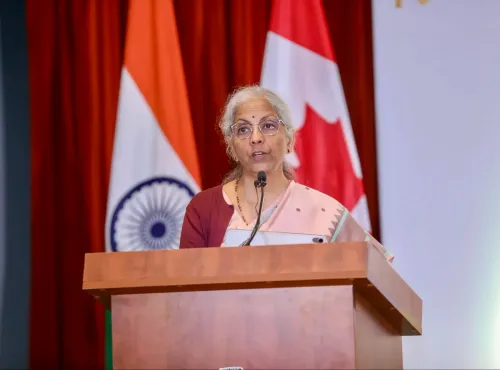
Sitharaman pitches India as global manufacturing hub at Chicago roundtable
Synopsis
At a Chicago business roundtable, Finance Minister Sitharaman did not just sell India — she reframed it. The pitch moved beyond market-size talking points to position India as a production and innovation platform, with GIFT City's 1,250 entities and the GCC evolution as concrete proof points. The real question is whether this translates into committed FDI or remains a compelling slide deck.
Key Takeaways
Finance Minister Nirmala Sitharaman addressed a high-level business roundtable in Chicago on 29 August 2026 .
She pitched India under the theme 'Manufacture in India — for India and for the world' , covering AI, defence, financial services, and infrastructure.
GIFT IFSC had 1,250 registered entities as of June 2026 , cited as evidence of India's growing financial services appeal.
India's Digital Public Infrastructure — Aadhaar, UPI, DigiLocker, ONDC, India Stack — was highlighted as a population-scale platform ready for higher-value AI and tech businesses.
India's Global Capability Centres are evolving from cost-arbitrage operations into global innovation hubs, according to Sitharaman.
The pitch comes as global companies actively reassess supply chains, positioning India as a beneficiary of China-plus-one and broader supply chain diversification trends.
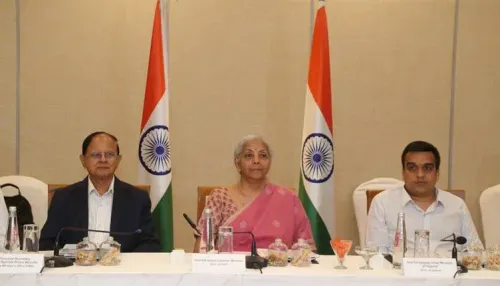
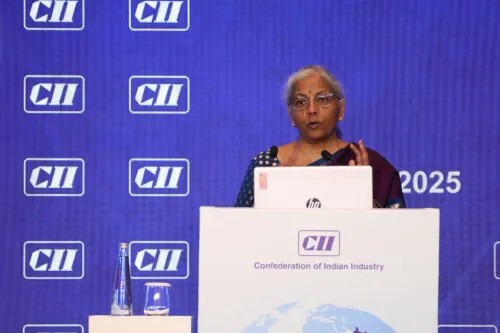
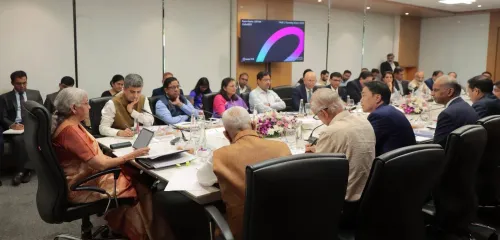
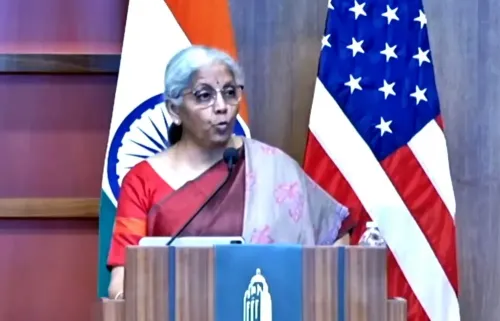
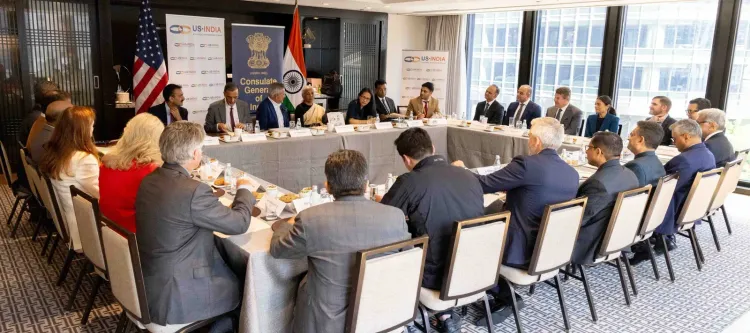
Finance Minister Nirmala Sitharaman on Saturday, 29 August made a direct pitch for India as a global investment and manufacturing destination at a high-level business roundtable in Chicago, urging leading investors and corporate executives to view India not merely as a consumer market but as a platform to manufacture, innovate and build for the world.
The Core Pitch: 'Why India, Why Now'
Sitharaman framed India's investment proposition around five structural strengths: strong domestic demand, investment-led growth, macroeconomic resilience, a deep talent pool, and rapidly expanding digital and physical infrastructure. She was emphatic that India's appeal rests on the convergence of multiple long-term advantages built over the past decade, rather than any single sector or policy lever.
The theme she anchored her address to — 'Manufacture in India — for India and for the world' — encompassed sectors including manufacturing, artificial intelligence, digital technologies, financial services, infrastructure, food processing, defence, and advanced technologies. This comes as global companies are actively reassessing supply chains and capital allocation in the wake of geopolitical shifts and post-pandemic restructuring.
Digital Infrastructure and AI Opportunity
On technology, Sitharaman highlighted India's Digital Public Infrastructure (DPI) stack — comprising Aadhaar, UPI, DigiLocker, ONDC, and India Stack — as platforms built and proven at population scale. She argued that the next frontier lies in higher-value businesses: AI, engineering analytics, product development, semiconductors, and electronics.
Notably, she pointed to India's Global Capability Centres (GCCs) as increasingly transitioning from back-office functions into genuine global innovation hubs — a shift that positions India to compete for higher-margin technology work rather than just cost-arbitrage services.
GIFT City and Financial Services
Sitharaman extended a specific invitation to global financial institutions to explore GIFT City, noting that the GIFT International Financial Services Centre (IFSC) had 1,250 registered entities as of June 2026. She described GIFT IFSC as an emerging international financial centre connecting global capital with Indian opportunities, with scope across banking, fund management, reinsurance, aircraft and ship leasing, sustainable finance, and other cross-border services.
Manufacturing and Global Supply Chain Realignment
On manufacturing, Sitharaman argued that the ongoing reconfiguration of global supply chains presents a significant structural opening for India, citing the country's large domestic market and increasingly competitive manufacturing capabilities. She said India's reform momentum over the past decade has created the conditions for global companies to anchor production in India for both domestic consumption and export.
What This Signals
The Chicago roundtable is part of a broader diplomatic and economic outreach by the Indian government to attract long-term foreign direct investment at a time when multinationals are diversifying away from single-country supply chain dependencies. With the Union Budget 2025-26 already signalling continued capex-led growth, Sitharaman's address reinforces the Centre's messaging that India is open — and structurally ready — for large-scale global capital. The next test will be whether investor interest translates into committed capital flows and on-ground manufacturing scale-up.
Point of View
But it faces a familiar credibility gap: India has been pitching itself as a manufacturing hub for over a decade, and its share of global manufacturing FDI remains modest relative to its ambitions. The GIFT City numbers and GCC evolution are genuine proof points, but the harder sell is on execution — land acquisition bottlenecks, logistics costs, and regulatory unpredictability remain live concerns for multinationals. The supply chain realignment moment is real and time-limited; whether India captures it at scale depends less on roundtable rhetoric and more on what happens in the 100 days after an investor signs an MOU.
NationPress
29 Aug 2026
Frequently Asked Questions
What did Finance Minister Nirmala Sitharaman say at the Chicago roundtable?
Sitharaman urged global investors and business leaders to view India as a platform to manufacture, innovate, and build for the world — not just a consumer market. She highlighted India's digital infrastructure, talent pool, macroeconomic resilience, and GIFT City as key investment draws.
What is the 'Manufacture in India — for India and for the world' theme?
It is the investment pitch framework Sitharaman used to describe India's opportunity across manufacturing, AI, digital technologies, financial services, infrastructure, food processing, defence, and advanced technologies. The theme positions India as a global production and export base, not just a domestic market.
How many entities are registered at GIFT IFSC?
As of June 2026, GIFT International Financial Services Centre had 1,250 registered entities, according to Sitharaman. The centre covers banking, fund management, reinsurance, aircraft and ship leasing, sustainable finance, and cross-border services.
Why is India pitching itself as a manufacturing hub now?
Global companies are reassessing supply chains and capital allocation amid geopolitical shifts, making this a strategic window for India. The government argues that a decade of reforms, expanding infrastructure, and a large domestic market make India a competitive alternative for multinational production bases.
What are India's Global Capability Centres and why do they matter?
Global Capability Centres (GCCs) are offshore units set up by multinational corporations in India, traditionally for back-office and IT support. Sitharaman noted they are increasingly evolving into global innovation hubs focused on AI, product development, and analytics — signalling a move up the value chain.