DMK accuses BJP of using delimitation to brand Opposition as anti-women
Synopsis
DMK's T.K.S. Elangovan has called out what he describes as a BJP political trap — linking delimitation with women's reservation so that any party opposing the former gets branded as anti-women. With delimitation set to redraw India's parliamentary map, the framing war around it is already as consequential as the exercise itself.
Key Takeaways
DMK spokesperson T.K.S.
Elangovan on 29 August accused the BJP of deliberately clubbing delimitation with women's reservation to malign the Opposition.
Elangovan stated that both the DMK and Congress supported the Women's Reservation Bill when it was passed, and that their opposition is solely to the proposed delimitation.
He alleged that 4,000 EVMs were stored in a godown that was later burned down, destroying potential evidence — claims that remain unverified.
On OBC reservation , Elangovan argued only state governments can determine Backward Classes, citing Punjab's 4 per cent OBC quota as an example of regional variation.
He defended Sonia Gandhi's memoirs, saying it is natural for political autobiographies to reference opponents like the BJP and RSS .
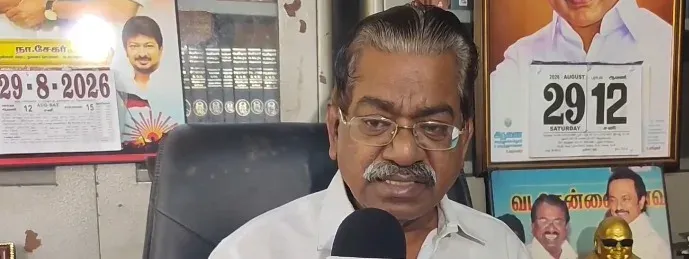
Dravida Munnetra Kazhagam (DMK) spokesperson T.K.S. Elangovan on Saturday, 29 August accused the National Democratic Alliance (NDA) government at the Centre of deliberately linking delimitation with women's reservation in a bid to portray parties opposing the delimitation exercise as being against women's rights.
The Core Allegation
Elangovan argued that the Bharatiya Janata Party (BJP) is employing a calculated political tactic. 'They want to club delimitation with women's reservation because if anyone opposes delimitation, they will portray them as being against women's reservation,' he said. He was categorical that neither the DMK nor the Indian National Congress (Congress) opposes women's reservation. 'When the Women's Reservation Bill was passed earlier, we supported it, and all parties supported it. It was originally introduced by the Congress party,' he added.
Elangovan clarified that the Opposition's objection is specifically to the proposed delimitation and the seat distribution being suggested — not to the reservation itself. 'Our opposition is to the proposed delimitation and the number of seats they are suggesting,' he said.
On ECI and Electoral Roll Controversy
Reacting to former West Bengal Chief Minister Mamata Banerjee's allegations that the BJP used the Election Commission of India (ECI) to 'hijack' the last West Bengal Assembly elections, and that the Special Intensive Revision (SIR) was being deployed to remove lakhs of names from electoral rolls, Elangovan described such concerns as 'very obvious.' He alleged that 4,000 Electronic Voting Machines (EVMs) were stored in a warehouse that was subsequently burned down, effectively destroying potential evidence. 'This shows that their intention was to manipulate the election, and they have successfully done so,' he claimed. These are allegations made by Elangovan and have not been independently verified.
Social Justice and Backward Classes
On the question of reservation and social justice, Elangovan argued that only state governments are equipped to determine which communities qualify as Backward Classes, given the variation in social composition across states. He cited Punjab, where the Other Backward Classes (OBC) reservation stands at just 4 per cent, as an example of how different states have distinct social realities that cannot be addressed through a uniform central framework.
Sonia Gandhi's Memoirs Row
Addressing the controversy surrounding Congress leader Sonia Gandhi's memoirs, Elangovan said it was natural for a political memoir to reference opponents. 'Sonia Gandhi is a political leader and was the president of the Congress party. Her memoirs will definitely talk about the BJP and the RSS,' he said, drawing a parallel with how memoirs of DMK or Communist leaders would similarly critique the Rashtriya Swayamsevak Sangh (RSS) and BJP.
The remarks reflect a broader Opposition effort to push back against what they describe as the Centre's attempt to reframe the delimitation debate ahead of what is expected to be a politically charged exercise that could redraw parliamentary seat allocations across states.
Point of View
Even indirectly, is an electoral liability in Tamil Nadu and beyond. The BJP's reported strategy of bundling delimitation with reservation is a pressure tactic that forces southern parties into a rhetorical corner: oppose seat redistribution and risk the anti-women label. What mainstream coverage underplays is that the delimitation debate is fundamentally about political power shifting from southern to northern states — women's reservation is the packaging, not the substance. Elangovan's EVM-godown allegation, made without cited evidence, also risks diluting an otherwise coherent political argument.
NationPress
29 Aug 2026
Frequently Asked Questions
Why is the DMK opposing delimitation?
The DMK opposes the proposed delimitation on the grounds that it would reduce the parliamentary representation of southern states, which have performed better on population control. Elangovan clarified that the party's objection is specifically to the seat distribution being proposed, not to women's reservation.
What is the BJP's alleged tactic on delimitation and women's reservation?
According to DMK spokesperson T.K.S. Elangovan, the BJP is linking delimitation with women's reservation so that any party opposing delimitation can be portrayed as being against women's rights. He called it a deliberate political tactic to discredit the Opposition.
Did the DMK support the Women's Reservation Bill?
Yes, according to Elangovan, the DMK supported the Women's Reservation Bill when it was passed, as did all parties at the time. He noted the bill was originally introduced by the Congress party.
What did Elangovan say about the ECI and electoral rolls?
Elangovan endorsed former West Bengal CM Mamata Banerjee's allegations that the BJP used the ECI to influence the last West Bengal Assembly elections and that the Special Intensive Revision was used to remove lakhs of names from voter rolls. He also alleged that 4,000 EVMs were stored in a warehouse that was subsequently burned down — claims that have not been independently verified.
Why does Elangovan say states should determine OBC status?
Elangovan argued that social compositions differ significantly across states, making a uniform central determination of Backward Classes impractical. He cited Punjab, where OBC reservation is only 4 per cent, as evidence that each state's demographic reality requires a tailored approach.