ISI ramps up espionage after Operation Sindoor, smuggling Indian SIMs to Pakistan

Synopsis
Pakistan's ISI is smuggling Indian SIM cards through Dubai and Nepal to run WhatsApp honey-trap operations targeting Indian defence personnel — and the Delhi arrest of Mohammad Sahil and Sameera has laid bare just how industrialised this network has become, with hundreds of SIMs reportedly in circulation and 90 per cent of operations run through Indian numbers to evade detection.
Key Takeaways
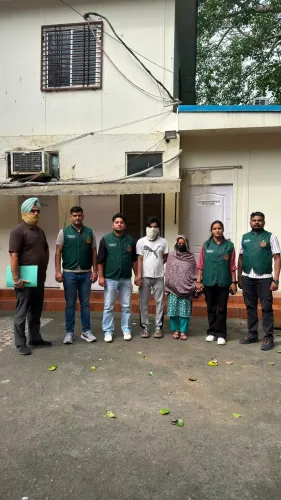
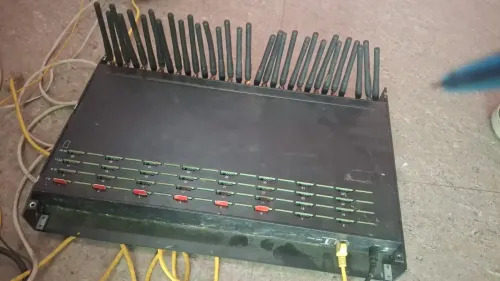
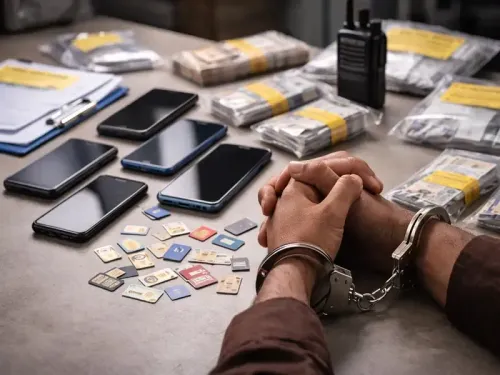
Delhi Police arrested Mohammad Sahil (25) and Sameera (21) on 29 August for procuring and smuggling eight Indian SIM cards to Pakistan via Dubai between 2024 and 2025.
The ISI uses Indian SIM cards to activate WhatsApp accounts for honey-trapping, with 90% of its espionage operations run through Indian numbers.
SIM cards are routed to Pakistan via the Gulf and Nepal corridors to avoid direct detection.
The ISI has reportedly procured hundreds of Indian SIM cards through its agent network, targeting primarily the Indian defence sector .
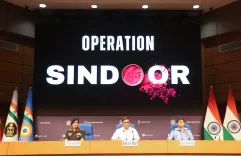
The escalation in espionage activity follows India's Operation Sindoor , according to security officials.
Indian agencies have busted multiple honey-trap modules but warn that new cases continue to emerge despite repeated awareness campaigns.
Pakistan's spy agency, the Inter-Services Intelligence (ISI), has significantly escalated its espionage operations inside India following Operation Sindoor, with Indian SIM card smuggling emerging as a critical enabler of its honey-trap network, according to security officials. The arrest of a young couple in New Delhi on Friday, 29 August has thrown a spotlight on a growing racket that routes Indian SIM cards through the Gulf and Nepal to handlers in Pakistan.
The Delhi Arrest That Exposed the Racket
Mohammad Sahil (25) and his wife Sameera (21) were detained by Delhi Police after an investigation revealed that between 2024 and 2025 the couple had procured eight Indian SIM cards and dispatched them to Pakistan via Dubai. Officials said the pair were part of a broader ISI-backed module in which specific individuals are assigned only one task: source Indian SIMs and move them across the border.
This comes amid a string of recently busted espionage cases in which a similar pattern has emerged — a layered network where different operatives handle SIM procurement, information collection, and honey-trapping as distinct, compartmentalised functions.
Why ISI Wants Indian SIM Cards
According to an Intelligence Bureau official, the demand for Indian SIM cards is driven by two operational advantages. First, Pakistani handlers can activate WhatsApp accounts on Indian numbers, making initial contact appear domestically rooted and delaying detection by Indian agencies. Second, using Indian SIMs leaves no direct digital trail back to Pakistan.
'Almost 90 per cent of these operations are carried out by activating WhatsApp accounts using Indian SIM cards,' an official said. The first approach is typically made through social media — scouts in Pakistan scan platforms for individuals photographed in uniform or associated with defence establishments — before the conversation migrates to WhatsApp for the actual honey-trap.
Scale and Targets of the Operation
Officials say the ISI has, through its Indian agents, reportedly procured hundreds of SIM cards for such activity. The honey-trap modules operating out of Pakistan focus extensively on the Indian defence sector, but other government officials are also considered high-value targets. Individuals with no government affiliation are separately recruited to conduct physical surveillance around defence installations and relay information to ISI handlers.
Notably, this is not an isolated module — officials describe a multi-layered architecture in which recruits in Pakistan are dedicated solely to social media scouting, while Indian-side operatives handle procurement and ground intelligence.
Post-Operation Sindoor Escalation
Security officials believe the spike in espionage activity is directly linked to the military setback Pakistan suffered during Operation Sindoor. According to one official, 'Pakistan may be planning a major misadventure and hence has stepped up surveillance and espionage activity in India.' The ISI's intensified drive to collect Indian military intelligence is seen as an attempt to compensate for the strategic embarrassment inflicted by the Indian armed forces.
Persistent Threat Despite Repeated Warnings
Indian agencies have dismantled multiple honey-trap modules in recent months, yet officials acknowledge that such cases continue to surface with troubling frequency. What concerns security personnel most is that awareness campaigns have not been sufficient deterrents — individuals from the defence and government sectors continue to fall prey to ISI-run networks.
With the scale of SIM smuggling operations reportedly growing and the Gulf and Nepal corridors actively exploited, Indian intelligence agencies are expected to tighten cross-border SIM card monitoring in the weeks ahead.
Point of View
Gulf and Nepal transit routes, hundreds of cards in circulation — signals that this is not opportunistic espionage but a structured programme. What is striking is how low-tech the vulnerability remains: a WhatsApp account on an Indian number is apparently sufficient to penetrate networks that handle sensitive defence information. Indian agencies have been raising alarms for years, yet the pipeline keeps flowing. The real accountability question is not just about the arrested couple but about the systemic gaps in SIM KYC enforcement and cross-border courier monitoring that make this racket viable at scale.
NationPress
29 Aug 2026
Frequently Asked Questions
What is the ISI's SIM card smuggling operation in India?
Pakistan's ISI is procuring Indian SIM cards through agents inside India and routing them to Pakistan via Dubai and Nepal. The SIMs are used to activate WhatsApp accounts for honey-trap operations targeting Indian defence and government personnel, allowing handlers to mask their Pakistani origin.
Who was arrested in Delhi for SIM smuggling to Pakistan?
Delhi Police arrested Mohammad Sahil (25) and his wife Sameera (21) on 29 August. The couple reportedly procured eight Indian SIM cards between 2024 and 2025 and sent them to Pakistan via Dubai as part of an ISI-linked module.
Why does the ISI specifically want Indian SIM cards?
Indian SIM cards allow Pakistani handlers to set up WhatsApp accounts that appear locally rooted, making it harder for Indian agencies to detect the operation quickly. They also avoid any direct digital trail leading back to Pakistan, according to Intelligence Bureau officials.
How does the ISI honey-trap network operate?
Recruits in Pakistan scan social media for individuals photographed in uniform or linked to the defence sector. Initial contact is made on social media, then shifted to WhatsApp — activated on smuggled Indian SIMs — where targets are honey-trapped and subsequently blackmailed into passing sensitive information.
Why has ISI espionage increased after Operation Sindoor?
Security officials say Pakistan's intelligence apparatus intensified its espionage drive following the military setback it suffered during Operation Sindoor. Officials suggest Pakistan may be planning further action and is attempting to gather Indian military intelligence to compensate for its strategic losses.