Operation Sindoor proved India's indigenous defence prowess: Minister Verma
Synopsis
Minister B.L. Verma used the NTH's 115th Foundation Day in Bengaluru to make a pointed claim: Operation Sindoor didn't just repel a threat — it validated a decade of indigenous defence investment. With NTH now certifying drones, EV batteries and chemicals, the institution is quietly becoming the quality backbone of Atmanirbhar Bharat.
Key Takeaways
Verma said Operation Sindoor proved India's indigenous weapons and missiles match global standards.
Verma spoke at the 115th Foundation Day of the National Test House (NTH) in Bengaluru on 29 August .
NTH was founded in 1912 as the Government Test House at Alipore, Kolkata — completing 114 years of service.
A new NTH facility in Bengaluru was inaugurated, serving the city's technology and innovation ecosystem.
NTH is expanding into drone testing and certification , EV battery testing , and chemical testing .
The institution is being modernised under PM Narendra Modi 's 'Reform, Perform and Transform' vision.
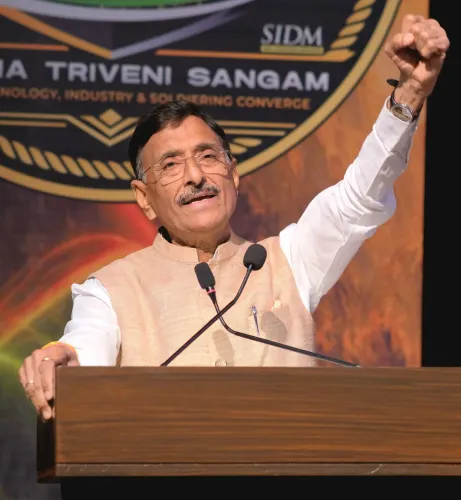
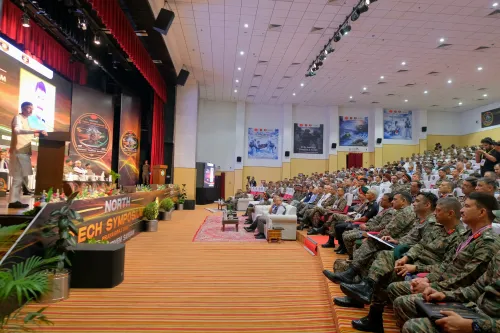
Union Minister of State B.L. Verma on Saturday, 29 August declared that Operation Sindoor had placed India's indigenous defence capabilities on par with any nation in the world, speaking at the 115th Foundation Day celebrations of the National Test House (NTH) in Bengaluru. The event also marked the inauguration of NTH's new Bengaluru facility.
Verma on Operation Sindoor
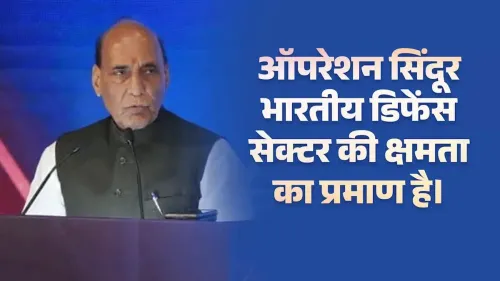
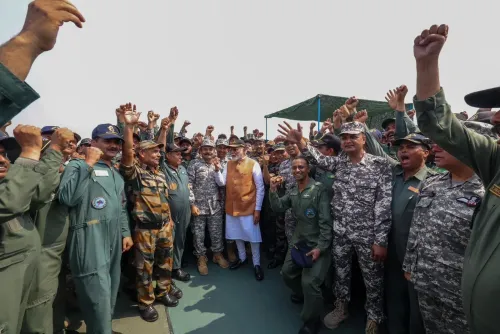
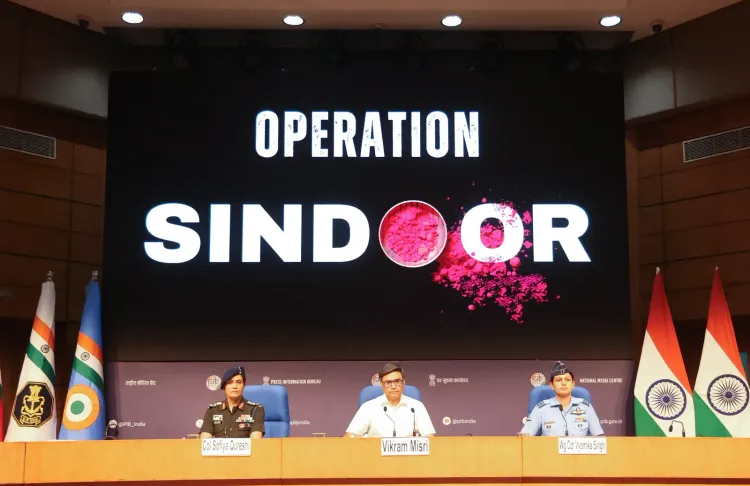
Addressing the gathering, Verma — who holds charge of the Ministry of Consumer Affairs, Food and Public Distribution and the Ministry of Social Justice and Empowerment — said the operation had been a global demonstration of India's homegrown weapons and missile technology. 'When we saw Operation Sindoor, the world witnessed the capability of our indigenous weapons and powerful missiles. Today, India is not behind anyone,' he said.
The minister framed Operation Sindoor as concrete proof of the country's progress under the Atmanirbhar Bharat and Make in India programmes, arguing that products developed through India's self-reliance push had now been tested under real-world conditions.
NTH at 115: A Century of Quality Testing
Verma noted that the NTH had completed 114 years of service since its founding in 1912 as the Government Test House at Alipore, Kolkata. 'This is not merely an institutional achievement, but a celebration of India's proud journey in scientific testing, quality, product safety and reliability,' he said.
The institution has since evolved into what officials describe as a key pillar of India's national quality infrastructure, aligned with the government's stated goals of 'Zero Defect, Zero Effect' and Viksit Bharat 2047. Verma added that the NTH was being modernised in line with Prime Minister Narendra Modi's 'Reform, Perform and Transform' framework.
New Frontiers: Drones, EVs and Chemical Testing
The minister highlighted NTH's expanding mandate into emerging sectors. On drone testing and certification, Verma said that with drones now deployed across defence, agriculture, surveying and disaster management, robust certification frameworks were essential to building a safe ecosystem.
He also pointed to Electric Vehicle (EV) battery testing facilities as critical for industrial safety, efficiency, and India's global competitiveness. Expansion of chemical testing capabilities was flagged as equally important for environmental monitoring and public health.
Significance of the Bengaluru Facility
Verma described the new Bengaluru building as more than physical infrastructure, calling it a step toward strengthening India's modern scientific and quality testing capacity. He noted that Bengaluru's status as a hub for technology, innovation, research, engineering and advanced industries made it an ideal location. 'The presence of NTH in Bengaluru will provide industries, startups, research institutions and innovators with better testing and technical services,' he said.
With NTH now expanding into drones, EVs, and chemicals alongside its traditional mandate, the institution appears positioned as a central node in India's broader industrial quality push — one whose relevance has only grown as the country seeks to scale indigenous manufacturing.
Point of View
Fast-moving sectors where testing standards globally are still being written — NTH's capacity to keep pace, not just its political symbolism, will determine whether Atmanirbhar Bharat's quality infrastructure is real or rhetorical.
NationPress
29 Aug 2026
Frequently Asked Questions
What did Minister B.L. Verma say about Operation Sindoor at the NTH event?
Verma said Operation Sindoor demonstrated the capability of India's indigenous weapons and powerful missiles to the world, declaring that India is now on par with any nation in defence. He made the remarks at the 115th Foundation Day of the National Test House in Bengaluru on 29 August.
What is the National Test House (NTH) and how old is it?
The National Test House is a government body responsible for scientific testing, quality assurance, product safety and reliability. It was established in 1912 as the Government Test House at Alipore, Kolkata, and has completed 114 years of service.
What new facilities or capabilities is NTH expanding into?
NTH is expanding into drone testing and certification, Electric Vehicle battery testing, and chemical testing. These additions are aimed at supporting defence, agriculture, industrial safety, environmental monitoring, and India's global competitiveness.
Why was a new NTH building inaugurated in Bengaluru?
The new Bengaluru facility was inaugurated because the city is a major centre for technology, innovation, research, and advanced industries. The NTH presence is intended to provide better testing and technical services to industries, startups, and research institutions in the region.
How does NTH connect to the government's Atmanirbhar Bharat goals?
Minister Verma described NTH as a key pillar of India's national quality infrastructure, aligned with the government's Make in India, Atmanirbhar Bharat, Zero Defect Zero Effect, and Viksit Bharat 2047 programmes. The institution is being modernised under PM Modi's 'Reform, Perform and Transform' framework.