India's EV transition: Why two-wheelers, not cars, lead the shift
Synopsis
India's EV story is not Europe's EV story. Driven by two-wheelers and auto-rickshaws rather than passenger cars, India's electrification path will send lithium demand past double, copper demand toward triple, and nickel demand to two-and-a-half times recent global production benchmarks — a mineral supply challenge with no Western playbook to follow.
Key Takeaways
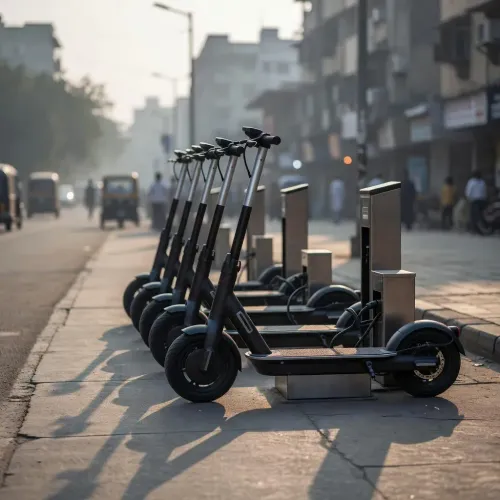
India's EV transition is led by two-wheelers and auto-rickshaws , not passenger cars — unlike Europe and the US .
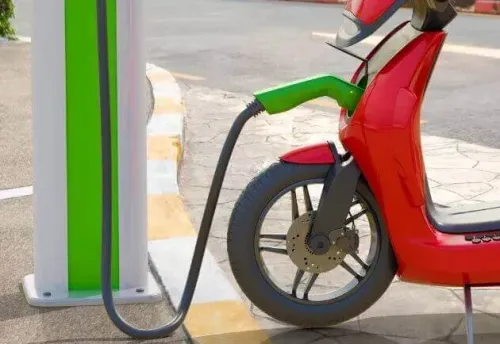
Demand for slow chargers could rise six to nine times by 2030 , driven by two- and three-wheelers.
Lithium demand could more than double , copper could approach three times , and nickel could reach two-and-a-half times recent global production benchmarks.
Passenger cars will continue expanding beyond 2050 , making India's electrification pathway progressively more mineral-intensive over time.
The analysis in The Policy Edge calls for a three-pillar mineral strategy: securing overseas access, reducing extraction dependence, and building domestic refining and battery manufacturing capacity.
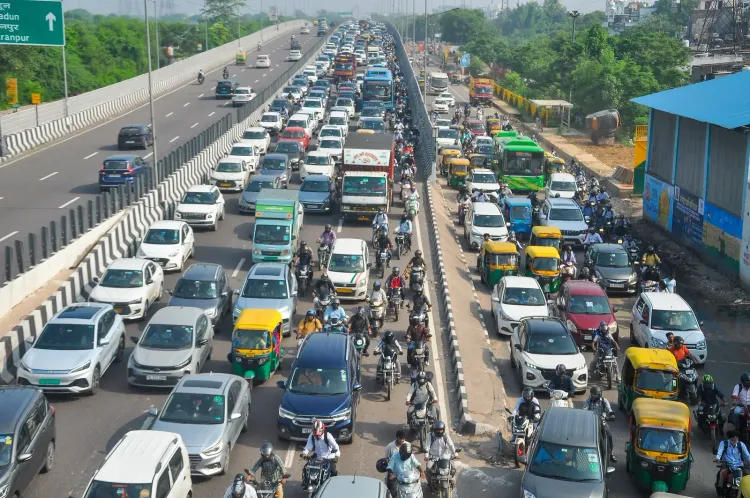
India's electric vehicle transition is structurally distinct from those of Europe and the United States, where passenger cars dominate electrification. In India, the shift is being led by two-wheelers and auto-rickshaws — the backbone of everyday mobility — and this divergence will shape the country's critical mineral demand in ways that have no direct parallel in Western economies, according to an analysis published in The Policy Edge.
A Phased, Vehicle-Diverse Transition
Unlike the relatively uniform car-led electrification seen in advanced economies, India's transport sector spans a wide spectrum: two-wheelers, auto-rickshaws, buses, trains, and passenger cars, each expected to electrify at a different pace. The first phase of India's transition, according to the analysis, will be driven by the rapid electrification of two- and three-wheelers. As these markets mature, growth will shift from fleet expansion to replacement of older vehicles.
Passenger cars, by contrast, are projected to continue expanding well beyond 2050. As car numbers grow, they will account for an increasing proportion of battery demand and critical mineral consumption. The analysis notes that India's electrification pathway will therefore become progressively more material-intensive even as overall vehicle growth begins to stabilise — a trajectory that policymakers and industry bodies have not yet fully priced in.
Charging Infrastructure Must Anticipate Tomorrow's Fleet
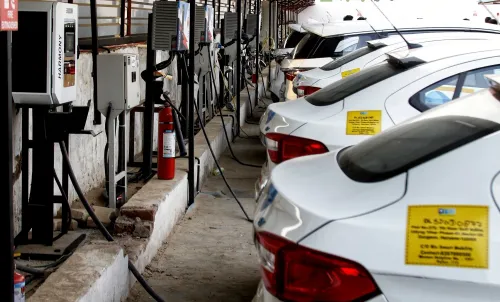
The divergence in vehicle types also has direct implications for charging infrastructure. Demand for slow chargers — primarily used by two- and three-wheelers — could increase six to nine times by 2030, the analysis estimates. Fast chargers, increasingly driven by passenger car adoption, are expected to keep expanding well into the following decades.
The analysis cautions that infrastructure planned today must anticipate tomorrow's vehicle mix rather than simply respond to current demand — a planning horizon that requires coordination across government, utilities, and private investors.
Critical Mineral Demand: Scale India Has Not Faced Before
The implications for critical minerals are, according to the analysis, even more consequential. Relative to recent global production benchmarks, lithium demand could more than double, copper demand could approach three times its benchmark, and nickel demand could reach approximately two-and-a-half times. Cobalt demand, despite starting from a smaller base, could approach its corresponding global production benchmark.
These projections, the analysis states, illustrate how India's electrification pathway could become a major driver of global demand for critical minerals — in some cases exceeding recent global production levels. This is not a distant scenario; the trajectory begins with the current surge in two-wheeler electrification.
Three Policy Pillars India Needs
The analysis argues that meeting this challenge requires policy to move well beyond promoting EV adoption. It identifies three complementary capabilities India must build.
The first is securing long-term access to critical minerals through partnerships with resource-rich countries, long-term supply agreements, and strategic participation in overseas mineral projects. As global competition for these resources intensifies, reliable access is described as an increasingly important source of strategic and economic advantage.
The second is reducing dependence on primary mineral extraction — by extending battery life, improving recovery of end-of-life materials, and accelerating adoption of alternative battery chemistries. This can moderate long-term demand for scarce minerals while improving resource efficiency.
The third is building domestic capabilities across the mineral value chain — expanding refining, processing, and advanced battery manufacturing capacity so India captures more value within the clean energy economy and strengthens industrial resilience.
With millions of electric vehicles set to enter Indian roads over the coming decades, how India manages this mineral supply challenge will determine not just the pace of its clean energy transition, but its strategic position in a rapidly reorganising global resource economy.
Point of View
GST cuts, FAME schemes. What the analysis in The Policy Edge surfaces is the harder, less politically visible problem: a looming mineral supply crunch that no amount of demand-side nudging will solve. The two-wheeler-first trajectory is a structural advantage in some respects — lower battery sizes, lower per-unit mineral intensity — but the sheer scale of India's fleet means aggregate demand will be enormous regardless. The absence of a credible, funded mineral strategy to match the EV push is the gap that deserves far more scrutiny than it currently receives.
NationPress
1 Oct 2026
Frequently Asked Questions
How is India's EV transition different from Europe and the US?
Unlike Europe and the US, where electrification is primarily driven by passenger cars, India's transition is led by two-wheelers and auto-rickshaws, which dominate everyday mobility. This means India's electrification pathway is more vehicle-diverse, phased differently over time, and places uneven pressure on critical mineral supply chains.
Which critical minerals will India need most for its EV transition?
According to the analysis in The Policy Edge, India's EV rollout could push lithium demand to more than double recent global production benchmarks, copper to nearly three times, nickel to about two-and-a-half times, and cobalt close to its global benchmark. These are projections relative to recent global production levels, not current Indian consumption.
How much will EV charging infrastructure need to grow in India by 2030?
Demand for slow chargers — used primarily by two- and three-wheelers — could increase six to nine times by 2030, according to the analysis. Fast chargers, driven by rising passenger car numbers, are expected to keep expanding beyond 2030 and into the following decades.
What policy steps does India need to manage its critical mineral demand?
The analysis recommends three complementary strategies: securing long-term access to minerals through overseas partnerships and supply agreements; reducing dependence on primary extraction through battery life extension, recycling, and alternative chemistries; and building domestic refining, processing, and battery manufacturing capacity to capture more value from the clean energy economy.
When will passenger cars become the dominant driver of India's EV mineral demand?
Passenger cars are projected to continue expanding well beyond 2050 and will account for a growing share of battery demand and mineral consumption as the two-wheeler market matures. The analysis notes that India's electrification pathway will become progressively more material-intensive even as overall vehicle growth stabilises.