State investment promises: Why laws, escrow and disclosure matter more than MoUs
Synopsis
India's states race to attract investment with generous incentives, but data shows Karnataka converted fewer than 16% of approved proposals into actual projects, Telangana left ₹3,736 crore in dues unpaid after a change of government, and Andhra Pradesh owed industry ₹5,000 crore just weeks ago. Andhra Pradesh's proposed Investment Protection Act is a rare attempt to make promises legally and fiscally binding — and it may be the template every competing state needs.
Key Takeaways
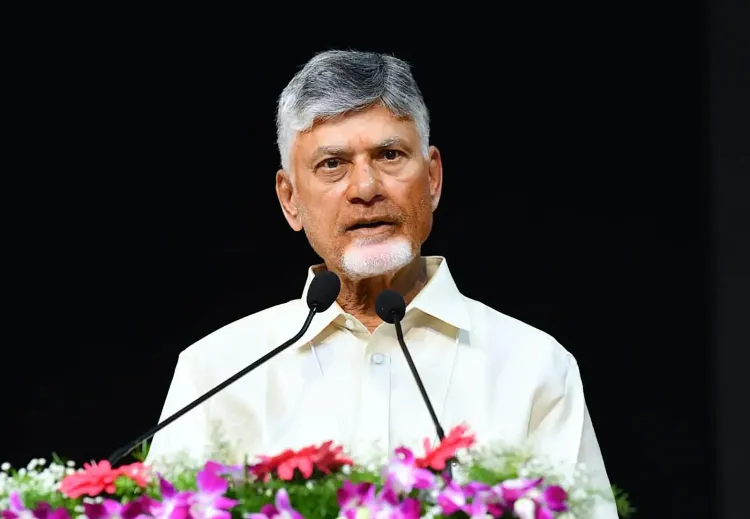
Andhra Pradesh CM N.
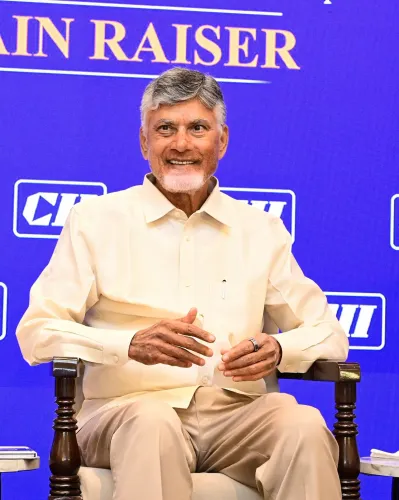
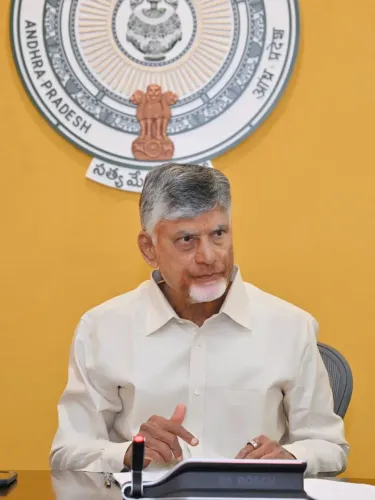
Chandrababu Naidu announced an Investment Protection Act ahead of the CII Partnership Summit to prevent future governments from reversing investor incentives.
Of 4,423 investment proposals approved by Karnataka between 2013 and October 2025 , only 697 — under 16% — were implemented, per state data.
Telangana owed industry approximately ₹3,736 crore in unpaid incentives after its government changed in December 2023 , including ₹684 crore in cheques that could not be encashed.
Andhra Pradesh released around ₹1,400 crore of a reported ₹5,000 crore owed to small industrial units in the last week of October 2026 .
States underspent capital budgets by roughly 20% between 2015-16 and 2023-24 , against just 7% for revenue spending, leaving industrial infrastructure chronically underfunded.
Analysts recommend three binding instruments: statutory law, escrow-secured payment (modelled on the PM-eBus Sewa RBI debit mechanism), and mandatory public disclosure of incentive liabilities.
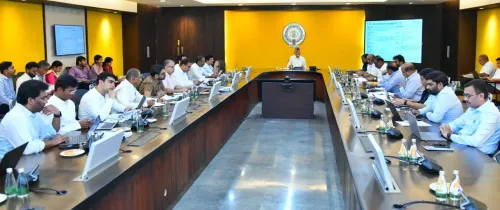
On the eve of the CII Partnership Summit, Andhra Pradesh Chief Minister N. Chandrababu Naidu announced that the state would introduce an Investment Protection Act — a law designed to prevent future governments from reversing incentives, land allotments, and approvals granted to investors. The proposal raises a pointed question that applies to every state competing for capital: can a promise written today survive a budget squeeze or a change of government five years from now?
The Gap Between Approvals and Implementation
The numbers suggest the gap between signing and doing is wide. Of 4,423 investment proposals approved by Karnataka between 2013 and October 2025, only 697 had been implemented, according to state government data. That is a conversion rate of under 16%. The problem is structural: incentive commitments often run for a decade or more, while state governments change every five years and budgets tighten unpredictably.
Gujarat's new industrial policy, in force since June 2026, pays its largest units capital subsidies over twelve years — a promise whose full value depends entirely on fiscal continuity and political will across multiple administrations.
When Incentives Go Unpaid
The risks are not theoretical. When Telangana's government changed in December 2023, the state reportedly owed industry approximately ₹3,736 crore in pending incentives, including cheques worth ₹684 crore that could not be encashed due to insufficient funds. In Andhra Pradesh, industry sought roughly ₹5,000 crore in dues for small units as recently as 29 October 2026; the state released around ₹1,400 crore within the week.
Incentives are paid out of annual state budgets, and when revenue falls short, they are among the easiest payments to defer. Investors price that risk in. A state that pays late effectively ends up offering more subsidy for the same investment than one that pays on time — a hidden fiscal cost that neither side publicly acknowledges.
Three Instruments That Can Fix the Problem
According to analysts Anuj Gupta of BowerGroupAsia, India and Ritika Joshi, Assistant Professor at Gautam Buddha University, Noida, a commitment survives a change of government only if it is hard to reverse, hard to leave unpaid, and hard to ignore. They identify three instruments: law, secured payment, and disclosure.
Law fixes the promise. Under Andhra Pradesh's proposed Investment Protection Act, later policy changes would apply only to new investments. The Supreme Court restated in May 2026, in State of Himachal Pradesh v. Kundlas Loh Udyog, that where a state has specifically sanctioned an incentive for an enterprise that has since invested, it is 'all the more firmly bound'. But law protects the promise — not the payment.
Secured payment closes that gap. Andhra Pradesh is reportedly establishing an escrow account funded from the state GST generated by large industrial units to pay their incentives. However, investors currently have no legal claim on the escrow, and smaller firms are excluded. A more transferable model exists under the PM-eBus Sewa scheme, where 19 states and Union Territories have authorised the Reserve Bank of India (RBI) to debit their accounts directly if they default on electric bus payments. An opt-in version of this mechanism for large industrial incentives would make payment independent of which party governs.
Disclosure makes the liability visible. The Union Budget has published the revenue impact of central tax incentives since 2006-07, but few, if any, states publicly disclose what they owe investors. Publishing these figures would ensure a successor government inherits a recorded liability rather than a disputed promise.
Infrastructure: The Underfunded Enabler
Beyond incentives, analysts note that states systematically underinvest in the industrial infrastructure that sustains productivity over time. Between 2015-16 and 2023-24, states underspent their capital budgets by approximately 20%, compared with just 7% for revenue spending — a pattern that leaves industrial clusters underserved precisely when they need expansion.
Industrial clusters could fund much of this themselves, but their local tax revenues frequently flow to entities that provide no services. In Sanand, an automobile hub near Ahmedabad, industrial units pay service charges for roads, drainage, and street lighting. Three gram panchayats also collect property tax from the same units while providing no civic services in return. The matter is reportedly before a court.
Gujarat's Industrial Development Act, 1962 offers a potential remedy under Section 16: an industrial estate can be declared a notified area, governed by a board that includes industry, which collects a consolidated tax and spends it within the estate. Sanand's industries have sought that status but have not yet obtained it.
Analysts argue this model should be made routine: every industrial cluster above a defined size should become a notified area within a fixed timeframe, with industry representation on its board and the right to retain the local taxes it generates. Clusters could also retain half of any increase in stamp duty above a recorded baseline for 20 to 25 years.
Three safeguards are considered essential: funds should be ring-fenced for shared infrastructure with a share reserved for villages whose land was acquired; the Comptroller and Auditor General (CAG) should audit the accounts; and any borrowing against cluster revenues must count as state debt. Kerala provides a cautionary example — in June 2026, the auditor held that its infrastructure fund's borrowings were, in substance, state debt. Ring-fencing can work; hidden debt cannot.
The Competition That Counts
The argument, ultimately, is that the competition between states for investment is not won by signing the most memoranda of understanding. It is won by which state's promises actually hold — through statute, secured payment, and transparent disclosure of what is owed. An investor holding a statutory certificate, a secured payment mechanism, and a publicly recorded liability has no need to track election results to know whether their incentives are safe.
As the CII Partnership Summit convenes in Andhra Pradesh, the state's Investment Protection Act proposal sets a benchmark that other investment-seeking states may find difficult to ignore.
Point of View
And it is not an outlier; it is the norm. The Andhra Pradesh Investment Protection Act is a serious structural response, but it protects the promise, not the payment: without a legally enforceable escrow or an RBI-style auto-debit backstop, the law is only as strong as the government that chooses to honour it. The deeper failure is fiscal opacity — no state systematically discloses what it owes investors, which means incoming governments can and do treat unpaid incentives as a negotiating chip rather than a legal obligation. Until disclosure is mandatory and audited, the competition between states will keep being won on headline MoU numbers rather than on the only metric that matters to investors: whether the cheque clears.
NationPress
18 Nov 2026
Frequently Asked Questions
What is Andhra Pradesh's proposed Investment Protection Act?
It is a proposed law announced by Chief Minister N. Chandrababu Naidu that would prevent future Andhra Pradesh governments from reversing incentives, land allotments, and approvals already granted to investors. Under the proposal, any subsequent policy changes would apply only to new investments, not to those already sanctioned.
Why do state investment promises often go unfulfilled in India?
Incentives are paid from annual state budgets and are among the easiest payments to defer when revenues fall short. A change of government can also lead to disputes over inherited commitments, as seen in Telangana in December 2023, when the state owed industry roughly ₹3,736 crore in unpaid dues after a new administration took over.
What is the PM-eBus Sewa model and how could it apply to investment incentives?
Under PM-eBus Sewa, 19 states and Union Territories have authorised the RBI to debit their accounts directly if they default on electric bus payments, making payment automatic and government-change-proof. Analysts argue a similar opt-in mechanism for large industrial incentives would ensure payment is independent of which party governs, closing the gap that escrow accounts alone cannot fill.
What is a notified industrial area and why does it matter for infrastructure funding?
Under Section 16 of Gujarat's Industrial Development Act, 1962, an industrial estate can be declared a notified area governed by a board that includes industry, which collects and spends local taxes within the estate. This prevents industrial taxes from flowing to bodies that provide no services — a problem currently affecting units in Sanand, the automobile hub near Ahmedabad, where three gram panchayats collect property tax while providing no civic services.
What did the Supreme Court rule in State of Himachal Pradesh v. Kundlas Loh Udyog?
In May 2026, the Supreme Court restated that where a state has specifically sanctioned an incentive for an enterprise that has since invested in reliance on that incentive, the state is 'all the more firmly bound' to honour it. The investor in that case lost because the incentive had never been specifically sanctioned — underlining that legal certainty at the point of sanction is critical.