Yes Bank stock falls 4% after SC upholds AT-1 bond write-off quashing

Synopsis
The Supreme Court's dismissal of Yes Bank's AT-1 bond write-off appeal has ripped open a ₹8,415-crore liability the bank had treated as buried since 2020. With Citi warning of a 250-basis-point CET1 hit and a 13–14% book value erosion, a capital raise may no longer be optional — and the ruling raises a question bigger than Yes Bank: does India's AT-1 bond framework still work as advertised?
Key Takeaways
The Supreme Court dismissed appeals by Yes Bank , the RBI , and the Centre , upholding the quashing of the ₹8,415-crore AT-1 bond write-off from March 2020 .
Yes Bank shares fell 3.85% to ₹17.45 on the BSE by 12:30 pm IST on Friday ; the stock had hit its lower circuit of ₹18.03 on Thursday.
Citi estimates a 250-basis-point reduction in Yes Bank's CET1 ratio to 11.5% and book value erosion of 13–14% ; maintains sell with a target of ₹17.50 .
Morgan Stanley estimates a post-tax liability of ₹6,300 crore , equivalent to ~ 12% of net worth, and a 190-basis-point CET1 drag; retains underweight with a target of ₹17 .
Both brokerages flagged that the final impact depends on implementation and whether a review petition is filed.
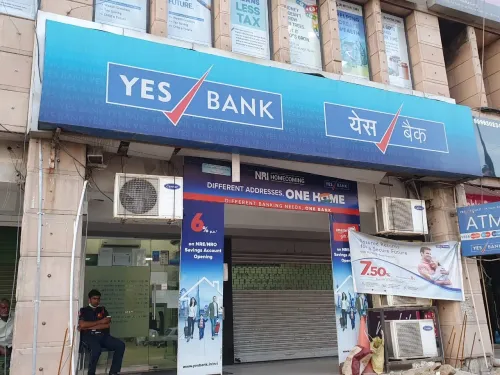
Yes Bank shares declined as much as 3.85% to ₹17.45 on the BSE by 12:30 pm IST on Friday, 17 October 2025, after the Supreme Court dismissed appeals against the Bombay High Court's ruling that quashed the write-down of the bank's ₹8,415-crore Additional Tier-1 (AT-1) bonds — triggering fresh capital concerns and sell ratings from global brokerages. The stock had already hit its lower circuit of ₹18.03 on the BSE on Thursday.
What the Supreme Court Ruled
The Supreme Court dismissed appeals filed by Yes Bank, the Reserve Bank of India (RBI), and the Centre against the Bombay High Court's 20 January 2023 judgment, which had quashed the write-down of AT-1 bonds that were extinguished during the lender's emergency rescue in March 2020. The apex court's order effectively upholds the high court's finding, reopening a liability that the bank had previously treated as extinguished.
Capital Impact: What Brokerages Are Saying
Analysts at global brokerage Citi maintained their sell rating on the stock and cut their target price to ₹17.50. According to Citi, the reversal of the AT-1 write-down could reduce Yes Bank's Common Equity Tier 1 (CET1) capital ratio by 250 basis points to 11.5%, based on the principal amount alone and assuming coupon payments are discretionary and non-cumulative. The brokerage also warned the liability could erode the bank's book value by 13–14%, potentially necessitating a capital raise to restore buffers.
Morgan Stanley retained its underweight rating with a target of ₹17, describing the order as 'prima facie negative'. The brokerage estimates the post-tax liability of ₹6,300 crore would represent approximately 12% of Yes Bank's net worth and could reduce its current CET1 ratio of 14% by around 190 basis points. Morgan Stanley said it would monitor any review petition and further clarification from the bank.
The Broader AT-1 Bond Question
A key uncertainty flagged by Morgan Stanley is whether the Supreme Court's decision fundamentally challenges the loss-absorption feature of AT-1 bonds as a class — a cornerstone of Basel III bank capital frameworks — or whether the ruling is narrowly confined to procedural lapses by the administrator during Yes Bank's 2020 reconstruction. The answer has implications not just for Yes Bank but potentially for how AT-1 instruments are treated by Indian banks more broadly.
Both brokerages noted that the final extent of the impact will depend on the implementation of the ruling and the treatment of outstanding bonds. The AT-1 bond issue, they said, has remained a persistent overhang on the stock since the reconstruction, and the latest development adds a fresh layer of regulatory and legal uncertainty.
Context and What Comes Next
Yes Bank was rescued in March 2020 under an RBI-led reconstruction scheme that saw State Bank of India (SBI) and other lenders step in. The AT-1 bond write-down, which wiped out roughly ₹8,415 crore owed to bondholders, was one of the most contentious aspects of that rescue. Bondholders challenged the move, and the Bombay High Court ruled in their favour in January 2023 — a verdict now endorsed by the Supreme Court.
The bank and regulators may yet file a review petition. Market participants will closely track any such development, along with official communication from Yes Bank on how it plans to address the capital shortfall if the ruling is ultimately enforced.
Point of View
The risk premium on future Indian AT-1 issuances will rise, making bank capital more expensive across the system. Yes Bank's immediate problem is a potential capital raise in an environment of tepid investor appetite, but the systemic problem is a signal to global bond markets that the loss-absorption features of Indian bank capital instruments may not be enforceable. Regulators would be wise to seek legislative clarity rather than leave this to case-by-case litigation.
NationPress
16 Oct 2026
Frequently Asked Questions
What did the Supreme Court rule on Yes Bank's AT-1 bonds?
The Supreme Court dismissed appeals filed by Yes Bank, the RBI, and the Centre against the Bombay High Court's 20 January 2023 judgment, which had quashed the write-down of ₹8,415-crore AT-1 bonds extinguished during Yes Bank's rescue in March 2020. The ruling effectively restores the bondholders' claims against the bank.
How much could Yes Bank's capital be affected by the ruling?
Citi estimates the reversal could reduce Yes Bank's CET1 capital ratio by 250 basis points to 11.5%, and erode book value by 13–14%, potentially requiring a capital raise. Morgan Stanley estimates a post-tax hit of ₹6,300 crore — about 12% of net worth — dragging the CET1 ratio down by around 190 basis points from its current 14%.
Why did Yes Bank's stock fall after the Supreme Court order?
The ruling reopens a ₹8,415-crore liability that Yes Bank had treated as permanently written off since its 2020 reconstruction. Investors reacted to the capital risk, sending shares down nearly 4% to ₹17.45 on the BSE on Friday, following a lower-circuit hit on Thursday.
What are Citi and Morgan Stanley recommending on Yes Bank stock?
Citi maintained a sell rating and cut its target price to ₹17.50. Morgan Stanley retained an underweight rating with a target of ₹17. Both brokerages cited capital erosion risk and await further clarity on the implementation of the ruling and the possibility of a review petition.
What happens next for Yes Bank following the Supreme Court verdict?
Yes Bank or the RBI may file a review petition before the Supreme Court. In parallel, the bank will need to clarify to investors how it intends to address the potential capital shortfall. The final financial impact will depend on the implementation of the ruling and whether coupon payments on the bonds are treated as cumulative or non-cumulative.